
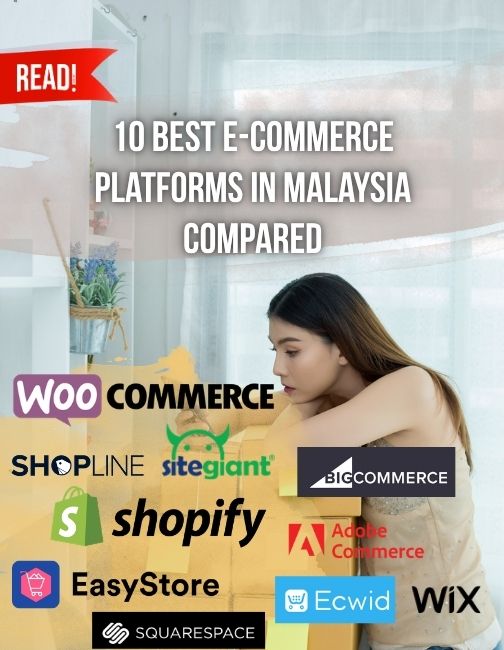
Some platforms provide these features in one hosted package, while others require separate hosting, plugins, extensions or developer support.
This difference affects how easy the store is to manage, how much it costs over time and how much freedom the business has to customise its ecommerce website.
Do Small Businesses Need a Full E-Commerce Website?
Not every business needs a complex website from the beginning.
A seller testing a small number of products may start with a marketplace, social media account or payment link. This keeps the initial setup simple and allows the business to confirm whether there is sufficient demand.
A dedicated ecommerce website becomes more valuable when the business needs to:
- Present a stronger brand
- Manage a larger product catalogue
- Improve organic search visibility
- Run its own promotions
- Collect customer information
- Integrate with accounting or inventory systems
- Expand beyond one marketplace
- Sell to customers in other countries
Choosing an overly complex system too early can increase costs and create unnecessary technical work. Choosing a platform that is too limited can lead to an expensive migration once the business begins to grow.

1. Shopify: Best Overall for Growing E-Commerce Brands
Shopify is a hosted e-commerce platform that allows businesses to launch and manage an online store without handling hosting, security updates or most technical maintenance.
Ideal for: Growing brands looking for an easy-to-manage platform with strong scalability.
With its user-friendly dashboard, responsive themes, and massive app ecosystem, Shopify suits scaling consumer brands well. It also supports multichannel sales and international features like regional pricing, multi-currency support, and localised storefronts.
For Malaysian businesses, the key considerations are ensuring smooth local payment gateway integrations (e.g., Paydibs, Billplz) and logistics integrations. Additionally, relying heavily on third-party apps can increase monthly overhead.
Key Highlights
- Main Strengths: Easy setup/maintenance, a massive app ecosystem, strong multichannel capabilities, and great international selling features.
- Main Limitation: Subscription fees, third-party app costs, and transaction fees can accumulate as your store grows.
Verdict: Shopify provides one of the strongest balances between usability and scalability, although businesses should calculate the complete cost before committing.

2. EasyStore: Best for Malaysian SMEs
EasyStore is a Malaysian e-commerce platform designed for businesses that want to manage their website, physical store and online marketplaces from one system.
Ideal for: Malaysian SMEs and first-time online sellers.
Its strength lies in local integrations, including payment gateways, courier services and marketplace synchronisation, making it easier for SMEs to start selling without extensive technical knowledge.
Key Highlights
- Main Strengths: Excellent local payment and shipping integrations, Shopee and Lazada connectivity, easy to set up and manage, omnichannel selling support.
- Main Limitations: Smaller app ecosystem than Shopify, less suitable for highly customised enterprise stores.
Verdict: An excellent choice for businesses focusing on the Malaysian market with straightforward ecommerce needs.

3. WooCommerce: Best for WordPress Flexibility and Control
WooCommerce is an open-source e-commerce plugin that transforms a WordPress website into a fully functional online store.
Ideal for: Businesses that want greater control over their ecommerce website and already use WordPress.
WooCommerce gives you complete control over your website structure, hosting, and content, making it ideal for WordPress users or content-heavy brands. While it handles core commerce essentials out of the box, advanced features rely on plugins and extensions.
For Malaysian businesses, it integrates smoothly with local payment gateways and couriers, though performance depends entirely on your chosen hosting and plugin setup.
Key Highlights
- Main Strengths: Total design and content freedom, powerful SEO/blogging foundations, a vast developer ecosystem, and no core platform subscription fees.
- Main Limitations: Requires independent hosting and domain management; security, updates, and backups fall entirely on you; and heavy reliance on multiple plugins can occasionally lead to compatibility conflicts or rising maintenance costs.
Verdict: WooCommerce is one of the best ecommerce platforms for businesses that value flexibility, content control and website ownership. It can be more demanding to manage than Shopify, but it offers greater freedom for businesses with the technical resources to support it.

4. SiteGiant: Best for Multichannel Selling
SiteGiant helps businesses manage products, inventory and orders across multiple sales channels, making it popular among sellers operating on Shopee, Lazada and their own website.
Ideal for: Businesses selling across multiple marketplaces.
Its centralised inventory management reduces manual work and helps keep stock levels consistent across different platforms.
Key Highlights
- Main Strengths: Strong marketplace synchronisation, centralised inventory management, local business focus, supports omnichannel operations.
- Main Limitations: Interface is less polished than some global competitors, fewer design and customisation options.
Verdict: Ideal for retailers that prioritise efficient multichannel operations over advanced website customisation.

5. Wix: Best for Beginners
Wix combines website building and ecommerce into a simple drag-and-drop platform that requires little technical knowledge.
Ideal for: Small businesses launching their first ecommerce website.
It offers attractive templates, built-in marketing tools and enough ecommerce features for many small businesses, although larger stores may eventually outgrow it.
Key Highlights
- Main Strengths: Very easy to use, modern templates, built-in marketing tools, quick website setup.
- Main Limitations: Less scalable for large catalogues, fewer advanced ecommerce features.
Verdict: A solid option for beginners that value simplicity and design over complex functionality.

6. BigCommerce: Best for Fast-Growing Businesses
BigCommerce is built for businesses expecting higher sales volumes, larger product catalogues or international expansion.
Ideal for: Mid-sized and growing ecommerce businesses.
It includes many advanced ecommerce features without relying heavily on third-party apps, making it attractive for growing businesses that need more built-in functionality.
Key Highlights
- Main Strengths: Strong built-in ecommerce features, excellent scalability, supports international selling, B2B capabilities available.
- Main Limitations: Steeper learning curve, higher pricing than entry-level platforms.
Verdict: A strong platform for businesses planning significant long-term growth.

7. SHOPLINE: Best for Social Commerce
SHOPLINE focuses on helping businesses sell across websites, social media and live commerce channels from one platform.
Ideal for: Social-first and omnichannel retailers.
Its integrated approach makes it suitable for brands that rely heavily on Facebook, Instagram and live selling to generate revenue.
Key Highlights
- Main Strengths: Strong social commerce features, easy omnichannel management, user-friendly interface, good regional presence.
- Main Limitations: Smaller extension ecosystem than Shopify, some advanced features require higher-tier plans.
Verdict: A good choice for businesses that generate a significant share of sales through social media.

8. Squarespace: Best for Design-Focused Brands
Squarespace is known for professionally designed templates and a polished website-building experience.
Ideal for: Creative businesses and premium consumer brands.
While its ecommerce tools are not as extensive as Shopify or WooCommerce, they are sufficient for many lifestyle, creative and premium brands.
Key Highlights
- Main Strengths: Excellent website design, easy content management, good built-in blogging tools, simple maintenance.
- Main Limitations: Limited ecommerce flexibility, smaller app marketplace.
Verdict: Best suited to businesses where visual presentation is a competitive advantage.

9. Adobe Commerce: Best for Enterprise Businesses
Adobe Commerce (formerly Magento Commerce) is an enterprise-grade ecommerce platform built for large organisations with complex operational requirements.
Ideal for: Large enterprises and complex ecommerce operations.
It supports extensive customisation, large product catalogues and advanced B2B capabilities, but usually requires experienced developers to implement and maintain.
Key Highlights
- Main Strengths: Highly customisable, enterprise-level scalability, advanced B2B features, powerful catalogue management.
- Main Limitations: High implementation cost, requires technical expertise, longer deployment time.
Verdict: An excellent enterprise solution, but often more than smaller businesses require.
10. Ecwid: Best for Existing Websites
Ecwid allows businesses to add ecommerce functionality to an existing website instead of building a new online store from scratch.
Ideal for: Businesses adding ecommerce to an existing website.
It integrates with various website platforms, making it suitable for businesses that already have an established website and simply want to start selling online.
Key Highlights
- Main Strengths: Fast implementation, works with existing websites, easy product management, affordable entry point.
- Main Limitations: Less flexibility than dedicated ecommerce platforms, limited advanced features.
Verdict: A practical solution for businesses that want to add online selling without rebuilding their website.
Should You Choose a Hosted or Self-Hosted Platform?
Hosted platforms such as Shopify, Wix and EasyStore manage the technical infrastructure for you. They are generally easier to launch and maintain, making them suitable for businesses without an in-house technical team.
Self-hosted platforms such as WooCommerce provide greater control over hosting, website structure and customisation. However, the business is responsible for updates, backups, security and performance.
Platform Type | Best For | Main Advantage | Main Drawback |
Hosted | Businesses prioritising simplicity | Lower technical workload | Less control and ongoing subscription costs |
Self-hosted | Businesses needing flexibility | Greater ownership and customisation | More maintenance and technical responsibility |
Businesses should also consider the cost of changing platforms later. Migrating products, customer accounts, order data and SEO settings can be expensive and disruptive, so it is better to choose with future growth in mind.
Which E-Commerce Platform is Right for Your Business?
Use this quick reference table to narrow down your options based on your business type and selling needs.
If You Are… | Recommended Platform |
Launching your first online store | Shopify |
Already using a WordPress website | WooCommerce |
Running a Malaysian SME | EasyStore |
Selling through Shopee and Lazada | SiteGiant |
Operating a small creative business | Wix |
Building a growing international brand | BigCommerce |
Managing a complex enterprise operation | Adobe Commerce |
Conclusion
Choosing the right e-commerce platform is only one part of building a successful ecommerce business. Long-term success also depends on choosing the right website strategy, creating useful content, delivering a seamless customer experience and adapting as customer expectations change.
Rather than choosing a platform based solely on popularity or price, compare how each option supports your day-to-day operations, payment methods, marketplace integrations, website management and future expansion. Selecting a platform that fits your current needs while allowing room for growth can help reduce costly migrations and technical challenges later.
Whether you’re building your first online store or comparing platforms for your next stage of growth, choosing the right ecommerce solution starts with understanding the fundamentals. Explore more practical learning resources on READ.com.my, where we simplify business, technology and more topics into easy-to-understand guides that help you keep learning.