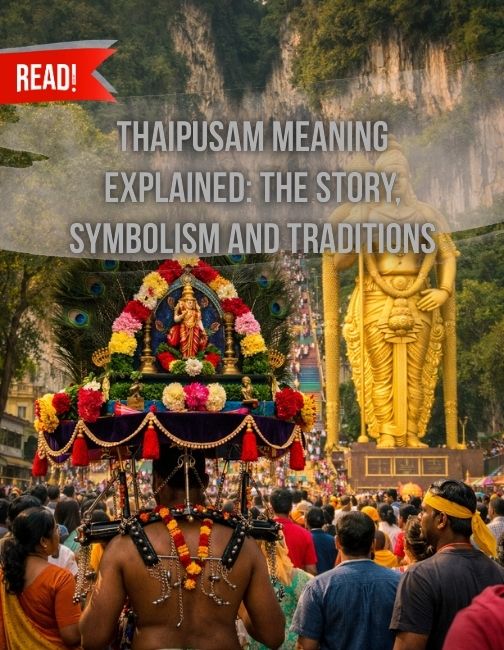
Thaipusam is a major Tamil Hindu festival celebrated especially in India, Malaysia, Singapore, Sri Lanka, South Africa, and by Tamil communities worldwide. It takes place on the full moon day of the Tamil month of Thai (around January–February) when the star Pusam is at its highest point in the sky, hence the name Thai + Pusam.
This festival is devotional, cultural, and symbolic, centred around Lord Murugan, the youthful god of courage, virtue and wisdom. It’s a time of prayer, thanksgiving, and spiritual reflection.
What Thaipusam Literally Means
The word Thaipusam combines:
- Thai: the tenth month of the Tamil calendar
- Pusam: a star (nakshatram) that is prominent on the festival day
So it literally refers to the full moon day of the Pusam star in the month of Thai.
Simple meaning: a special full moon festival linked to a star and time in the Tamil lunar calendar.
Mythology & the Story Behind Thaipusam
According to traditional Hindu legends:
- Lord Murugan (also called Kartikeya, Skanda, Subrahmanya) was granted a vel (a divine lance or spear) by his mother, Goddess Parvati.
- He used this vel to defeat the demon king Surapadman and restore balance and peace. This story symbolizes the victory of good over evil.
The vel represents wisdom, strength and divine power, not just physical force. Some interpretations even suggest its shape represents knowledge cutting through ignorance.
Why People Celebrate Thaipusam
Thaipusam is observed as:
- A celebration of courage and victory
- A moment for repentance, prayer and devotion
- A time to demonstrate gratitude for answered vows
Devotees often prepare with:
- Fasting and cleansing rituals
- Meditation and prayer
- Vegetarian diet and abstinence in the days or weeks leading up to Thaipusam
It is both personal (inner reflection) and communal (public celebration).
How Thaipusam Is Celebrated
Kavadi Attam (Burden Offering)
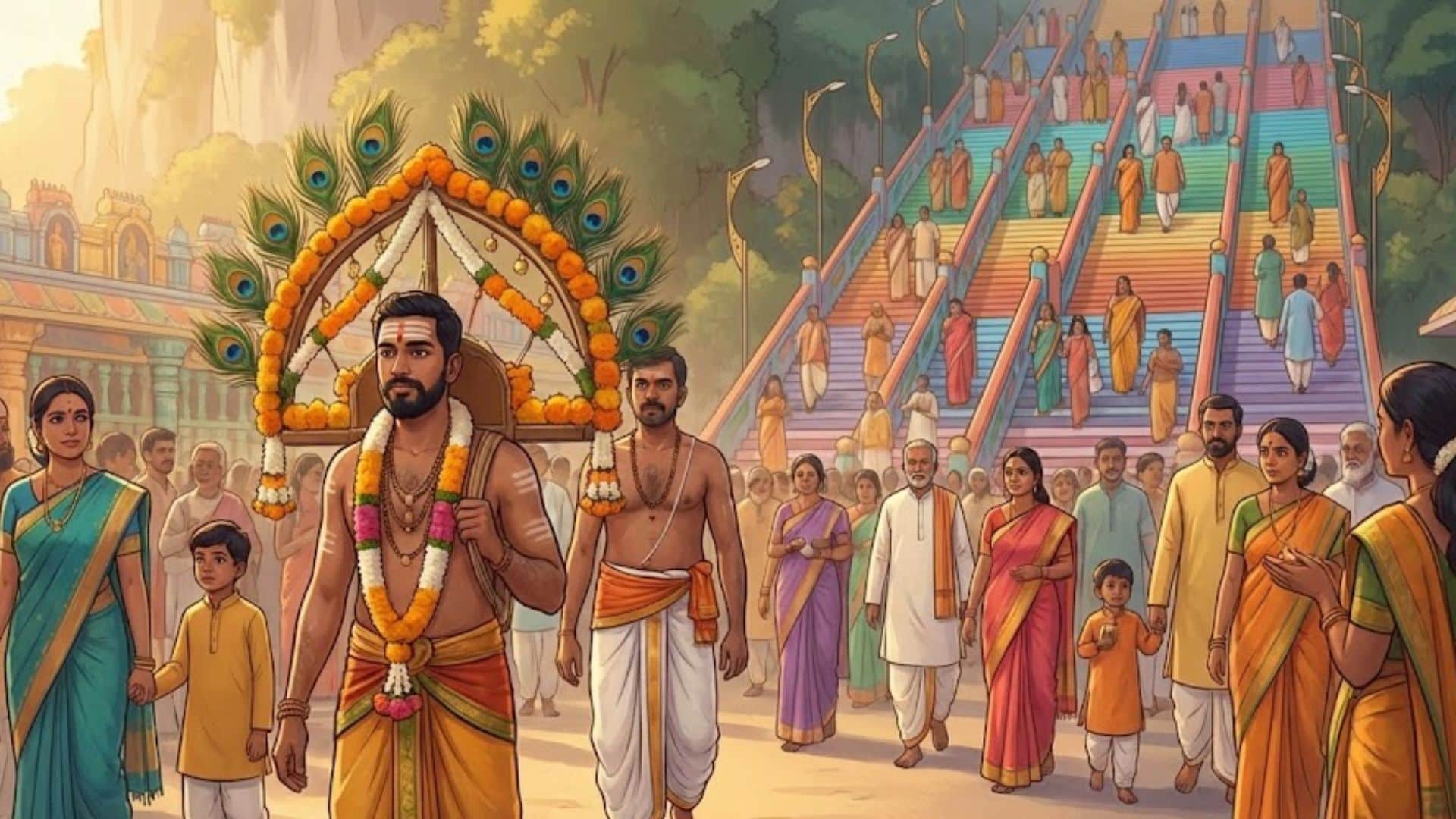
One of the most visible parts of Thaipusam is Kavadi Attam, where devotees carry physical burdens (kavadi) as an act of devotion, sacrifice and thanksgiving. These burdens range from:
- Milk pots (paal kudam)
- Decorated structures pierced to the body by hooks and skewers
- Intricate frames balanced on shoulders
The act represents self-sacrifice and spiritual discipline, a physical expression of devotion.
Milk Offering & Rituals
Devotees often carry pots of milk to the temple as an offering to Murugan. Coconuts may also be broken along the procession route, symbolising humility and the breaking of the ego.
Where Thaipusam is Celebrated Most Publicly
While Thaipusam is celebrated widely in Tamil communities, in Malaysia and Singapore it has become especially visible:
- Batu Caves (Kuala Lumpur): one of the largest gatherings
- Penang and Ipoh: major processions and temple rites
- Singapore’s Serangoon and Tank Road routes: long foot processions by devotees (around 3–4 km)
Thousands of people, devotees and spectators alike participate, making it a celebrated cultural event beyond just Hindu observers.
Deeper Symbolism: More Than Rituals
Beyond the physical ceremonies, Thaipusam carries deeper spiritual messages:
- The vel reflects not just victory over evil but inner transformation and self-mastery.
- The practice of devotion can be seen as a journey of discipline, humility, and personal growth.
- Walking long distances, chanting and fasting symbolise devotion, sacrifice and mental focus.
These symbolic layers elevate Thaipusam from festival to life lesson.
Common Misunderstandings (and Clarifications)
- Is Thaipusam a “birthday”?
No, although some sources relate it to Murugan’s mythic battles, it is not traditionally considered his birthday. That honour is often associated with other festivals. - Is it only in Malaysia?
No, it is celebrated across the Tamil diaspora globally, but Malaysia and Singapore hold very large public gatherings.
This helps learners avoid common misconceptions and place the festival in cultural context.
Conclusion: Thaipusam, Meaningful and Multilayered
Thaipusam is much more than a colourful festival. It is:
- A cultural celebration with deep roots in Tamil Hindu tradition
- A symbolic victory of good over evil and inner transformation
- A day of devotion, sacrifice, and spiritual discipline
- A community event that blends faith, culture and personal reflection
Appreciating the depth of festivals like Thaipusam is a gateway to true cultural literacy, especially in a diverse society. Language is often the key that unlocks these traditions, allowing us to move past surface-level observations and into the heart of a community’s stories. For those eager to explore more of Malaysia’s rich tapestry, there are dedicated digital hubs designed to bridge these gaps.
We serve as multilingual learning platform where curious minds can sharpen their language skills while diving into local heritage, ensuring that the beauty of our shared traditions is understood by everyone, regardless of their native tongue.