
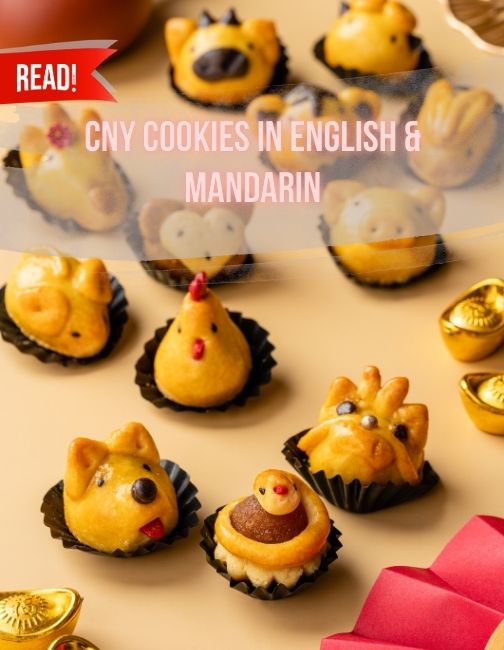
Chinese New Year is more than just fireworks, red packets, and family reunions. For many Malaysians, it is also the memory of sitting in our grandparents’ house, opening familiar containers filled with cookies we only tasted once a year.
You may remember how they tasted, sweet, crumbly, crunchy, but do you remember what they are called in English or Mandarin?
In this guide, we revisit the most popular Chinese New Year (CNY) cookies in Malaysia, while learning their English names, Mandarin names, and simple vocabulary you can actually use. Whether you are learning English, Mandarin, or both, this is a gentle way to learn language through familiar culture.
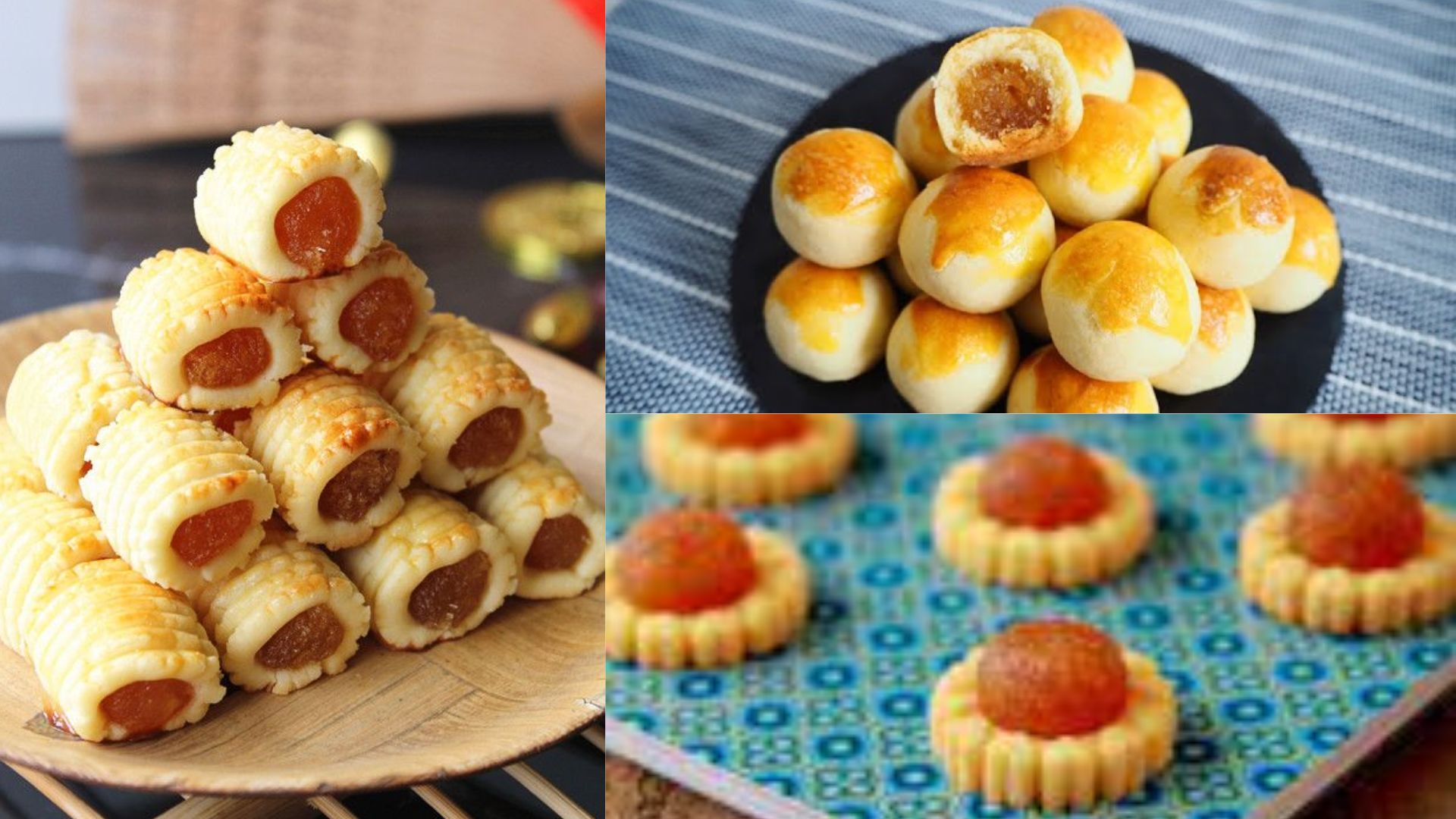
Pineapple Tart
English: Pineapple Tart
Mandarin: 黄梨饼 (Pinyin: Huáng Lí Bǐng)
Cantonese: Wong lai bang
Hokkien: Ong Lai bia
Pineapple tarts are one of the most iconic CNY cookies in Malaysia. They symbolise prosperity and good fortune, as the word “pineapple” sounds similar to “prosperity” in several Chinese dialects commonly spoken in Malaysia.
They are usually:
- Sweet
- Buttery
- Slightly tangy
Language Tip
- Crumbly = breaks easily
- Tangy = slightly sour
Example sentence: Pineapple tarts are sweet and crumbly.
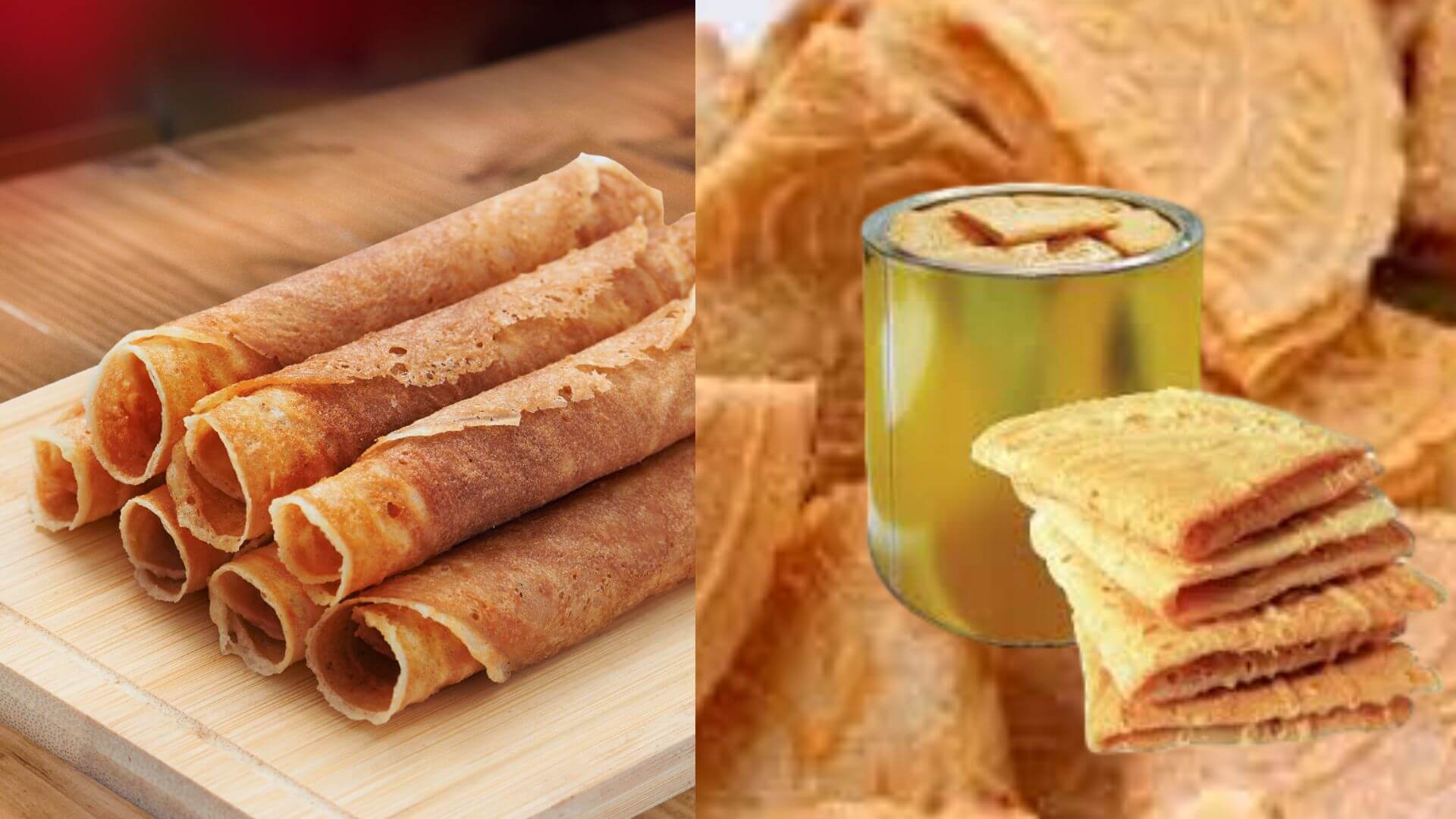
Kuih Kapit (Love Letters)
English: Love Letters / Kuih Kapit
Mandarin: 蛋卷 (Pinyin: Dàn Juǎn)
Cantonese: dan guin
Hokkien: dan geng
Kuih kapit, also known as love letters, are thin and crispy cookies traditionally cooked using charcoal moulds. They are often rolled or folded and stored in large tins during Chinese New Year.
They are:
- Crispy
- Light
- Fragrant
Language Tip
- Crispy = makes a sharp sound when you bite
Example sentence: Love letters are thin and crispy.
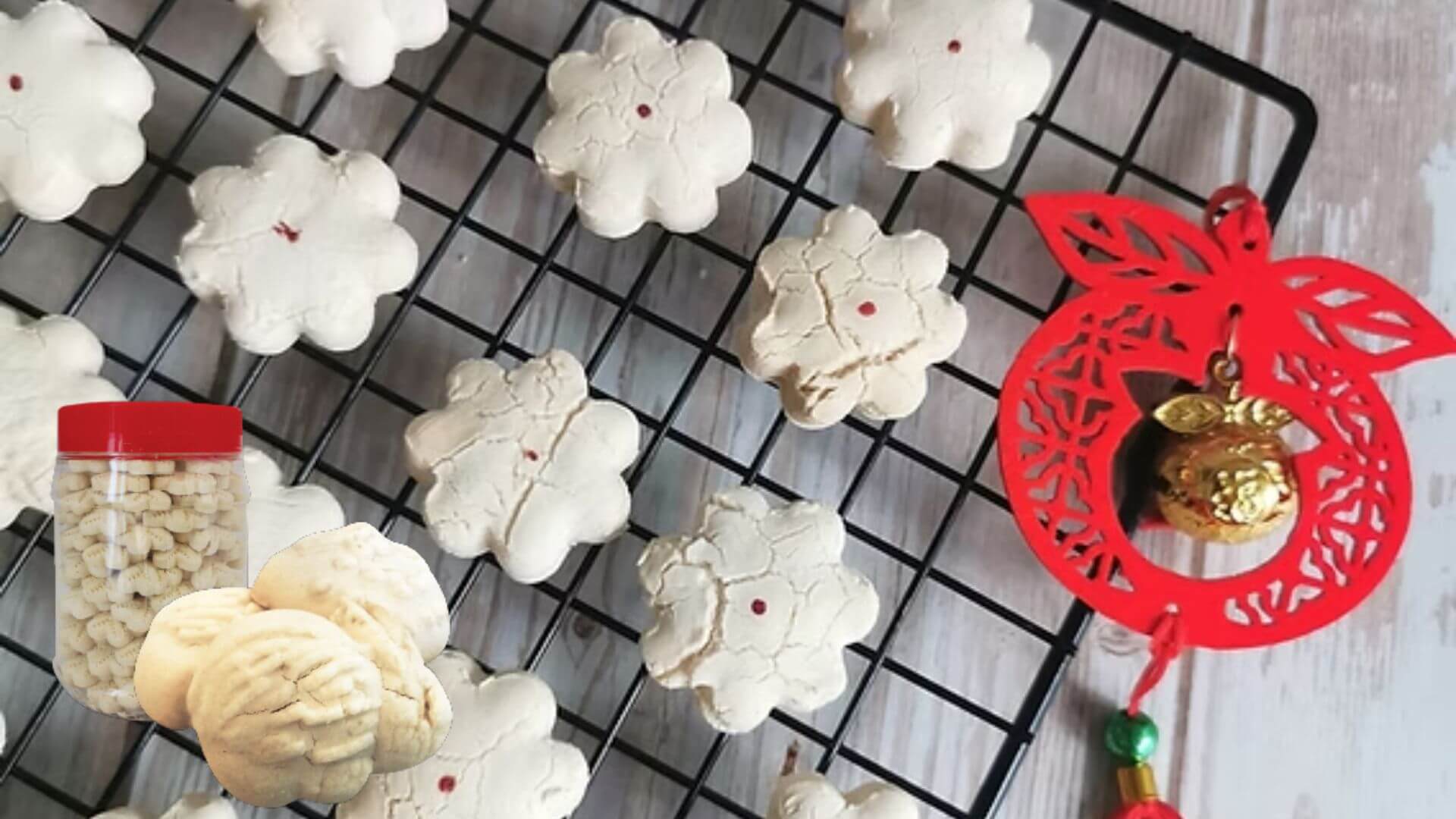
Kuih Bangkit
English: Tapioca Coconut Cookies
Mandarin: 番婆饼 (Pinyin: Fān Pó Bǐng)
Cantonese: fun poh bang
Hokkien: Huan po pia
Kuih bangkit is known for its powdery texture that melts in the mouth. It is made from tapioca flour and coconut milk and is especially popular among older generations.
They feel:
- Soft
- Powdery
- Light
Language Tip
- Melts in the mouth = disappears quickly when eaten
Example sentence: Kuih bangkit melts in your mouth.
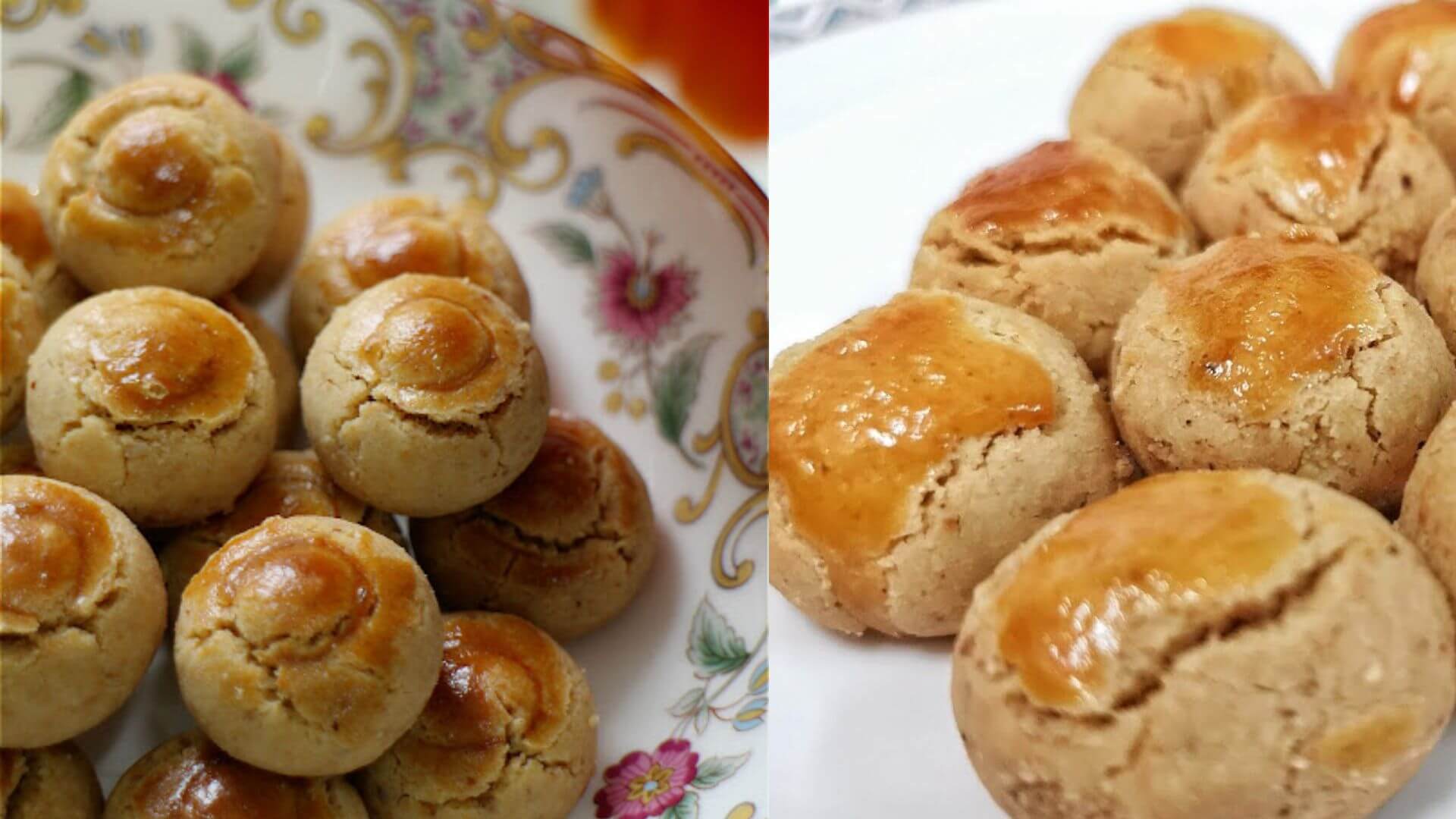
Peanut Cookies
English: Peanut Cookies
Mandarin: 花生饼 (Pinyin: Huā Shēng Bǐng)
Cantonese: fah sheng bang
Hokkien: Hoa sing pia
Peanut cookies are round, crumbly, and rich in peanut flavor. In Chinese culture, peanuts symbolize longevity, making them a meaningful CNY treat.
They are often:
- Nutty
- Crumbly
- Rich
Language Tip
- Nutty = tastes like nuts
Example sentence: Peanut cookies are nutty and crumbly.
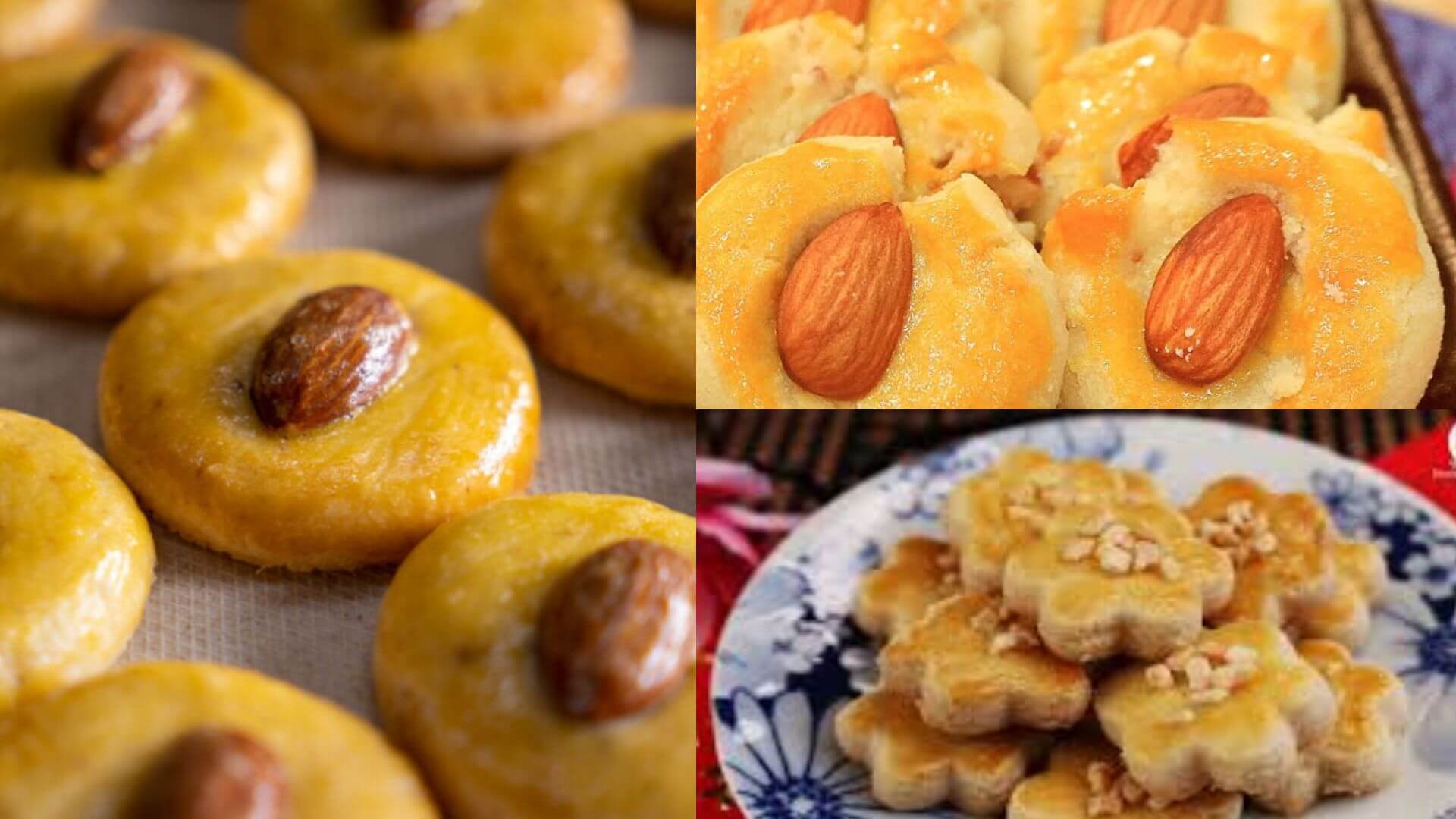
Almond Cookies
English: Almond Cookies
Mandarin: 杏仁饼 (Pinyin: Xìng Rén Bǐng)
Cantonese: heng yearn bang
Hokkien: Heng jin pia
Almond cookies are popular for their strong aroma and crunchy texture. They are often associated with elegance and are commonly given as gifts during Chinese New Year.
They are:
- Crunchy
- Fragrant
- Sweet
Language Tip
- Fragrant = smells good
Example sentence: Almond cookies are crunchy and fragrant.
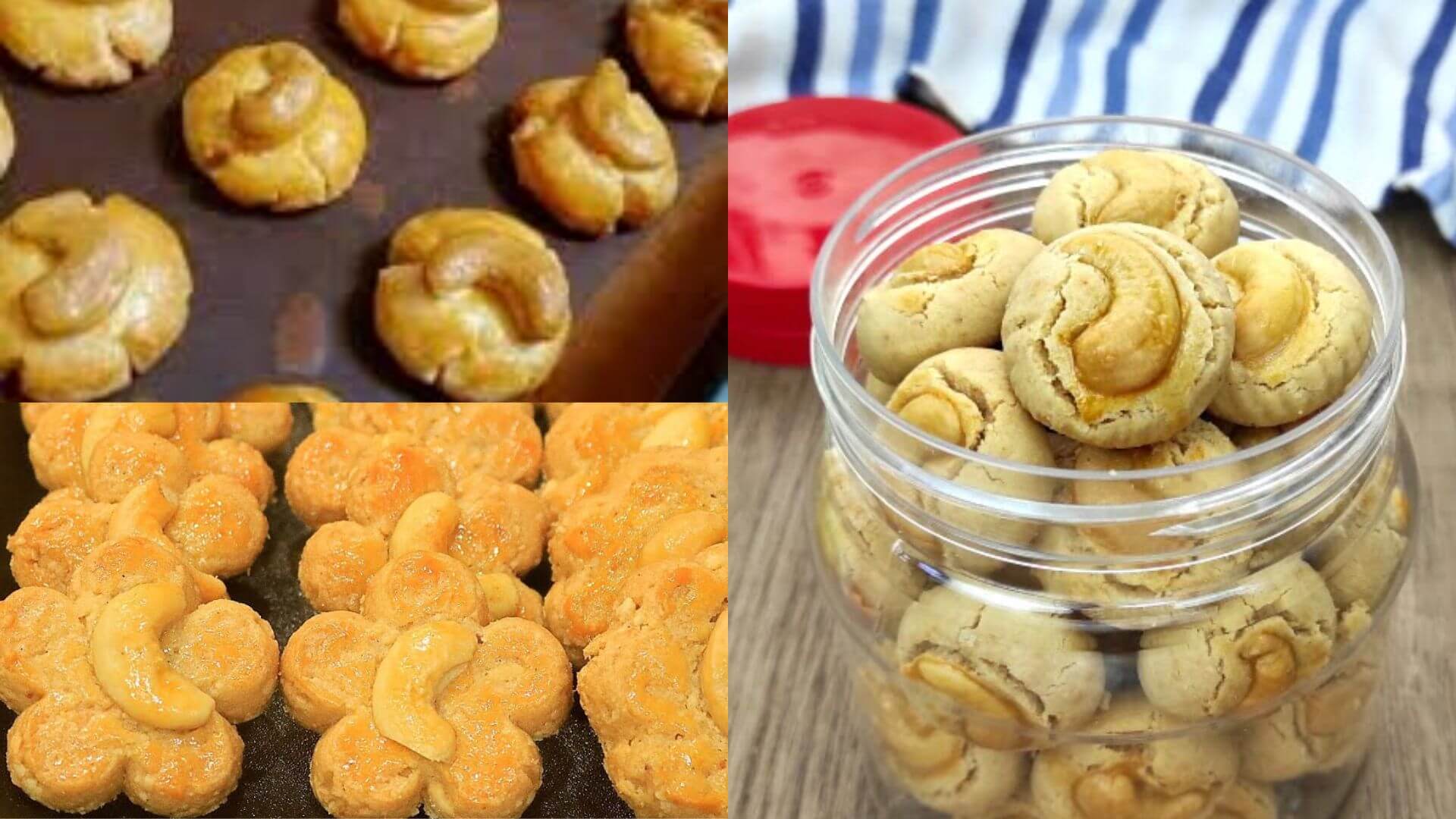
Cashew Nut Cookies
English: Cashew Nut Cookies
Mandarin: 腰豆饼 (Pinyin: Yāo Dòu Bǐng)
Cantonese: you dao bang
Hokkien: Iau tau pia
Cashew nut cookies are rich and buttery, often filled with chopped cashew nuts. They are a common sight in Malaysian households during Chinese New Year.
They are:
- Buttery
- Crunchy
- Rich
Example sentence: Cashew nut cookies are rich and buttery.
Why Learning Food Vocabulary Matters in Language Learning
Food is one of the best entry points for language learning, especially for beginners.
When you learn words connected to:
- Childhood memories
- Family traditions
- Familiar tastes
…your brain remembers them better.
Reading about familiar topics like CNY cookies helps learners:
- Build vocabulary naturally
- Improve reading confidence
- Connect language with real-life culture
This is why READ.com.my focuses on learning through reading and cultural context, instead of memorisation alone.
Common Adjectives Used to Describe CNY Cookies
Here are some useful words you will see often in English descriptions:
- Sweet: tastes like sugar
- Crunchy: hard and makes a sound when bitten
- Crispy: thin and light with a sharp bite
- Crumbly: breaks easily
- Soft: easy to bite
- Fragrant: smells pleasant
- Rich: strong, full flavour
- Light: not heavy, easy to eat
Try using these words in simple sentences when talking about food during Chinese New Year.
Learn Language Through Culture
Chinese New Year cookies are part of our shared memories growing up in Malaysia.
If you enjoyed learning through this article, you can continue your journey by learning English and Manglish through READ language learning hub, using familiar cultural topics designed for beginners.