

How to Use This Cheat Sheet
This is not an essay, it’s a reference guide.
Use this page when you:
- Hear a Manglish phrase you don’t understand
- Want to translate Manglish into proper English
- Work or communicate with Malaysians
- Travel in Malaysia
Each section is broken down so you can jump in, get the meaning, and move on.
What is Manglish?
Manglish is informal Malaysian English influenced by:
- Malay
- Chinese dialects (Hokkien, Cantonese, Mandarin)
- Tamil
It’s widely spoken in daily life but not used in formal writing.
For a full explanation of Manglish, see our complete guide on Manglish Explained.

Manglish Sentence Structure (Quick Rule)
Before the phrases, remember this:
- Grammar is simplified
- Verb tenses are often dropped
- Meaning depends heavily on context
So instead of translating word-for-word, translate intent.
Everyday Manglish Phrases (Most Common)
These are phrases you will hear constantly in Malaysia.
Daily Conversation
Manglish Phrase | What It Means in English |
Eat already or not? | Have you eaten? |
Don’t have | No / It’s not available |
| Can or not? | Is this possible? |
Up to you lah | It’s your choice |
| Why you like that? | Why are you behaving this way? |
Like that also can | That’s acceptable too |
| No need | It’s not necessary |
Manglish Questions & Responses
Manglish | English Meaning |
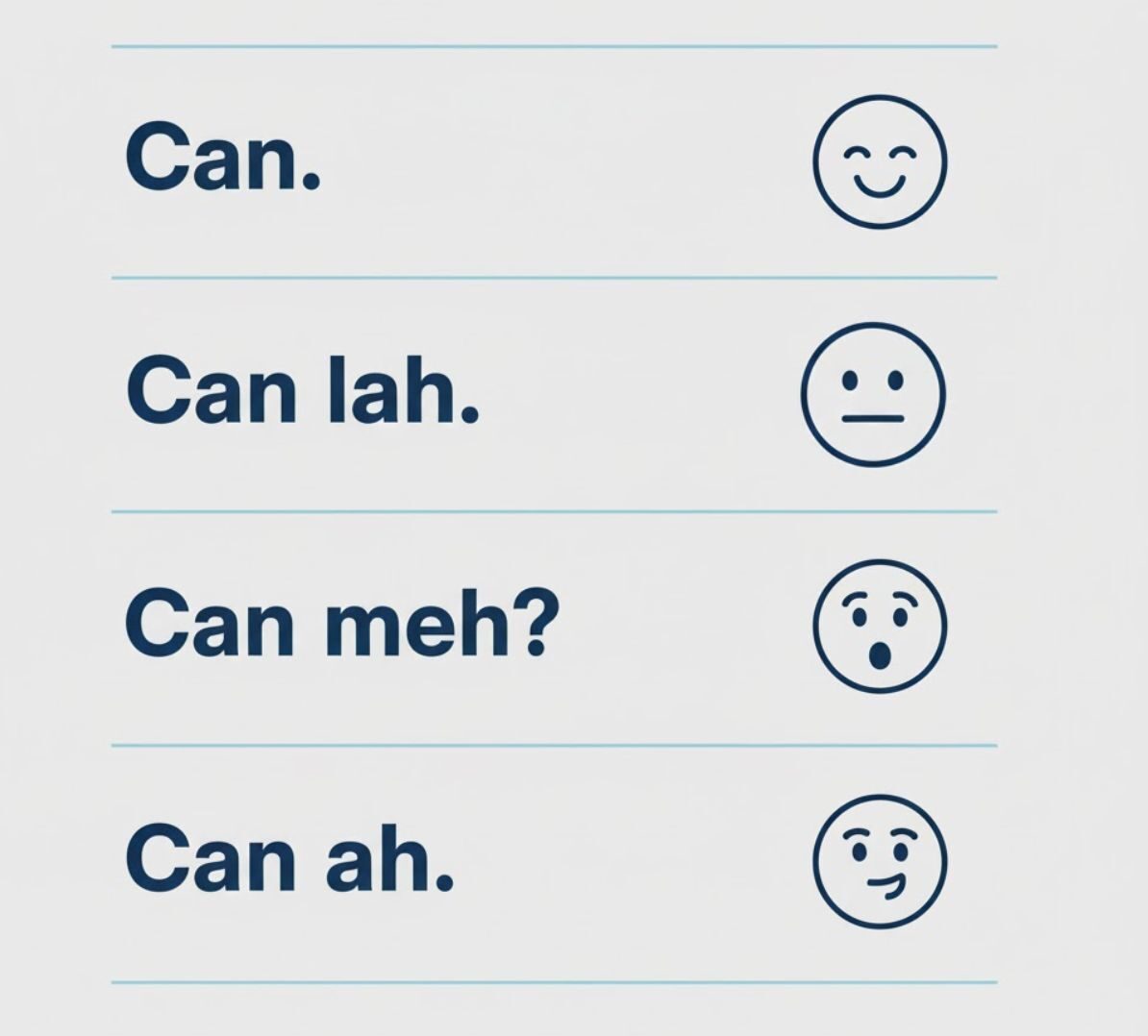
Can ah? | Is that okay? |
| Serious ah? | Are you serious? |
Really meh? | Really? |
| Why like that one? | Why is it this way? |
You sure or not? | Are you sure? |
Manglish Short Answers (Very Common)
Manglish | Meaning |
Can | Yes / Possible |
| Cannot | No / Not possible |
Can lah | Yes, it’s fine |
Cannot lah | Definitely not |
| Maybe can | Possibly |
See how | We’ll decide later |
Manglish Grammar Shortcuts (Translated)
Dropping “Is / Are”
Manglish | Standard English |
He very busy | He is very busy |
| This place crowded | This place is crowded |
Weather very hot | The weather is very hot |
No Past or Future Tense
Manglish | Standard English |
Yesterday I go there | I went there yesterday |
| Just now he call me | He just called me |
Tomorrow we meet | We will meet tomorrow |
Manglish Particles (Quick Reference)
Particles change tone, not meaning.
Particle | What It Does | Example |
lah | Softens / reassures | Can lah |
| leh | Mild doubt | I don’t think so leh |
lor | Acceptance | Like that lor |
meh | Questioning | Really meh? |
| ah | Confirmation | You coming ah? |
hor | Reminder | Don’t forget hor |
Manglish at Work (Casual Office Speech)
These are common in spoken workplace conversations.
Manglish | Professional English |
Can settle today? | Can this be completed today? |
| This one urgent | This is urgent |
Boss not free now | The manager is unavailable |
| Later I update you | I’ll update you later |
I help you check | I’ll check on this |
Tip: Avoid Manglish in emails to international clients.
Manglish Food & Hawker Phrases
If you eat in Malaysia, you’ll hear these.
Manglish | Meaning |
Tapau | Takeaway |
| Bungkus | Pack to go |
Add rice | Please add more rice |
| Less spicy | Make it less spicy |
No pork | Please exclude pork |
| One kopi O | One black coffee |

Manglish Slang Words
Word | Meaning |
Blur | Confused / unaware |
| Steady | Good / reliable |
Alamak | Oh no / Oops |
| Paiseh | Embarrassed |
Shiok/Syok | Very enjoyable |
Manglish “Why” & “What” Constructions
Manglish | Standard English |
Why you never tell me? | Why didn’t you tell me? |
| You want what? | What do you want? |
This one how much? | How much is this? |
| Like this how? | What should we do now? |
Quick Translation Rule (Bookmark This)
When translating Manglish to English:
- Ignore grammar
- Identify the situation
- Translate intent, not words
Example:
Manglish:
“Can lah, no problem.”
Meaning:
“Yes, that’s fine. It won’t be an issue.”
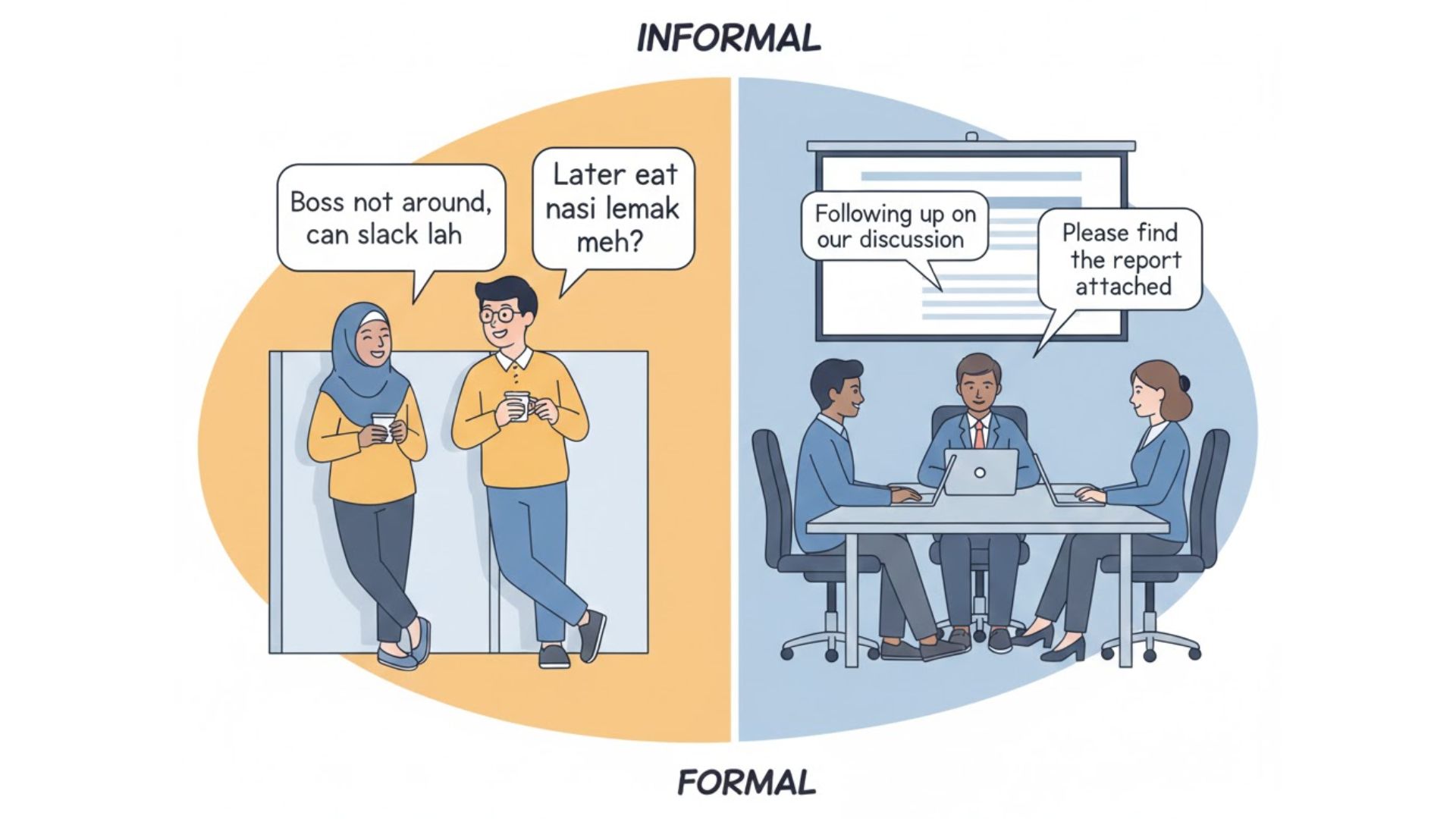
When You Should (and Shouldn’t) Use Manglish
Appropriate
- Casual conversations
- Chats with Malaysian friends
- Informal spoken settings
Avoid
- Formal writing
- Academic work
- Professional presentations
Understanding Manglish is essential, using it is optional.
Conclusion: Master Manglish, Master Malaysian Conversations
Understanding Manglish is more than just learning phrases, it’s about grasping the rhythm, tone, and culture of everyday Malaysian conversation. With this cheat sheet, you now have a handy reference for translating common Manglish phrases, interpreting particles like lah and leh, and navigating casual speech with confidence.
Whether you’re chatting with friends, traveling in Malaysia, or working with Malaysian colleagues, knowing Manglish makes communication smoother, friendlier, and more engaging.
If you want to continue improving your English skills and explore more practical language tips, visit Read, Your Language Learning Hub. From helpful guides to interactive resources, it’s designed to make learning English easy, fun, and accessible anytime you need it.