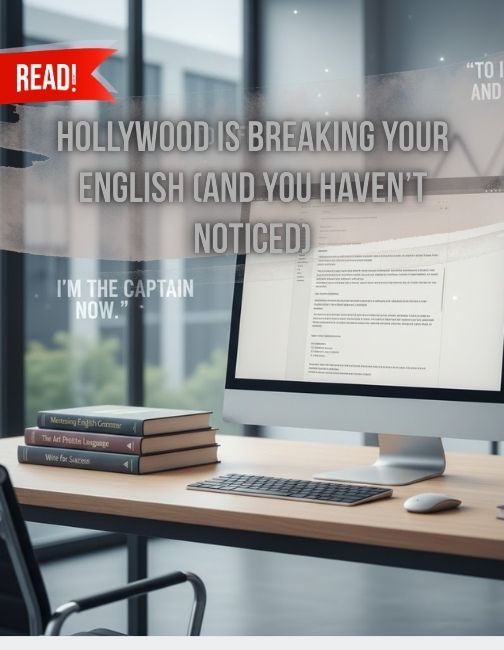
If you hear a lie often enough, it starts to feel like the truth. The same goes for English.
In 2026, we are drowning in content. Between 15-second TikTok trends and Netflix binges, we are bombarded by “broken” English disguised as cool catchphrases. The problem? You’re starting to use them in work emails, university essays, and job interviews.
Eventually, you become “language-blind.”
This is the Linguistic Shift. It’s when common errors become so trendy they evolve into a new, incorrect standard. At READ – Language Learning Hub, we see it every day: students who stop speaking English and start speaking “Script.”
It’s time to sharpen your Grammar Radar and stop the drift.
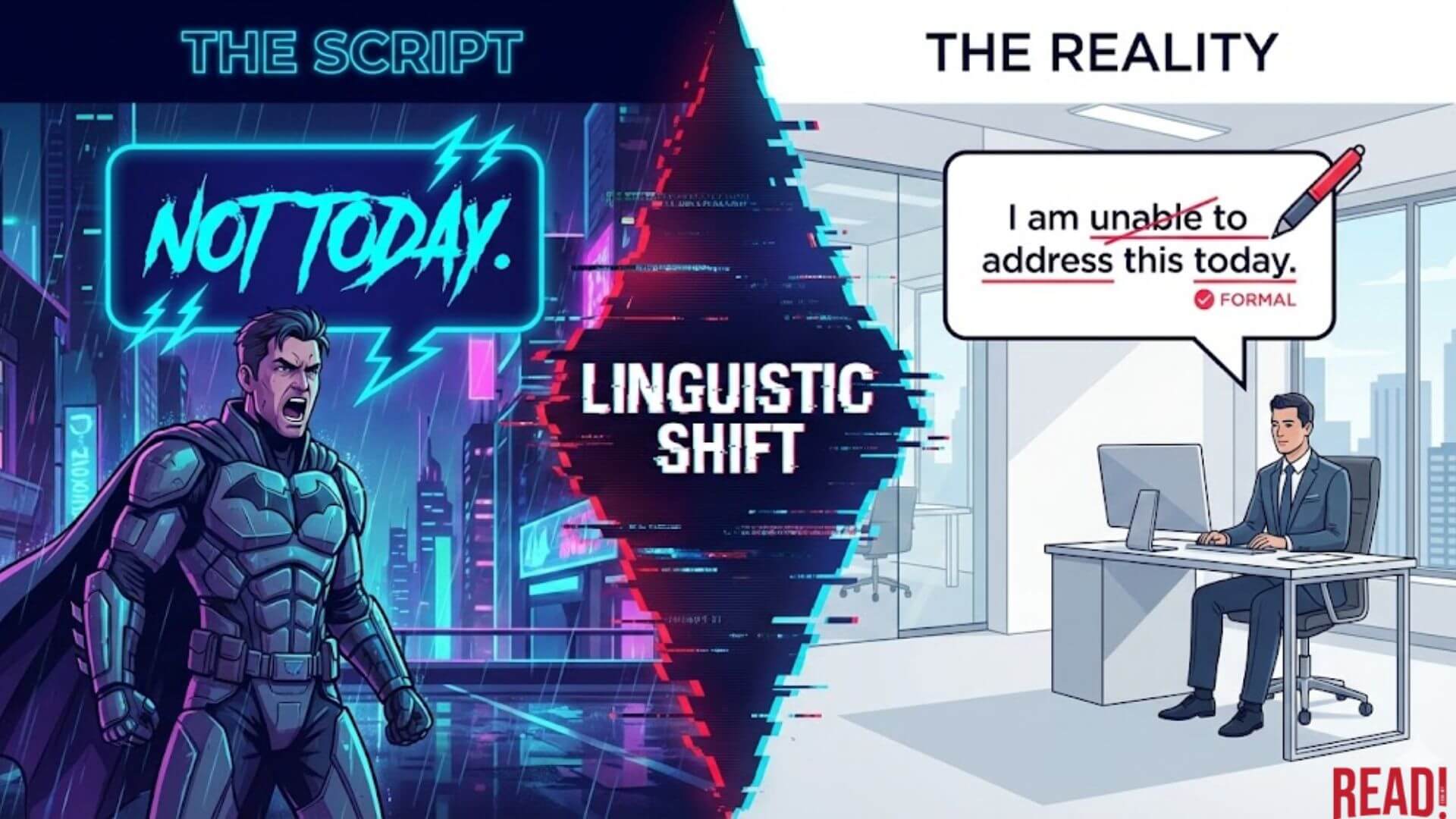
1. “Not today.“
- Source: Game of Thrones / Various
- How people use it: As a defiant “no” to a task, a person, or a bad vibe.
- The Problem: This is a Fragment. It has no subject and no verb. To understand how to build a sentence that actually works in a professional setting, check out our guide on Sentence Structure.
- The Professional Flip: “I am unable to address this matter today.”
2. “Apes together strong.“
- Source: Planet of the Apes
- How people use it: To describe teamwork or “strength in numbers” (usually in memes).
- The Problem: It’s missing the linking verb ($are$). It’s “Caveman Speak.” It strips English down to its barest, most broken bones.
- The Professional Flip: “Our collective strength ensures our success.”
3. “Why so serious?“
- Source: The Dark Knight
- How people use it: To tell someone they are overthinking or being too intense.
- The Problem: This is an Ellipsis. You’ve deleted the subject and the helping verb (“Why are you so serious?”). In a movie, it’s chilling. In a report, it looks lazy.
- The Professional Flip: “Could you explain the reason for your formal approach?”
4. “I’m the Captain now.“
- Source: Captain Phillips
- How people use it: To announce they are taking charge of a project or a meeting.
- The Problem: It’s missing the definite article ($the$). While the quote is iconic, skipping articles makes your English feel “telegraphic” and incomplete.
- The Professional Flip: “I have assumed responsibility for this unit.”
5. “To infinity and beyond!“
- Source: Toy Story
- How people use it: To show ambition or that a project has no limits.
- The Problem: Grammatically, this is a Prepositional Phrase masquerading as a sentence. It has no “action” (verb). You can’t go to infinity if you don’t use the word “go.”
- The Professional Flip: “We aim to exceed our current benchmarks indefinitely.”
6. “Main Character Energy“
- Source: Social Media / Modern Drama Trends
- How people use it: To describe someone with high confidence or leadership.
- The Problem: This is a Slang Noun Phrase. It turns an abstract feeling into a concrete identity, which confuses the “Subject-Verb” relationship for new learners.
- The Professional Flip: “She demonstrates exceptional leadership and presence.”
7. “Whatever it takes.“
- Source: Avengers: Endgame
- How people use it: To show absolute determination to finish a goal.
- The Problem: This is a Dependent Clause. It’s a “hanger-on” sentence that needs a main idea to survive. On its own, it’s grammatically homeless.
- The Professional Flip: “We will do whatever is necessary to ensure the project’s success.”
8. “I’m all in.“
- Source: Casino Royale / Various Poker Dramas
- How people use it: To show 100% commitment to a project or a person.
- The Problem: This is a Fragmented Idiom. It lacks a direct object. You are “in” what? In a movie, the context (the poker table) does the work. In an email, it’s a floating preposition.
- The Professional Flip: “I am fully committed to this project’s success.”
9. “Bond. James Bond.“
- Source: 007 Series
- How people use it: To introduce themselves with “authority” or mystery.
- The Problem: This is a Noun Appositive It has no verb. It’s just a name repeated for dramatic effect. If you introduce yourself like this in an interview, you’re not a secret agent; you’re someone who can’t finish a sentence.
- The Professional Flip: “My name is James Bond.”
10. “To be continued…“
- Source: Every TV Drama/Cliffhanger ever
- How people use it: To end a meeting or a conversation that isn’t finished yet.
- The Problem: This is a Passive Infinitive Phrase. It’s missing a subject. What is to be continued? The project? The meeting? The argument? Without a subject, the sentence is grammatically “homeless”. Mastering English Tenses ensures your audience always knows exactly when an action is taking place.
- The Professional Flip: “We will continue this discussion in our next session.”
Stop the Drift: Your Next Steps
The more you hear “Broken English” in movies, the more your brain accepts it. To stop this, you must practice Active Editing.
- Identify the Fragment: Next time you hear a cool movie line, ask: Is there a subject? Is there a verb?
- The “Formal Flip”: Try to rewrite that “cool” line so a CEO would say it.
- Check for “The Shift”: Are you using a word because it’s correct, or because you saw it on a viral clip?
Don’t let Hollywood write your story. If you’re ready to move past catchphrases and build a professional vocabulary, dive into our Grammar Complete Guide to master every rule of the game.
Conclusion: Own the Rule, Then Break the Script
Hollywood’s job isn’t to teach you English; it’s to make you feel something. When a character says, “Not today,” or “Apes together strong,” they are sacrificing grammar for impact. That is fine for a blockbuster, but it’s a trap for a language learner.
The Linguistic Shift is real. If you aren’t careful, the “broken” English of your favorite trending clips will become your default setting. In a world where everyone is starting to sound like a 15-second viral video, the person who can craft a complete, sophisticated, and grammatically perfect sentence is the one who stands out.
Don’t just repeat the script. Understand the structure. Once you master sentence composition, you’ll have the power to decide when to follow the rules and exactly when to break them for effect.
Master your foundations. Stop the drift. Start writing with intent at READ – Online Language Learning Platform.