
Have you ever heard politicians, news reporters, or social media users talk about jus soli during discussions about citizenship or nationality?
Many people see the term online but still wonder:
- What does jus soli actually mean?
- Why is it important?
- Is Malaysia using prinsip jus soli?
- What’s the difference between jus soli and jus sanguinis?
Don’t worry, this guide explains everything in a simple and beginner-friendly way.
What Does Jus Soli Mean?
Jus soli is a Latin legal phrase that translates to:
“right of the soil”
In simple words, it refers to a citizenship principle where a person becomes a citizen because they were born in a country.
Under the principle of jus soli (known in Malay as prinsip jus soli, meaning ‘hak tempat lahir’), the place of birth is the main factor used to determine nationality.
“If you are born in this country, you may become its citizen automatically.”
This system is commonly called:
- citizenship by birth
- birthright citizenship
- nationality by birthplace
Pronunciation of Jus Soli
Because it is a Latin phrase, people are often unsure how to say it. Different pronunciations may exist,but the most common pronunciation in English conversations is: joos SOH-lie.
Real-Life Example of Jus Soli
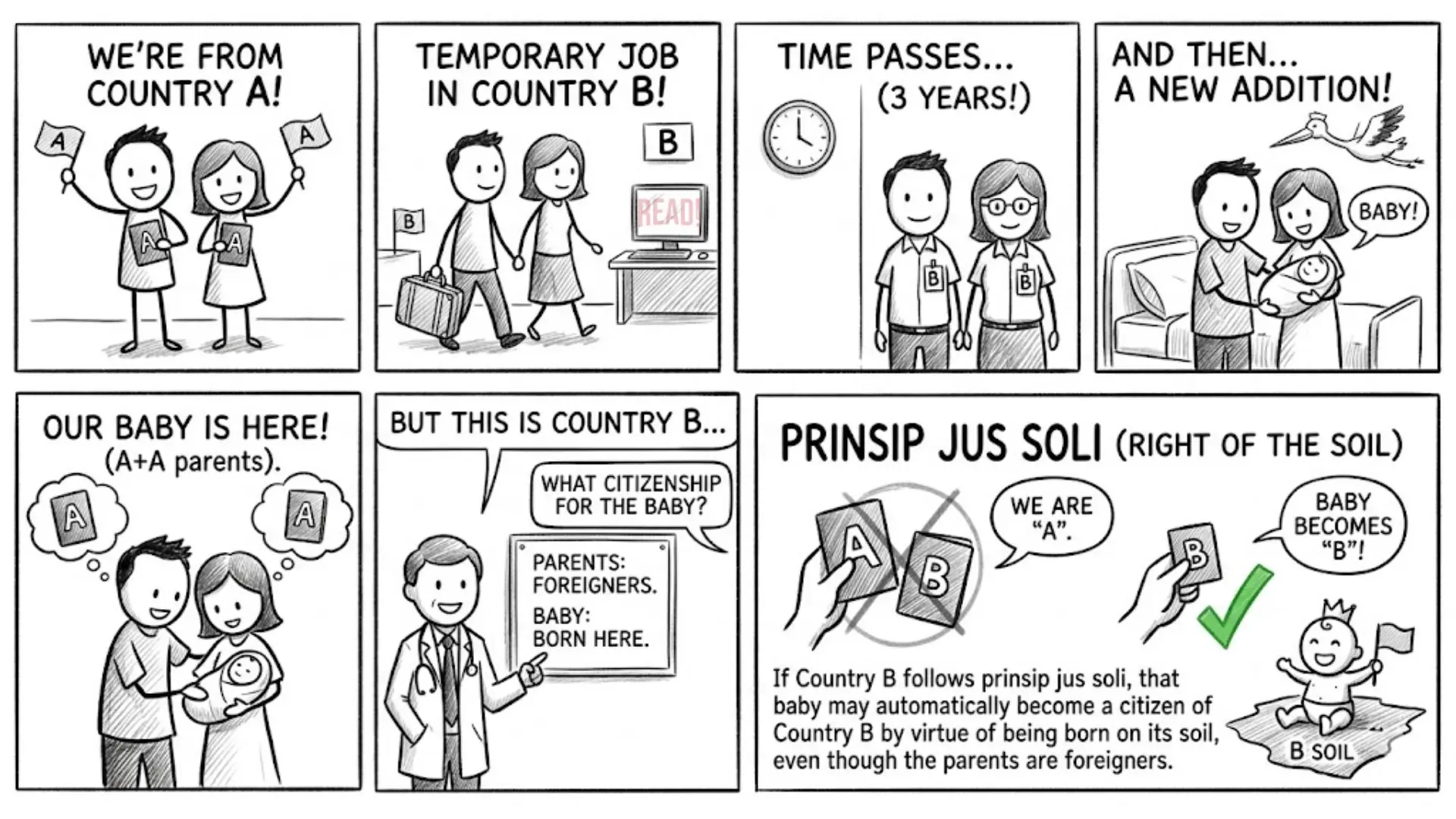
Imagine a couple from Country A is temporarily living and working in Country B. While there, they have a baby.
If Country B follows prinsip jus soli, that baby may automatically become a citizen of Country B by virtue of being born on its soil, even though the parents are foreigners.
Countries That Use Jus Soli System
Some countries are famous for practicing unrestricted or full jus soli. Examples include:
- The United States
- Canada
- Mexico
- Brazil
However, citizenship laws vary globally. Some nations practice full jus soli, while others use a restricted or mixed system with specific exceptions.
Does Malaysia Use Prinsip Jus Soli?
No, Malaysia does not practice pure or unrestricted jus soli like the United States or Canada.
Instead, Malaysia mainly follows a different legal principle called jus sanguinis (the “right of blood”). This means a child’s citizenship is primarily determined by their parents’ nationality and legal status at the time of birth, rather than the physical location of the birth.
Because Malaysia’s citizenship laws involve strict Federal Constitution rules and registration conditions, the topic of prinsip jus soli frequently becomes a sensitive political or historical discussion.
Jus Soli vs Jus Sanguinis
These two terms are almost always debated together. Here is an easy way to understand the difference:
| Principle | Translation | Citizenship Based On |
| Jus Soli | Right of the soil | Place of birth |
| Jus Sanguinis | Right of blood | Parents’ nationality / bloodline |
Easy Memory Trick: Think Soli = Soil. If you associate soli with the land or dirt you are born on, you will always remember its meaning!
Why Do People Debate Jus Soli?
It sparks debate because citizenship directly impacts national identity, voting rights, and social benefits.
- Supporters argue that jus soli prevents statelessness and gives equal opportunities to children born locally.
- Critics argue that it can complicate national identity issues or potentially encourage illegal immigration.
Because of this, many countries carefully control how jus soli is applied.
Other Useful Legal Terms to Know
English frequently borrows Latin phrases for legal and philosophical contexts. To help you better understand global news and political debates, here are a few related terms:
- Citizenship: Legal membership in a country.
- Naturalisation: The legal process of becoming a citizen of a country later in life.
- Stateless: A person who is not recognised as a citizen by any country.
Conclusion
The meaning of jus soli is far simpler than its formal legal phrasing suggests. At its core, it represents the foundational idea that being born on a country’s soil can grant a person the automatic right to citizenship. Whether you are analysing global immigration policies, studying constitutional history, or trying to follow local political debates, mastering terms like prinsip jus soli is a fantastic way to sharpen your real-world vocabulary.
If breaking down this Latin phrase has sparked your interest in how words shape our understanding of the world, exploring comprehensive online learning resources and educational guides can help you master complex topics easily. Cultivating a deeper understanding of global concepts not only makes navigating daily news much simpler, but it also helps you build a smarter, more informed perspective every single day.