




Sip Like a Local: Your Guide to Order Malaysian Drinks

Facebook
LinkedIn
Twitter
WhatsApp
Email
Table of Contents
Couple having Malaysian drinks of Teh O Limau Iced

Key Takeaways

  • The Suffix System: Use “O,” “C,” “Peng,” and “Kosong” to customise any tea or coffee.
  • Condensed vs. Evaporated: Condensed milk is very sweet; evaporated milk (C) is creamy but requires you to specify if you want sugar.
  • The “Pull” Matters: Teh Tarik isn’t just about the mix; the pulling aerates the tea and improves the flavour.
  • Sugar Levels: Malaysian drinks are famously sweet. If you prefer less sugar, always add the phrase “kurang manis.”
  • Caffeine-Free Options: If you aren’t a fan of tea or coffee, look for Barley, Asam Boi, Kedundung, Chrysanthemum, or Sirap on the list.

Stepping into a kopitiam or a mamak for the first time can feel like entering a different world. You’ll hear waiters shouting orders like “Teh O Peng!” or “Kopi C Kosong!” that sounds more like a secret code than a drink request.

Understanding how to navigate the popular Malaysian drinks scene is a rite of passage for any culture or language learner. It’s not just about quenching your thirst; it’s about mastering the “shorthand” that keeps the country caffeinated and refreshed.

The Logic Behind the Names

Most Malaysian drinks follow a simple linguistic formula. Once you learn these six ‘building blocks’ ranging from flavor modifiers to ordering instructions, you can navigate any Malaysian drinks menu like a local:

  1. O: Means no milk. Derived from the Hokkien word for “black” (). Originally used to describe black coffee (kopi-o), it has become a universal suffix indicating that the drink is served without milk but still with sugar. You can think of it as “original” or “only” the tea or coffee essence.
  2. C: Refers to the use of evaporated milk. The “C” is commonly believed to have originated from the brand Carnation, which was once a widely used evaporated milk brand in the region. Some also suggest it may come from susu cair (“evaporated milk” in Malay). It makes the drink creamier and less sweet than versions made with condensed milk.
  3. Peng: Derived from the Cantonese word for “ice” (bīng). If you do not specify peng at a traditional Chinese kopitiam, your drink will arrive steaming hot by default. Note that this is a localised term; if you are at a non-Chinese establishment, using the word “ice” is the standard way to ensure you get a cold drink.
  4. Kosong: The Malay word for “zero” or “empty”, meaning the drink is served without sugar.
  5. Gao (or Kaw): Derived from the Hokkien word for “thick” (). It signals that you want a stronger, more concentrated flavour. This is perfect for drinks made from powder (like Milo, Nestum or Horlicks) or traditional coffee and tea, as the server will use extra scoops of the base ingredient to create a bolder taste.
  6. Bungkus (or Tapau): These terms mean “to take away” or “to-go.” Bungkus is the Malay word for “to wrap,” while tapau is the Cantonese slang widely used in Malaysian. Interestingly, locals often order their drinks bungkus even when dining in. Because the portion is larger (just slightly more expensive) than a standard cup, it is the perfect way to ensure you have enough drink to last through a long session of mamak conversation.

Note: The “base” version of a drink at a mamak or kopitiam usually includes both condensed milk and sugar. The suffixes listed above act as adjustments to this default preparation.

Popular Malaysian Drinks to Start With

If you are looking for a place to start, here are the heavy hitters you’ll find on every Malaysian drinks menu or list:

  • Teh Tarik: The “pulled tea.” It’s black tea mixed with condensed milk, poured back and forth to create a frothy head. It’s one of the most commonly ordered drinks at mamaks!
  • Cham: A classic “mash-up” drink that’s familiar in many Malaysian coffee shops. Derived from the Cantonese word for “mix,” this drink is a hybrid of coffee and tea (usually with milk). It offers the caffeine kick of coffee with the aromatic finish of tea, perfect for those who can’t decide between the two.
  • Sirap Bandung: A vibrant pink, nostalgic drink made with rose syrup and condensed milk. It’s sweet, floral, and incredibly refreshing.
  • Milo Dinosaur: A cold cup of Milo (chocolate malt drink) topped with a massive, un-dissolved mountain of extra Milo powder.
  • Limau Asam Boi: Fresh lime juice mixed with a salty, dried preserved plum. It’s the perfect “thirst-quencher” on a humid afternoon.
  • Teh O Limau Ice: A refreshing, iced black tea infused with fresh lime. The “O” signifies that it is served without milk, while the “Limau” adds a zesty, citrus kick that cuts through the sweetness, making it a staple for cooling down on a sweltering day.

How to Order Like a Pro

Ready to try it out? Here’s a quick cheat sheet for your next outing:

  • If you want an iced black coffee with no sugar: “Kopi O Peng Kosong, satu!”
  • If you want a hot tea with evaporated milk and sugar: “Teh C, satu!”

Mastering these orders is a practical way to get comfortable with local ordering phrases and improve your pronunciation while immersing yourself in the local rhythm. For a deeper look at the food that pairs perfectly with these beverages, don’t forget to visit our guide to Malaysian Food.

If you are still feeling a bit nervous about speaking up, more guidance is available on our language learning site

Mix Your Malaysian Drinks!

Choose ingredients below to generate a Malaysian drink order.

Black coffee ingredients
Original tea ingredients
Evaporated milk
Condensed milk
white sugar
Big red question mark
Let’s see what drink you will get!

Example combinations:

BaseMilkSugarIceMalaysian Drinks
Black CoffeeNoYesOptionalKopi O
TeaEvaporatedYesOptionalTeh C

FAQs About Ordering Malaysian Drinks

What is the difference between "Teh" and "Teh Tarik"?

Technically, Teh is simply tea with milk, while Teh Tarik specifically refers to the “pulled” version. At a mamak, the base ingredients are identical; however, the “tarik” process, the act of pulling the tea between two mugs, is what creates the signature foam and velvety, smooth texture that makes it a Malaysian icon.

Why is it called "Kopi C"?

The “C” is widely believed to come from the brand Carnation, which was the most common evaporated milk used in old-school coffee shops.

Is Milo a Malaysian drink?

While Milo is a global brand, Malaysia is the world’s largest consumer of it! It is considered a staple “national” chocolate drink.

What does "Ikat Tepi" mean?

If you order your drink for takeaway in a plastic bag, ikat tepi translates to “tied on the side.” This creates a convenient loop, allowing you to carry the drink by your finger while sipping through a straw. 

Alternatively, if you are traveling and don’t want it to spill, you can ask for ikat mati (“dead knot” or “tied tight”). This secures the bag completely, preventing any leaks while you carry it or set it on a table. Once you are ready to drink, you can simply undo the ikat mati and tie it into an ikat tepi yourself!
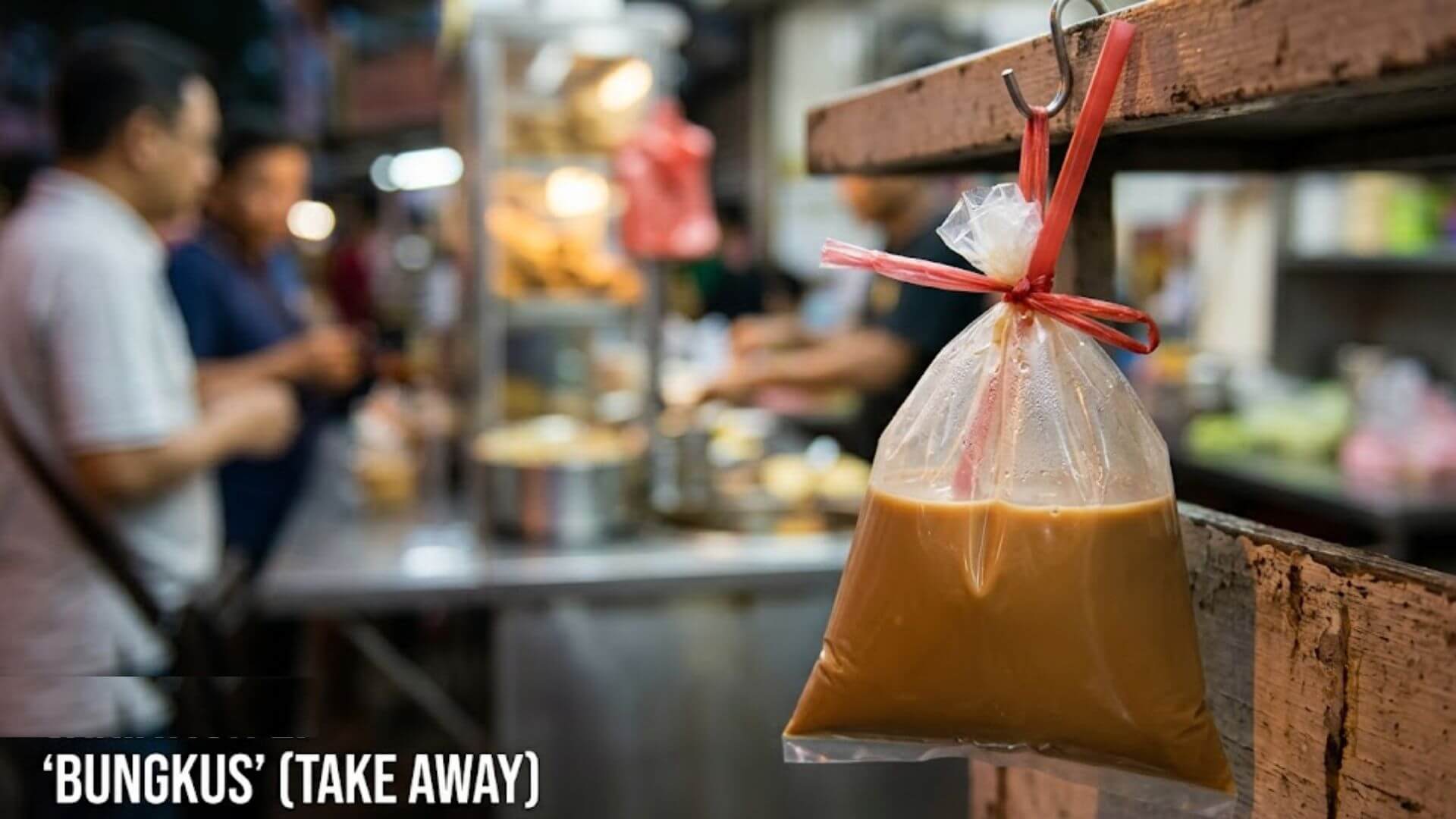
An 'ikat mati' teh hanging aside
Example of Ikat Mati

How do I order "Teh Tarik" like a local?

You can simply say “Teh Tarik satu” (one pulled tea). If you prefer it less sweet, just ask for “Teh Tarik kurang manis.”

What is the best time to visit for a full experience?

While breakfast is great, the mamak really comes alive at night. Visit around 9:00 PM to experience the vibrant, social atmosphere that locals love.


Related Post