What Does Kitsch Actually Mean?
At its core, kitsch (pronounced kitch) refers to art, objects, or design that are considered to be in poor taste because of excessive sentimentality or garishness.
However, the definition has evolved. In the 20th century, if a critic called your home “kitschy,” they were insulting your intelligence. Today, saying a cafe is “wonderfully kitsch” is often a compliment to its quirky, maximalist, and fun aesthetic.
Examples:
- Souvenir shops filled with novelty mugs and figurines
- Mass-produced paintings designed to look “romantic”
Simple term: Kitsch refers to objects or art that many people consider tasteless or overly sentimental, especially when they are made to appeal to popular taste.
Origin & History of the Word “Kitsch”
Most dictionaries give you a one-word origin: German. But the story is much richer.
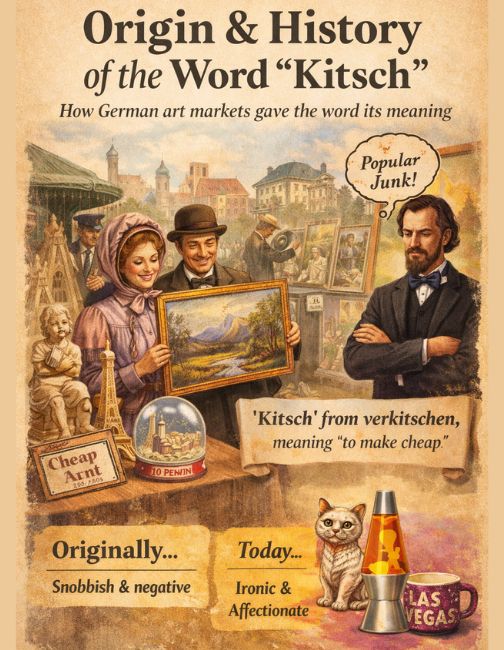
In the 1860s and 1870s, the city of Munich was an art hub. As the middle class grew, people wanted to buy art to look sophisticated but they couldn’t afford “High Art.” Enterprising dealers began selling cheap, mass-produced sketches and sculptures.
Elite artists coined the term kitsch (from the German verkitschen, meaning “to make cheap”) to look down on these popular items. It was originally a weapon of “snobbery” used to distinguish “true” art from “popular” junk.
Today, the meaning has expanded. While kitsch was once strongly negative, modern usage can be ironic or even affectionate.
How is “Kitsch” Used in Everyday English?
1. Negative or Critical Use
“The decorations felt kitsch and poorly made.”
Here, kitsch suggests bad taste or low quality.
2. Ironic or Playful Use
“She loves kitsch décor, neon lights, plastic flamingos, and retro posters.”
In this case, kitsch is used knowingly and even positively.
3. Cultural or Design Discussions
The word is common when talking about:
- Interior design
- Art and exhibitions
- Fashion trends
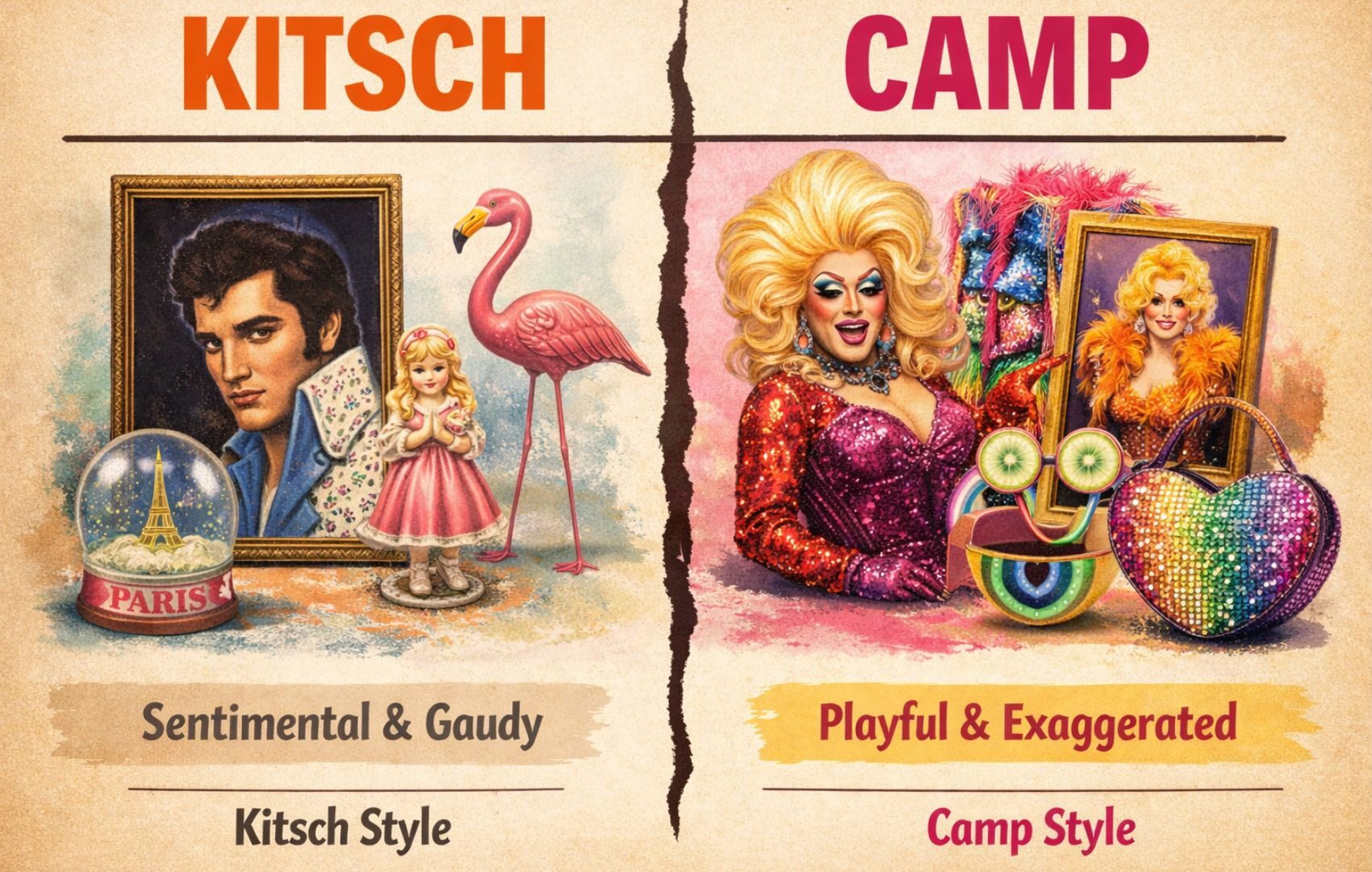
Everyday Examples of Kitsch
You see kitsch every day, even if you don’t realize it. Here are some classic examples:
- Souvenirs: Think of those “I Love MY” mugs or plastic miniature Towers of KLCC.
- Garden Decor: The classic lawn flamingo or the ceramic garden gnome.
- Holiday Overload: Homes that are so covered in Christmas lights and inflatable Santas that you can see them from space.
- “Crying Boy” Paintings: Mass-produced art designed to trigger a quick emotional response.
Kitsch vs Similar Words (Important Differences)
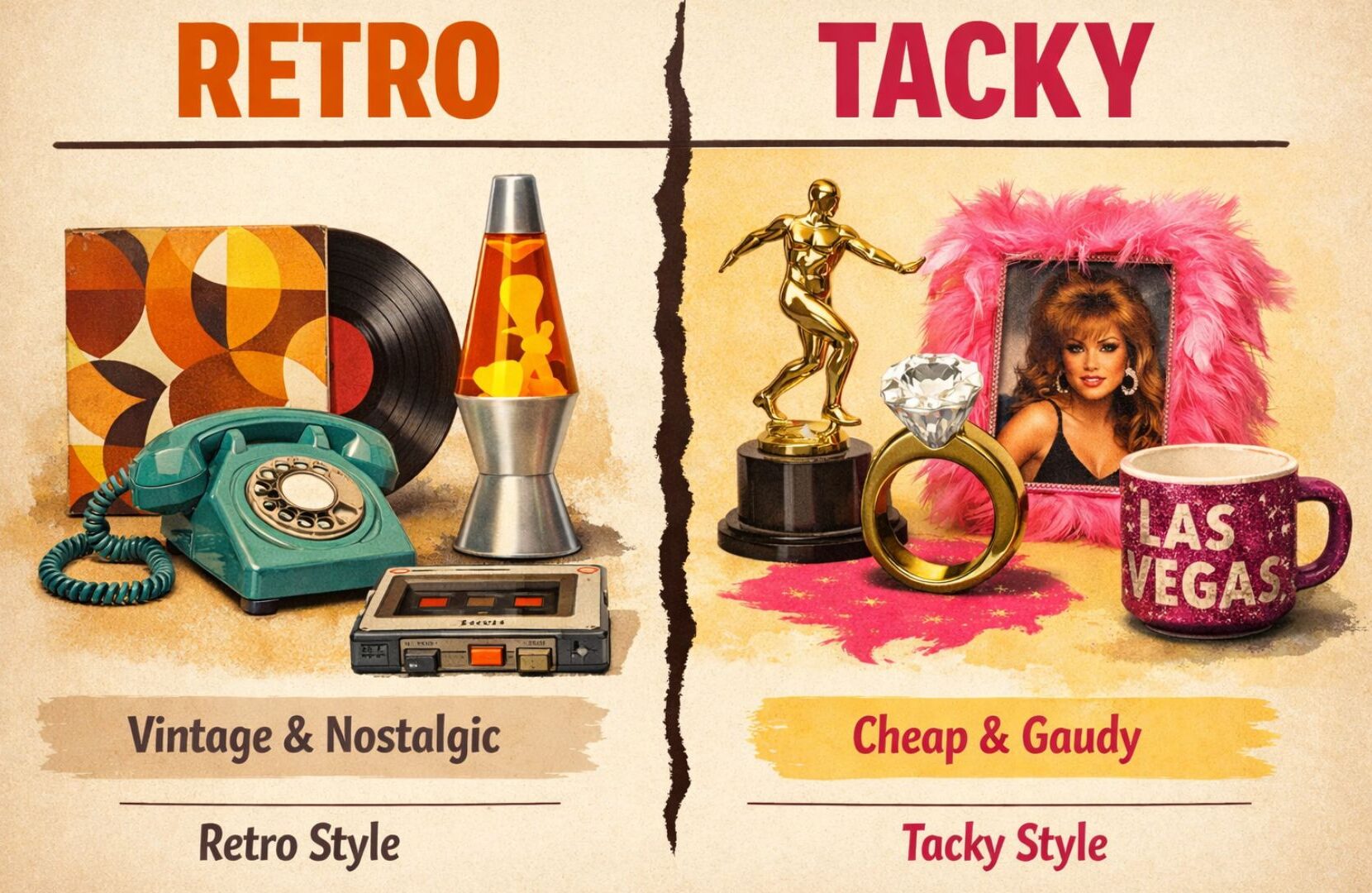
One of the biggest struggles for learners is knowing when to use kitsch versus similar words. Use this table to master the nuance:
| Word | Main Meaning | Tone | Typical Use |
| Kitsch | Overly sentimental or tasteless art | Critical or ironic | Art, design, culture |
| Tacky | Cheap and Low Quality | Strongly negative | Clothes, décor |
| Gaudy | Too bright or flashy | Negative | Colours, jewellery |
| Camp | Deliberately exaggerated | Often positive | Fashion, performance |
| Retro | Style from the past | Neutral or positive | Design trends |
Why People Love Kitsch
In recent years, the world has shifted away from the minimalist “sad beige” aesthetic and embraced maximalism.
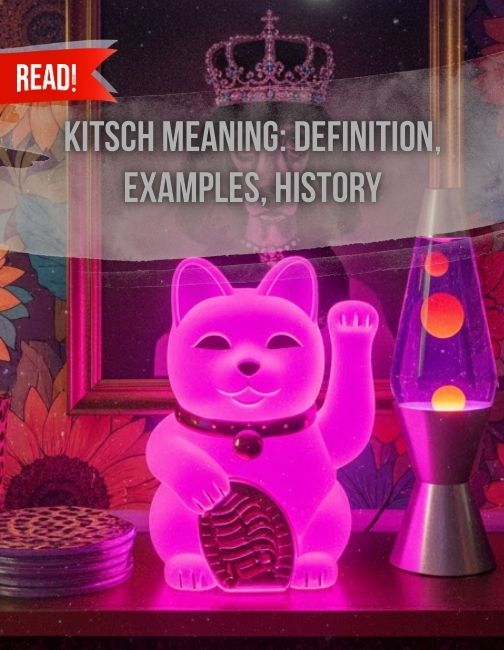
People are celebrating kitsch for its human touch and joyful vibe. While “High Art” can feel cold and intimidating, something as simple as a lava lamp or a collection of vintage Pez dispensers evokes a sense of nostalgia and fun. It’s a way of saying, “I don’t care what critics think; I love what makes me smile.”
Though kitsch was once criticized by artists and critics, it’s now widely embraced. Here’s why:
- Nostalgia: Reminds people of their childhood or the past.
- Humour: The exaggerated style often brings a sense of fun and laughter.
- Rebellion: A rejection of traditional ideas of “good taste” and artistic conventions.
In modern design and pop culture, kitsch is used intentionally to inject personality and create a joyful, welcoming atmosphere.
Common Mistakes to Avoid
1. Don’t call everything ugly “kitsch.”
If a building is falling apart and dirty, it’s just “dilapidated.” It’s only kitsch if it’s trying to be decorative or artistic in a “loud” way.
2. Pronunciation
Remember, the ‘s’ and ‘ch’ blend. It rhymes with “pitch.”
3. Context Matters
In a formal art gallery, “kitsch” is still an insult. In a trendy interior design magazine, it’s a “bold choice.”
Conclusion
Kitsch is the “comfort food” of the art world. It might not be sophisticated, and it might be a little too sweet, but it brings a sense of personality and playfulness to our lives.
The kitsch meaning goes beyond “bad taste.” It reflects changing ideas about art, emotion, and popular culture. While once used mainly as criticism, kitsch today can be ironic, playful, or even admired.
For English learners, understanding kitsch helps you talk more naturally about art, design, and culture and recognise how meaning changes with context. This level of nuanced comprehension is a major milestone in your language learning journey, it’s where you stop simply translating words and start feeling the culture behind them.
Next time you see a neon-pink cat clock with swinging eyes, don’t just call it tacky, call it kitsch, and appreciate the history behind the glitter.