

Understanding the word “psycho” is more than just knowing its dictionary definition. It’s a word loaded with slang usage, emotional tone, cultural influence, and common misunderstandings, especially for English learners.
In this guide, we’ll break down the psycho meaning, how it’s used in real life, where it comes from, and when you should (and shouldn’t) use it, as part of our English vocabulary resources at read.com.my, where we focus on real English usage, not just textbook definitions.
What Does “Psycho” Mean?
Psycho is an informal and often offensive word used to describe a person who seems mentally unstable, unpredictable, or frightening.
It can be used as:
- A noun: “He’s a psycho.”
- An adjective: “That was a psycho reaction.”
Important: In modern English, psycho is not a medical term. It’s mostly slang and can sound rude or insensitive.
Psycho Meaning (Simple Definition)
In simple terms, psycho means someone who behaves in an extreme, irrational, or scary way.
People often use it to express:
- Shock
- Fear
- Anger
- Exaggeration (not always literal)
Example: “He drove 180 km/h in the rain, total psycho move.”
Is “Psycho” a Medical or Psychological Term?
No. Although the word comes from psychology-related roots, “psycho” is NOT a clinical diagnosis.
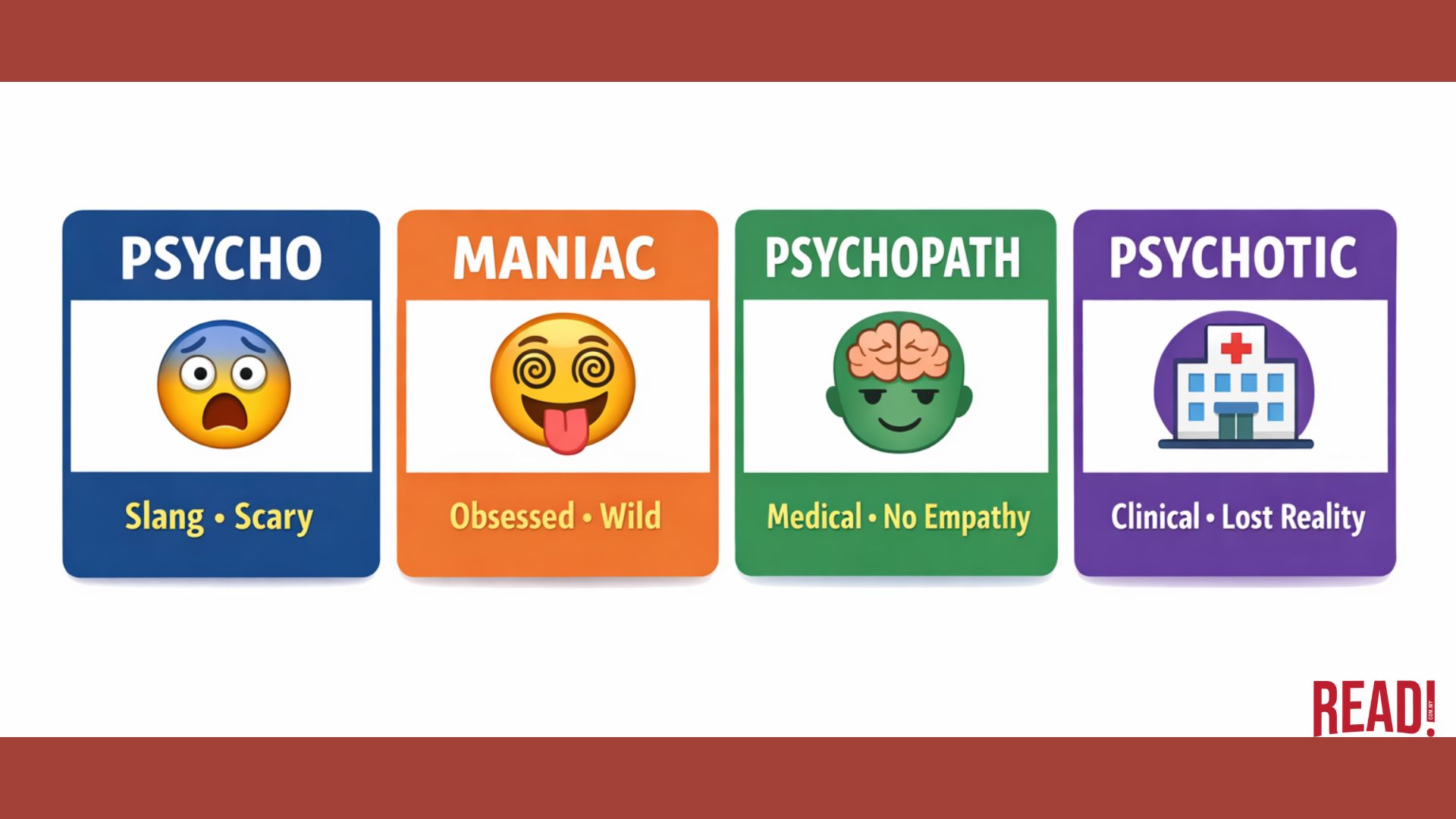
People often confuse it with real medical terms like:
- Psychopath: a specific personality disorder
- Psychotic: a mental state involving loss of reality
- Psychosis: a serious mental health condition
Calling someone a “psycho” is usually incorrect and misleading in a psychological sense.
Origin & Etymology of “Psycho”
The word psycho comes from the Greek word “psyche”, meaning:
- mind
- soul
- spirit
Originally, psycho- was a prefix used in neutral academic words like:
- psychology
- psychosomatic
- psychotherapy
Over time, English speakers shortened longer terms like psychopath and psychotic into the slang word “psycho”, giving it a negative and dramatic tone.
How “Psycho” is Used in Everyday English
1. Slang & Casual Speech
In casual conversation, people often use psycho hyperbolically (not literally):
“That exam was psycho hard.” “My boss went psycho during the meeting.”
Here, it simply means extreme, intense, or unreasonable.
2. Describing Dangerous or Scary Behavior
Sometimes, it’s used more seriously:
“The attacker was acting like a psycho.”
This usage is stronger and more negative, often linked to fear or danger.
3. Pop Culture Usage
Movies, music, and social media have shaped the word’s tone:
- The movie Psycho (1960)
- Song titles like “Sweet but Psycho”
- Viral slang on TikTok and memes
Pop culture often dramatises the word rather than using it literally.
Is “Psycho” Offensive?
Yes, it can be.
Because it links bad behavior to mental illness, many people see it as:
- Stigmatising
- Insensitive
- Inappropriate in professional or serious contexts
Better Alternatives (Depending on Meaning)
Instead of psycho, consider:
- unpredictable
- aggressive
- irrational
- reckless
- extreme
Choosing the right word makes your English sound more accurate and respectful.
Grammar Notes
- Singular: psycho
- Plural: psychos
- Adjective use: psycho behavior, psycho reaction
- Prefix form: psycho- (related to the mind)
Examples: “That was a psycho decision, quitting your job without a backup plan.”
Common Mistakes English Learners Make
- Using “psycho” as a medical or psychological term
- Using it in formal or academic writing
- Calling real people “psycho” without understanding tone or context
Understand “psycho” for slang and media, but avoid using it in formal, academic, or sensitive situations.
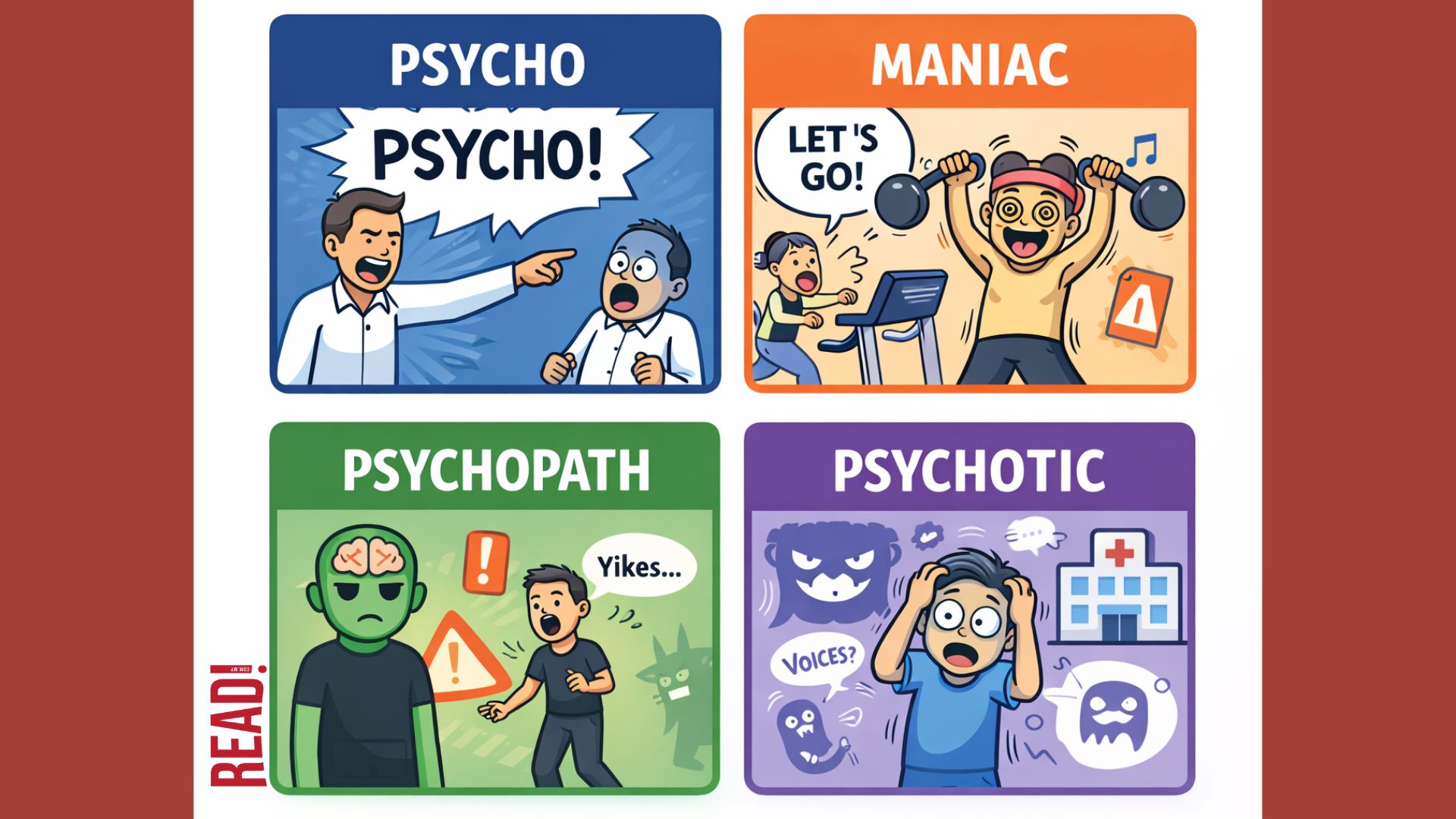
Psycho vs Psychopath vs Psychotic (Quick Comparison)
Term | Is it medical? | Meaning | Common Usage |
Psycho | ❌ No | Informal slang for someone acting extreme, irrational, or scary | Casual speech, movies, slang |
| Psychopath | ✅ Yes | A diagnosed personality disorder with lack of empathy or remorse | Psychology, crime discussions |
Psychotic | ✅ Yes | A mental state involving loss of contact with reality | Medical and clinical contexts |
Maniac Meaning: How is It Different from Psycho?
Maniac is another word people often confuse with psycho, but the meaning and tone are slightly different.
A maniac usually refers to someone who behaves with wild, obsessive, or uncontrollable enthusiasm or energy. It can be negative, but it’s often less connected to mental illness than the word psycho.
Examples:
“He’s a fitness maniac, he trains twice a day.”
“She laughed like a maniac.”
In modern English, maniac is frequently used playfully or exaggeratively, especially to describe obsession rather than danger.
Psycho vs Maniac (Quick Difference)
Word | Main Idea | Tone | Example |
Psycho | Dangerous, irrational, scary behavior | Strong, negative | “That driver went psycho.” |
| Maniac | Obsessive or uncontrolled energy | Often playful or dramatic | “He’s a coffee maniac.” |
Tip for learners: Maniac is usually safer and more casual than psycho, especially in friendly conversations.
Conclusion
Understanding the psycho meaning isn’t just about memorising a definition, it’s about knowing tone, context, and impact.
Words like psycho, maniac, psychopath, and psychotic may sound similar, but they carry very different meanings and levels of seriousness. Some are casual slang, some are medical terms, and some can be offensive if used carelessly.
For English learners, the goal is simple:
- ✅ Understand these words when you hear them in movies, songs, or online
- ⚠️ Use them carefully, paying attention to tone and situation
- ❌ Avoid them in formal, academic, or sensitive conversations
Mastering these nuances will help you sound more natural, confident, and respectful in real English.