
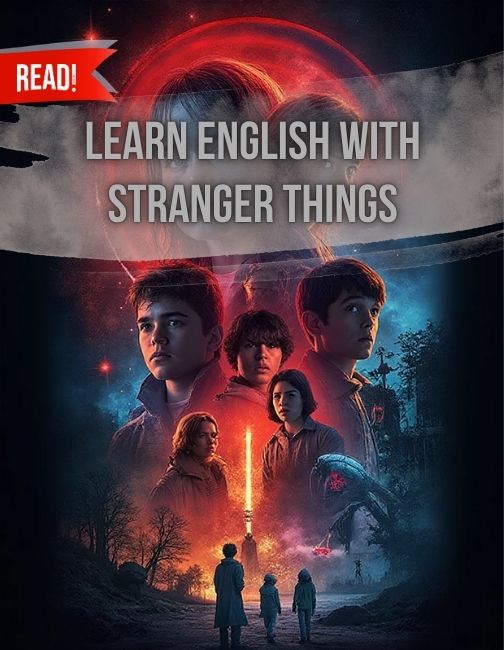
Stranger Things Season 5 remains one of the most streamed shows this month on Netflix. The mix of mystery, friendship, fear and supernatural battles gives you more than entertainment. It provides vocabulary that is practical, emotional and easy to remember because it is linked to powerful scenes. Below is a detailed guide to vocabulary you can learn from the show, complete with story driven examples so the meaning stays in your mind.
1. Upside Down
In the show this refers to a parallel world, but in everyday talk it can mean “a situation that is completely confused or chaotic.”
Meaning: A confusing or chaotic version of reality.
Example: Imagine waking up and your entire house looks familiar but feels darker. Chairs are floating, your kitchen clock is ticking backward and there is a cold fog on the floor. You are still in your house, but it is the Upside Down version of it.

2. Stranger
Means someone you do not know. The title Stranger Things plays with this meaning and adds mystery.
Meaning: A person you do not know.
Example: You are cycling home and someone calls your name from a distance. You turn around but you do not recognise the face. A stranger knowing your name instantly creates tension, just like the opening scenes of Stranger Things.

3. Geeky
Used for people who are very into games, science, or computers.
Meaning: Someone very interested in science, maths or technology.
Example: Dustin proudly explains the rules of a Dungeons and Dragons battle while his friends listen. He talks fast, smiles wide and corrects everyone’s calculations. That passionate energy captures the meaning of geeky.

4. Binge watch
Watch many episodes in one sitting. A very popular term in streaming culture.
Meaning: Watching many episodes without stopping.
Example: You tell yourself you will only watch one episode. Suddenly it is 2 a.m. and Netflix is asking if you are still there. That is true binge watching energy.

5. Cliffhanger
A cliffhanger is a dramatic ending that leaves you desperate for the next episode.
Meaning: A dramatic ending that leaves you desperate for the next episode.
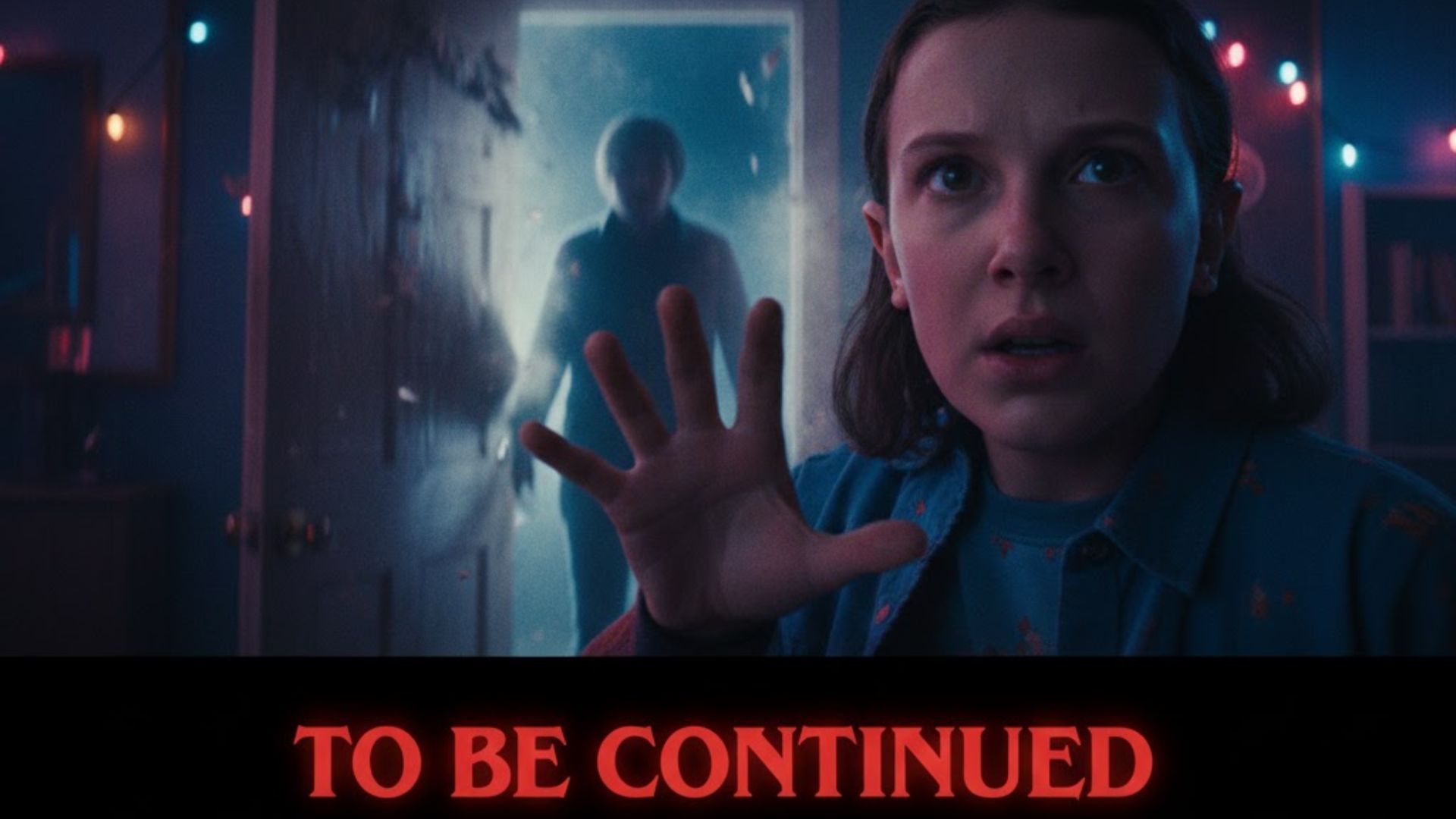
Example: Eleven finally opens the door to reveal someone from her past. The camera zooms in, the screen cuts to black and you shout at the TV. That moment is a cliffhanger.
6. Sidekick
A close friend who helps the main character.
Meaning: A loyal helper to the main hero.
Example: Robin racing behind Steve with a plan, carrying tools, shouting advice and covering his back. She is the perfect sidekick, always present when the stakes rise.
7. Suspense
That uneasy, edge-of-your-seat feeling when you don’t know what’s coming next.
Meaning: A feeling of waiting for something scary or important.
Example: The group stands outside the abandoned house. The lights flicker, something crawls on the ceiling and everyone is silent. Suspense is the tight feeling in your chest right before something happens.

8. Plot twist
That shocking moment when the story suddenly goes in a direction you didn’t expect.
Meaning: A sudden surprise in the story.
Example: You think the villain is defeated. Then the wall cracks open and another creature emerges. That sudden shock, which flips everything, is a plot twist.

9. Reveal
That moment when hidden secrets finally come to light.
Meaning: To show hidden information.
Example: When Eleven learns how Vecna became who he is, the entire story shifts. The audience experiences the reveal at the same moment she does.
10. Threat
That looming sense of danger you can’t ignore.
Meaning: Something that could cause danger or harm.
Example: The Mind Flayer forming a massive shadow over Hawkins makes the danger feel real. That shape in the sky represents a threat that no one can ignore.

11. Ally
That trusted friend who has your back when it matters most.
Meaning: Someone who supports you.
Example: Max standing beside Eleven during a dangerous confrontation shows the meaning of an ally. She stays even when she is afraid.

12. Resilience
The strength to keep going, even when things get tough.
Meaning: Ability to recover from difficulty.
Example: When the characters lose battles but return stronger, you see resilience. They rest, regroup and fight again even when the odds look impossible.

13. Heroic
That courageous act that inspires others, even in danger.
Meaning: Showing great courage.
Example: A character holding back a monster long enough for their friends to escape shows heroic bravery even when the character knows the risk.

14. Navigate
Finding your way through challenges, step by step.
Meaning: To find your way through a difficult place.
Example: The group moves silently through the Upside Down, marking the walls and watching for creatures. Every step is a careful attempt to navigate danger.

15. Breakthrough
That exciting moment when everything finally makes sense.
Meaning: A major discovery or new understanding.
Example: When they finally figure out the monster’s weakness, everything changes. That moment where the puzzle clicks is called a breakthrough.

16. Strategy
A carefully thought-out plan to reach your goal.
Meaning: A planned method to reach a goal.
Example: The group spreads a map on the table and assigns roles. Someone distracts the creature, someone traps it and someone protects the exit. That organised planning is a strategy.

17. Tension
That tense, anticipatory feeling before something happens.
Meaning: A mixture of fear and anticipation.
Example: The lights flicker, the radio crackles and everyone holds their breath because they know something is coming. That tight feeling in the atmosphere is tension.

18. Suspicious
That feeling that something or someone isn’t quite right.
Meaning: Something that looks untrustworthy.
Example: When a friendly new character asks too many questions about Eleven, the group instantly feels suspicious.

19. Retreat
To step back and regroup when things get too dangerous.
Meaning: To pull back for safety.
Example: The group runs through the woods, hears a roar and realises the creature is too strong. They retreat to plan again.

20. Victory
The thrilling feeling of success after overcoming a big challenge.
Meaning: A successful outcome after a struggle.
Example: After days of fighting, the team finally closes the gate to the Upside Down. They fall to the floor laughing and crying. That relief and joy is the feeling of victory.

Slang and Idioms You’ll Hear in Stranger Things Season 5
Beyond general vocabulary, Stranger Things Season 5 is full of slang and idioms used in everyday American English. Let’s explore what these expressions mean and how to use them naturally without sounding too “textbook”.
Before we continue, let’s clear up a common confusion.
- Normal vocabulary: Words with direct meanings (e.g. happy, scared, walk)
- Slang: Informal words used in casual conversations
- Idioms: Phrases where the meaning is not literal
Tip: Idioms can sound confusing at first, that’s totally normal, even for advanced learners.
Common Slang Table
| Slang | Meaning | Example Sentence | Notes |
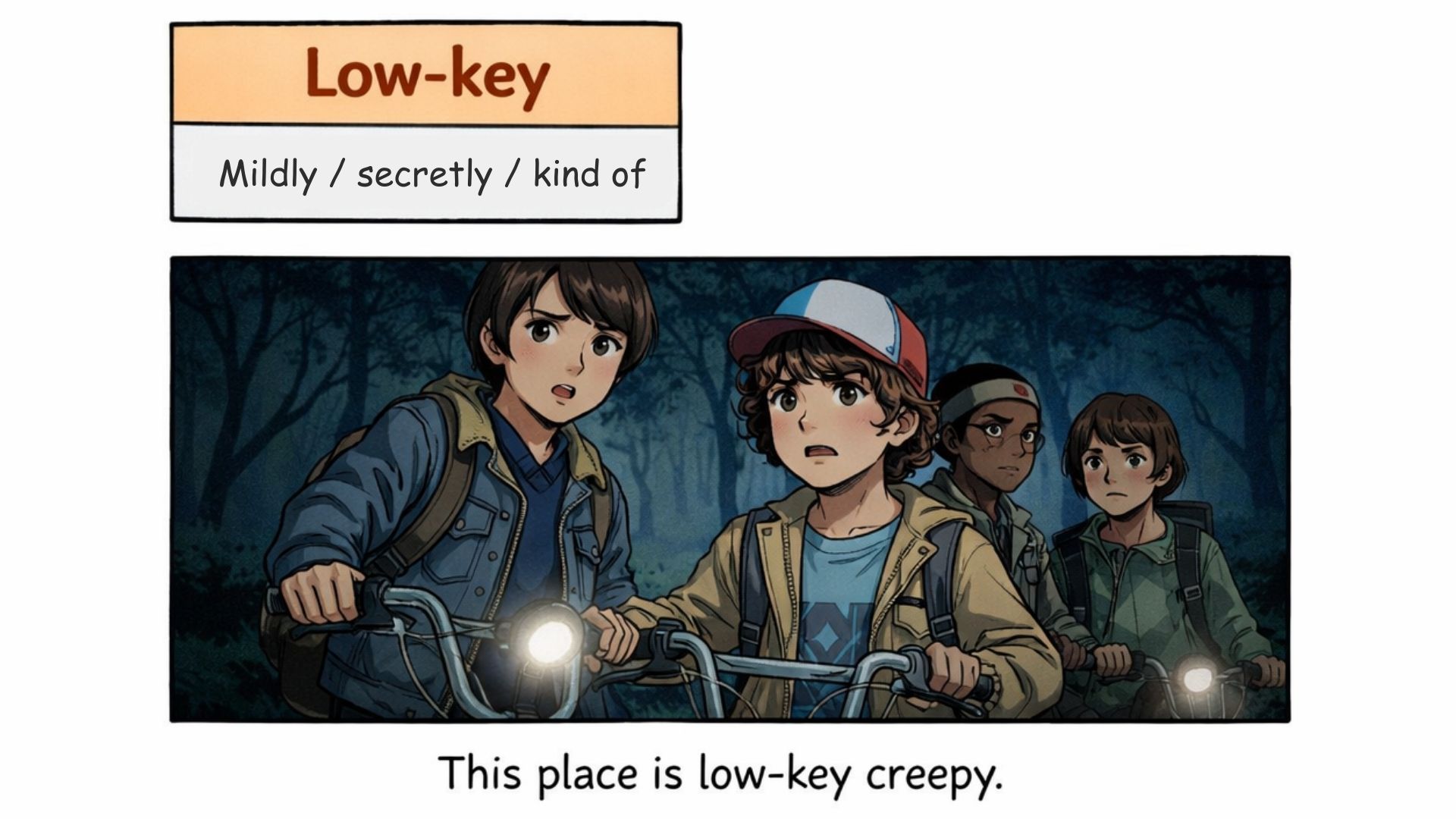
| Low-key | Mildly / secretly / kind of | That scene was low-key scary. | Very common Gen Z slang, casual tone |
| Chill | Relax / calm down | Just chill, everything is under control. | Popular in teen speech |
| Screw up | Make a mistake | I really screwed up my presentation. | Avoid in formal writing |
| Mess up | To make a mistake or cause a problem | I messed up the plan and everyone was upset. | Softer than “screw up”, very common |
| Creep / Creepy | A strange or scary person or situation | That place feels creepy at night. | Common in horror & mystery |
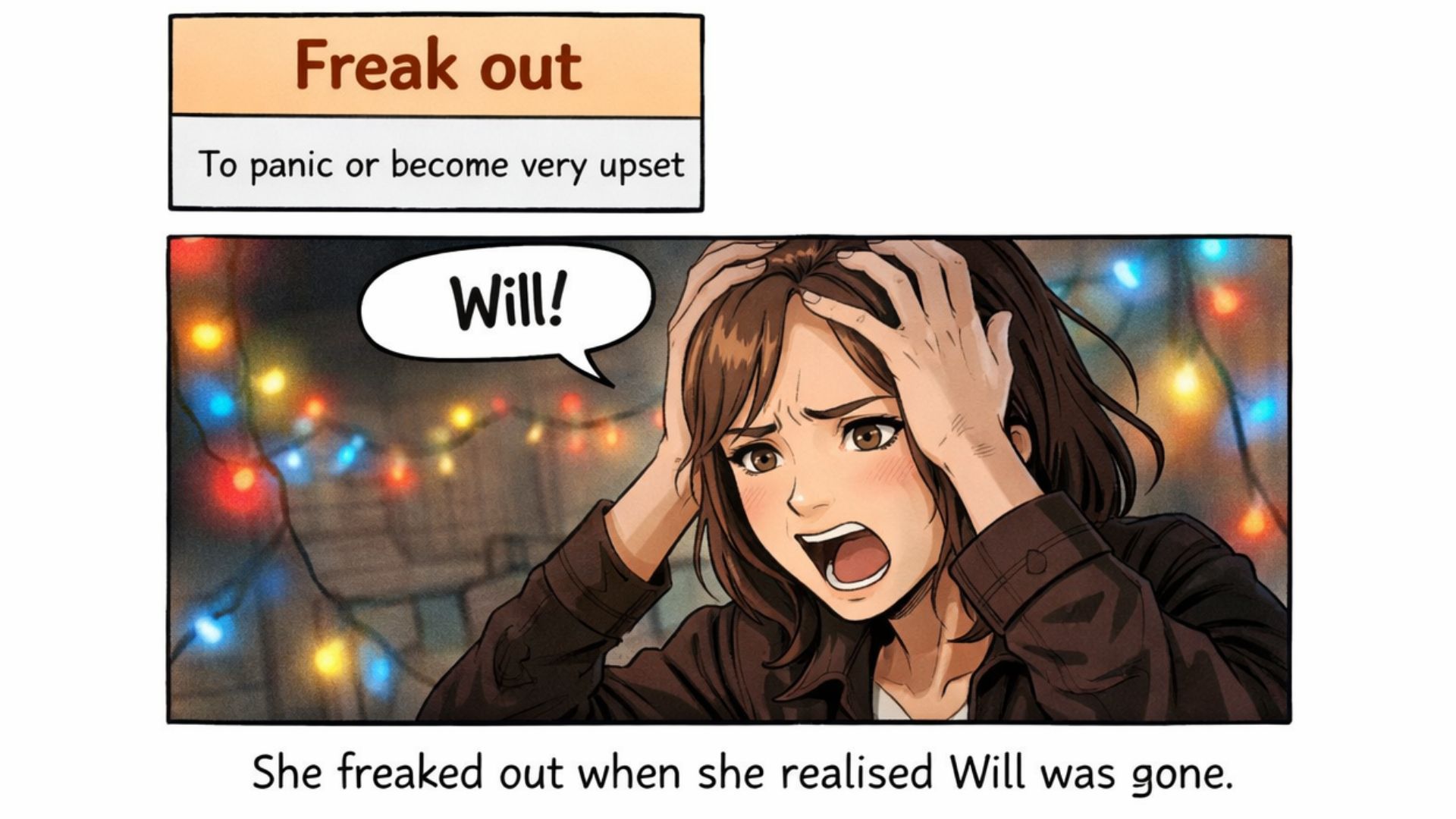
| Freak out | To panic or become very upset | She freaked out when she couldn’t find her brother. | Very common, informal |
| Sus | Suspicious / not trustworthy | That guy is acting kind of sus. | Very common Gen Z slang, informal |
| No way | Expression of shock or disbelief | No way! That can’t be true. | Casual reaction phrase |
| This is bad | Something serious or dangerous is happening | We’re stuck here — this is bad. | Often used in tense or scary situations |
| Hits different | Feels emotionally stronger or unusual | Watching that scene alone at night hits different. | Modern spoken English, common in emotional reactions. |
Idioms You’ll Hear in Stranger Things Season 5
Idioms are tricky because their meanings cannot be understood word by word.
Common Idioms Explained
1. In over my head
Meaning: Facing something too difficult
Example: I said yes to the project because it sounded exciting, but now I’m in over my head and don’t know where to start.
2. On edge
Meaning: Nervous or anxious
Example: Everyone was on edge all night, checking their phones and waiting for the results.
3. Out of the blue
Meaning: Something unexpected
Example: She messaged me out of the blue after we hadn’t talked in years.
If you’re in Malaysia, you probably understand that moment of pause, suddenly you’re wondering if they’re about to sell insurance or property.
4. Hold it together
Meaning: Stay calm under pressure
Example: He was scared and stressed, but he tried to hold it together in front of his friends.
5. Lose it
Meaning: Become very angry or emotional
Example: After hours of staying calm, she finally lost it and started shouting.
Teen & Casual American English Expressions
These expressions are extremely common in spoken American English. You’ll hear them everywhere in TV shows, movies, and real-life conversations, often said quickly and casually.
1. What’s going on?
Meaning: Asking what is happening
This expression changes meaning depending on tone and situation.
- Said calmly → you’re just curious
- Said urgently → you’re worried
- Said sharply → you’re annoyed or suspicious
Example: You walk into a room, everyone suddenly goes quiet, and you ask, “What’s going on?”
2. You okay?
Americans often drop words when speaking casually, especially with friends.
Full form: Are you okay? (In native speech, this often sounds like “you kay?”)
This question is usually said with concern, not formality.
Example scenario:
A foreigner is walking down the street in the US with a serious, poker face. A local American girl notices and asks kindly,
“You okay?”
The foreigner pauses, confused, and replies:
“No, I’m from Malaysia.”
The American girl just stands there… confused.

3. Let’s get out of here
This phrase is used when something doesn’t feel right.
It can mean:
- There’s danger
- The situation feels uncomfortable
- Urgency is involved (You want to leave quickly)
Example: Something feels off, nobody says much, and someone quietly says, “Let’s get out of here.”
Slang vs Idioms: What’s the Difference?
| Slang | Idioms | |
| Definition | Informal words or expressions | Fixed phrases with non-literal meanings |
| Usage | Casual conversations | Spoken and written English |
| Who uses it | Often younger speakers | All age groups |
| Formality | Very informal | Neutral to informal |
| Can it change? | Yes, can become outdated | Usually stays the same |
| Example | chill, sus, freak out | on edge, out of the blue |
Why ESL Learners Should Learn Both Slang and Idioms
For English learners, understanding both slang and idioms is important because they appear constantly in real-life conversations, especially in TV shows like Stranger Things and in casual spoken English.
Learning slang and idioms helps you:
- Understand movies and series more easily
- Sound more natural and confident when speaking
- Avoid misunderstandings in everyday conversations
Learner Tip: Slang is best used in casual conversations with friends, while idioms can be used more widely once you understand their meaning. When in doubt, listen first before using them yourself.
How to Learn English Faster Using Stranger Things
Try these effective methods:
- Watch with English subtitles
- Pause and repeat slang phrases
- Write down new expressions
- Rewatch scenes to understand context
- Practice using phrases in your own sentences
Common Mistakes English Learners Make
Common Mistakes
- Using slang in formal situations (work emails, presentations, exams)
- Translating idioms word by word, which often changes the meaning
- Overusing slang in writing or professional messages
Better Practice Tips
- Use slang mainly in spoken, casual conversations
- Use idioms only after you understand the meaning and context
- When unsure, choose clear, simple English instead of slang
Why This Matters
Avoiding these mistakes helps you sound natural, confident, and appropriate without accidentally sounding rude, confusing, or unprofessional.
Conclusion
Learning English through movies helps you understand how the language is really used in everyday life. By watching Stranger Things Season 5, you can pick up useful vocabulary, slang, and idioms that make your English sound more natural, confident, and fluent just like native speakers.
Beyond entertainment, Stranger Things is a powerful tool for improving your real-world English skills, especially listening and speaking. When you learn expressions in context, they become easier to remember and use naturally.
If you enjoy learning English through TV shows and pop culture, READ is your go-to language learning hub for practical vocabulary, everyday expressions, and content that helps you learn English the way it’s really spoken.