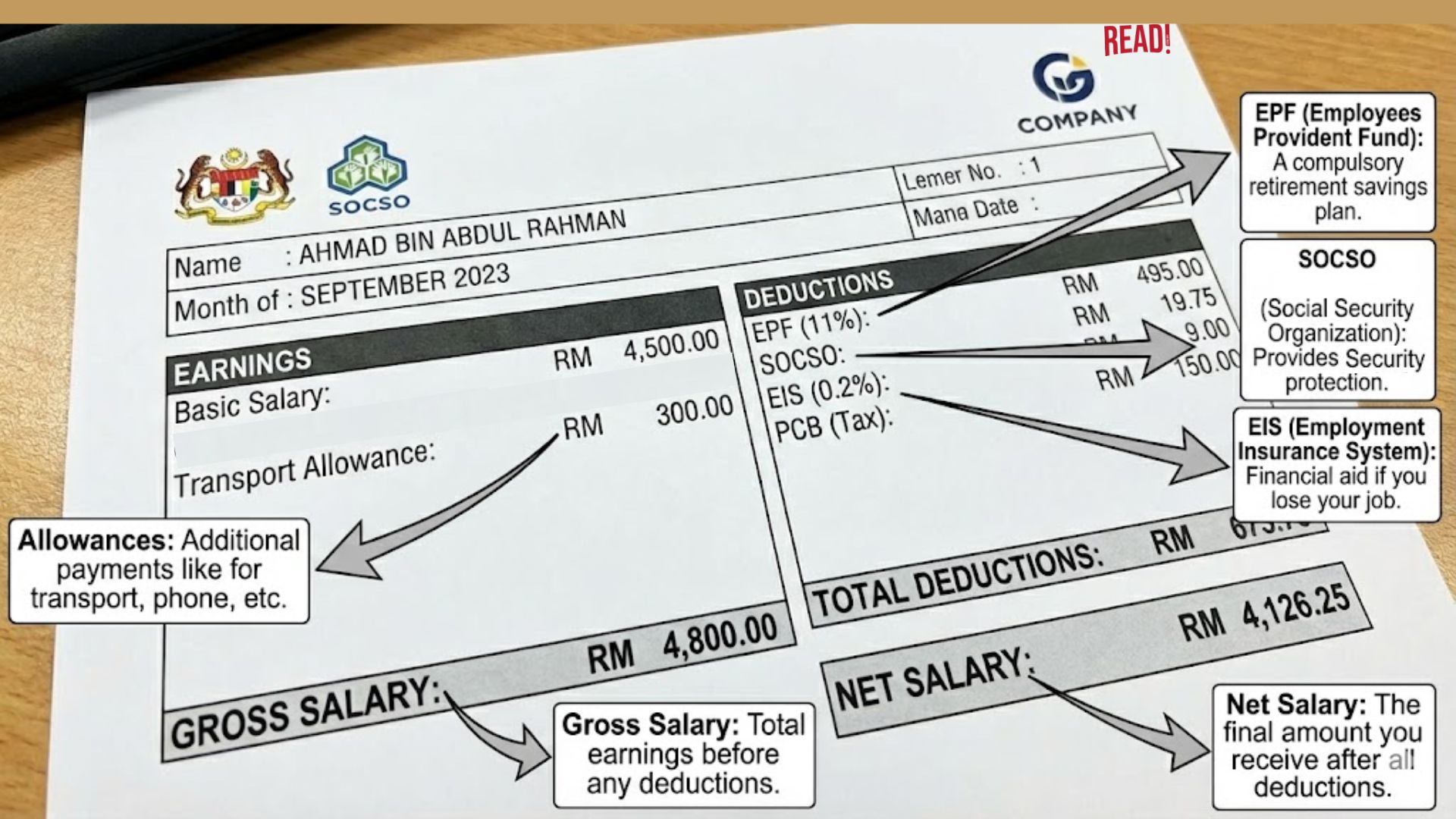
If you look at a Malaysian payslip, you will almost always see EPF, SOCSO, and EIS listed under deductions or contributions. These short forms appear so often that many employees recognise the names, but not everyone understands what they actually mean, especially for language learners and first-time employees.
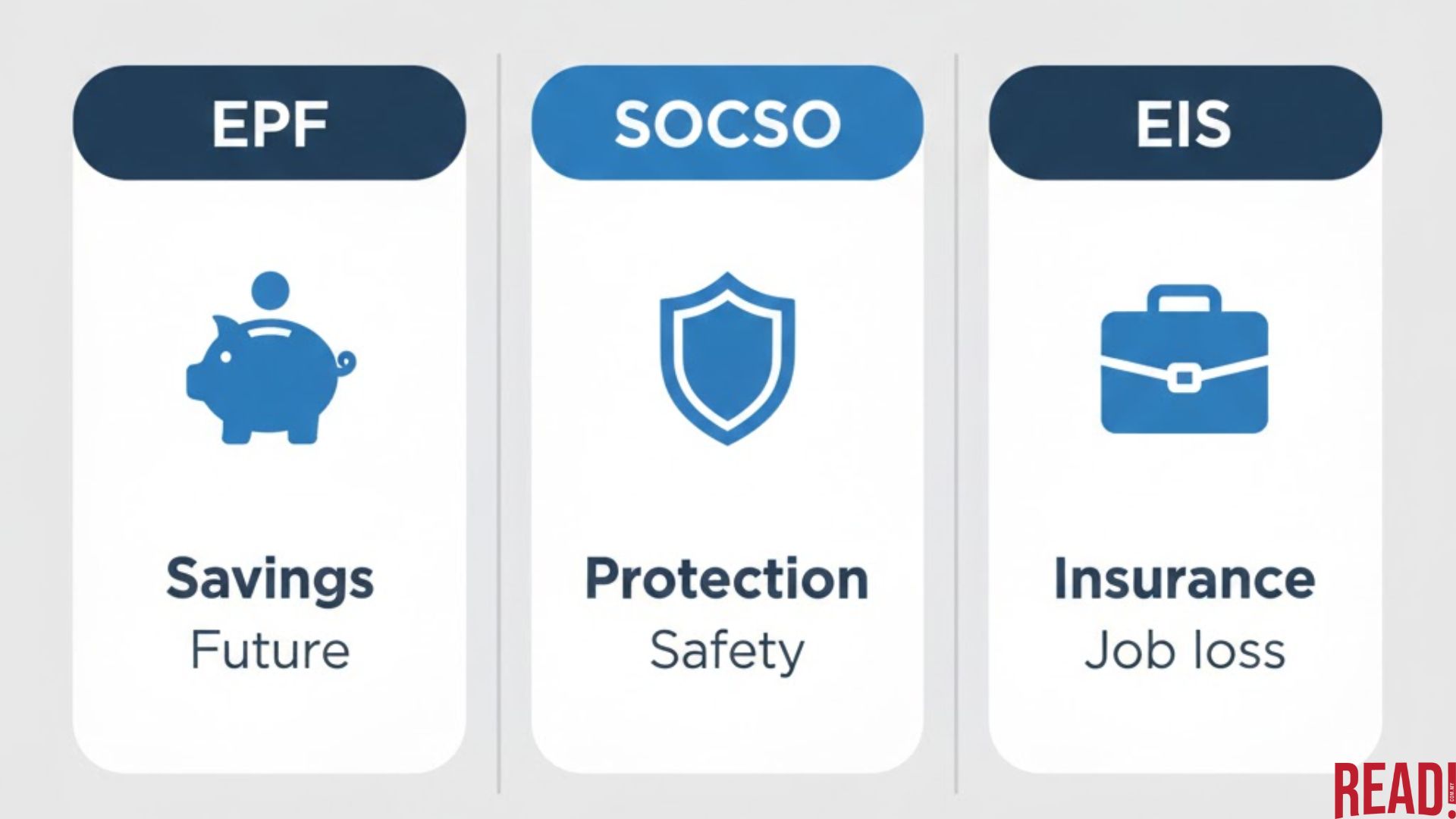
EPF, SOCSO, and EIS are mandatory contributions, not penalties and not tax. Each term represents a different purpose: savings, protection, and insurance.
This guide explains EPF, SOCSO, and EIS in simple language. Instead of focusing on contribution rates, systems, or calculations, it focuses on language and meaning, what these terms represent, why they appear on payslips, and how they are commonly used across workplace documents.
Quick Answer: What Are EPF, SOCSO & EIS?
- EPF = Retirement savings
- SOCSO = Social security protection
- EIS = Employment insurance
Why These Terms Appear on Almost Every Payslip
EPF, SOCSO, and EIS are part of Malaysia’s employment system. Employers include them on payslips to show:
- What is contributed each month
- What is deducted from salary
- What protections or savings are being built
From a language perspective, these terms:
- Are usually written as abbreviations
- Rarely explained in the payslip itself
- Often appear next to numbers without context
That’s why understanding the meaning of the words is so important.
What is EPF?
EPF stands for Employee Provident Fund.
In simple terms:
EPF is money saved for your retirement.
How EPF appears on a payslip
- Listed as EPF
- Sometimes shown as “Employee Contribution”
- May be split into employee and employer portions
Language tip
When you see EPF in a document, it usually refers to:
- Savings
- Long-term funds
- Retirement-related matters
EPF is different from tax because it is your savings, not money paid to the government as tax.
What is SOCSO?
SOCSO refers to social security protection.
In simple terms:
SOCSO provides protection if you are injured, disabled, or face work-related risks.
Where SOCSO appears
- Payslips
- Employment letters
- HR explanations
Language tip
SOCSO-related wording often includes:
- Protection
- Coverage
- Compensation
- Contribution
SOCSO is about protection, not savings.
What is EIS?
EIS stands for Employment Insurance System.
In simple terms:
EIS provides temporary financial support if you lose your job.
How EIS is described in documents
- Employment insurance
- Job loss protection
- Re-employment support
Language tip
EIS-related terms often include:
- Eligibility
- Claims
- Benefits
- Temporary support
EIS is usually listed separately from SOCSO, even though both are related to protection.
EPF vs SOCSO vs EIS: What’s the Difference?
Here’s a clear comparison to help you read payslips correctly:
Term | Purpose | Focus |
EPF | Retirement savings | Long-term |
| SOCSO | Social protection | Injury & safety |
EIS | Employment insurance | Job loss |
Understanding this table alone can remove most payslip confusion.
Mandatory Contribution: EPF, SOCSO & EIS vs PCB
One of the most common misunderstandings is confusing these contributions with PCB.
Let’s clarify:
Term | Category |
PCB | Tax deduction |
| EPF | Savings |
SOCSO | Protection |
| EIS | Insurance |
If you want a full explanation of PCB, read more on What is PCB in a Payslip? Meaning & Explanation for Malaysian Employees
Why These Deductions Are Not “Lost Money”
Many people feel uncomfortable seeing deductions on their payslip. From a language and understanding point of view, it helps to reframe them:
- EPF → money saved for you
- SOCSO → protection if something happens
- EIS → support during job transition
These terms describe purpose, not punishment.
How These Terms Appear in Workplace Documents
Beyond payslips, EPF, SOCSO, and EIS may appear in:
- Offer letters
- HR policies
- Salary adjustment emails
- Employment confirmations
Once you recognise the terms, workplace documents become far less intimidating.
How EPF, SOCSO & EIS Are Labelled on Payslips
These contributions may appear under different labels depending on the company or payroll system:
- EPF may appear as EPF, KWSP, or Employee Contribution
- SOCSO may appear as SOCSO, PERKESO, or Social Security
- EIS may appear as EIS or Employment Insurance
Recognising these variations helps you avoid confusion when documents use different wording for the same contribution.
Common Misunderstandings About EPF, SOCSO & EIS
Let’s clear up some common confusion around these terms, because, honestly, it’s easy to get them mixed up!
❌ “These are all taxes”
✔️ Nope! Only PCB is tax. EPF, SOCSO, and EIS are all contributions, they’re about savings, protection, and insurance, not money you pay to the government.
❌ “If I don’t see them on payslip, something is wrong”
✔️ Not necessarily. There are situations where certain contributions might not appear, like if you’re a contract worker or your salary doesn’t meet the threshold. Always check with HR if you’re unsure.
Simple Memory Tips for EPF, EIS, and SOCSO
You don’t need to memorise long explanations. Remembering the purpose of each term is usually enough.
- EPF (Employee Provident Fund): “F” for “Future”. EPF is about long-term retirement savings.
- SOCSO (Social Security Organization): “S” for “Safety”. SOCSO provides protection for work-related risks and injuries.
- EIS (Employment Insurance System): “E” for “Emergency” (EIS offers temporary support if you lose your job.)
These simple associations help you recognise the terms quickly when they appear on payslips, HR documents, or employment letters without needing to recall technical details.
Conclusion: Understand the Terms, Not Just the Numbers
EPF, SOCSO, and EIS may look like small abbreviations on a payslip, but they carry important meaning. When you understand what these terms represent, savings, protection, and insurance. payslips and workplace documents become much easier to read.
You don’t need to memorise systems or calculations to feel confident. Most confusion comes from unfamiliar words and unexplained abbreviations, not from a lack of English ability. Once you recognise these common terms and how they are used, reading employment-related documents feels clearer and less stressful.
This guide is part of our Understanding Business Documents series, where we explain workplace terms in plain English. If you want to build confidence with payslips, HR letters, and other professional documents, start with understanding the language, one term at a time.