
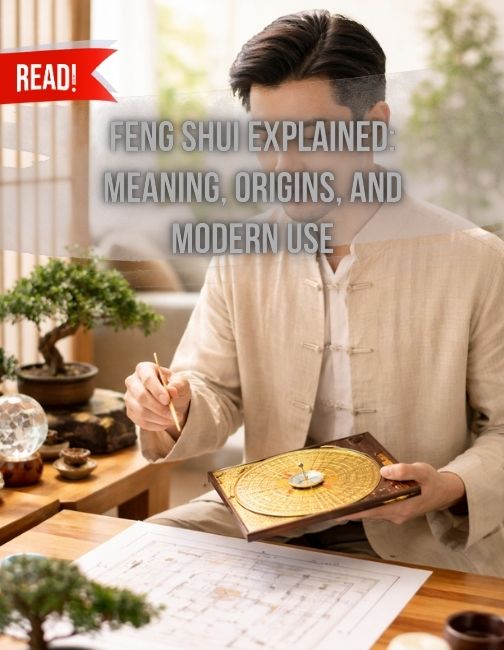
Feng shui is a traditional Chinese system that studies how environment, layout, and direction influence balance, wellbeing, and harmony. It focuses on how people interact with space they live in, rather than predicting outcomes or guaranteeing luck.
Today, feng shui is often discussed alongside home design, personal wellbeing, and lifestyle choices. However, its original meaning is frequently misunderstood or reduced to surface-level advice.
This guide explains what feng shui actually means, where it comes from, and how it is commonly understood in modern contexts.
What Does Feng Shui Mean Literally?
The term feng shui translates directly to “wind” (feng) and “water” (shui), two natural forces that shape life and environment.
In classical Chinese thought, wind represents movement and invisible energy, while water represents flow, direction, and accumulation. Together, they describe how energy, people, and nature interact within a space. Early feng shui did not focus on decorative objects but on observing how natural conditions affected human settlement.
Traditional feng shui examined factors such as:
- Landforms and terrain
- Direction and orientation
- Natural movement of air and water
- How people lived within and adapted to these environments
This original meaning is often lost when feng shui is reduced to symbolic items or quick fixes.
Where Did Feng Shui Come From?
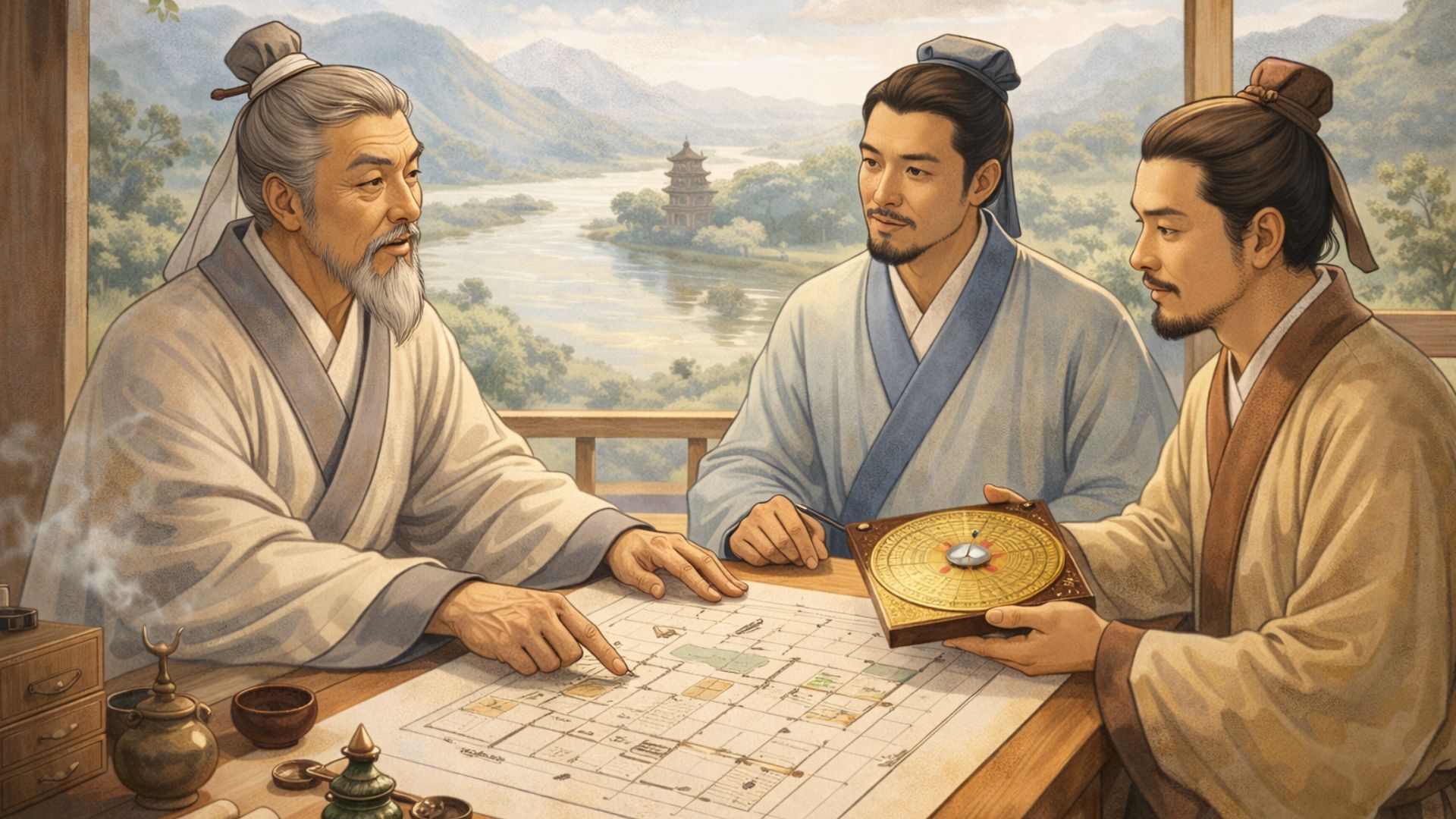
Feng shui originated in ancient China as a way to understand how humans coexist with nature.Long before it was associated with interior décor or personal accessories, it was used to determine settlement locations, building orientation, and burial sites.
Its roots are closely linked to classical Chinese philosophy, including:
- Yin and yang
- The five elements
- Observational study of nature
“Early feng shui was less about symbols and more about reading the environment.” Traditional Chinese geomancy texts
Is Feng Shui a Belief System or a Practical Framework?
Feng shui is not a religion. It does not involve worship, rituals, or required belief. Instead, it is a framework for observing space and balance.
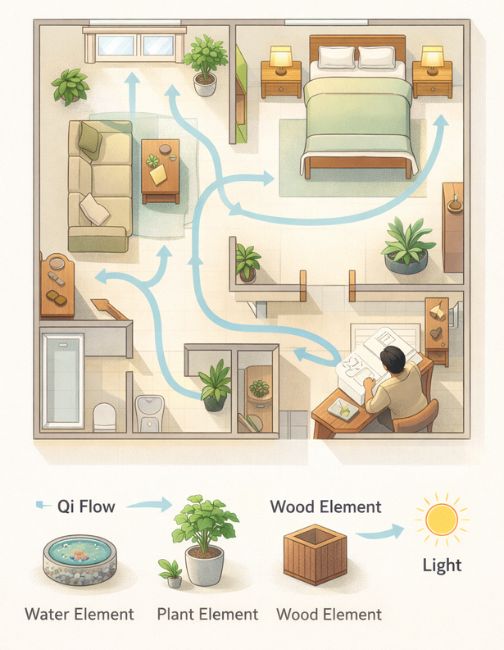
Understanding feng shui as a practical framework helps separate cultural meaning from exaggerated claims. This is why feng shui ideas are often discussed today in relation to spaces such as the feng shui bedroom principles , where layout, light, and movement affect rest and focus more than symbolic items alone.
Viewing feng shui in this way allows it to be understood without superstition, as a method of awareness rather than faith.
How Feng Shui is Commonly Used Today
Modern feng shui is applied more as a lifestyle language than a technical discipline.
People commonly discuss feng shui in relation to:
- Homes and personal spaces
- Work environments
- Directional preferences
- Symbolic choices, including feng shui plants and décor
For example, many people explore feng shui plants not only for symbolism, but also for how greenery affects airflow, light, and mood within a space.
However, this modern usage is a simplified layer built on deeper principles. Many guides focus on “what to place” but skip explaining “why it matters.”
Common Misunderstandings About Feng Shui
Feng shui is often misunderstood as superstition or instant problem-solving.
Common misconceptions include:
- Feng shui guarantees wealth or luck
- Objects alone can change outcomes
- One rule applies to everyone
- Feng shui is only about decoration
These misunderstandings often arise when feng shui is treated as a checklist rather than a way of observing space. This is also why topics like feng shui numbers or symbols are frequently misapplied without context.
Learning the meaning of feng shui helps readers approach these ideas more critically.
Why Feng Shui Still Matters in Modern Life
Feng shui remains relevant because it addresses how people experience space.
In modern life, people are increasingly attentive to:
- Mental clarity
- Comfort at home
- Flow in daily routines
- Relationship between environment and wellbeing
Feng shui provides language to describe these experiences, even when interpreted in a practical or modern way rather than a traditional one.
For learners, feng shui also becomes a useful entry point into understanding how cultural concepts evolve through language and usage over time.
How This Guide Supports Deeper Learning
This article is designed as a foundation, not a final destination.
Feng shui is often explored through specific contexts, whether that involves studying its principles formally, adjusting living spaces, or understanding symbolic elements. Each of those topics benefits from first understanding what feng shui means and how it developed.
By grounding readers in meaning and context, future learning becomes clearer and less reliant on assumptions or myths.
Conclusion: Understanding Feng Shui Starts With Meaning
Feng shui is widely discussed, yet often poorly explained. At its core, it is a way of understanding balance, environment, and human interaction with space, rooted in language, culture, and observation rather than superstition.
Starting with meaning allows learners to evaluate modern interpretations more thoughtfully and decide how feng shui fits into their lives, whether practically, culturally, or linguistically. As with any concept, clarity comes before application. Exploring how cultural terms evolve through language learning, helps learners interpret them more accurately in everyday use.