
Badminton has its own fast-paced language. From smashes to deuce, these terms aren’t just jargon, they tell you exactly what happens on the court.
This guide explains over 30 key badminton terms, how they’re used in live play, and what they mean for both viewers and players. Whether you’re an ESL learner or a beginner, mastering these words will transform how you watch and talk about the game.
Common Badminton Shot Terms
Shots describe how the shuttle is hit during a rally.
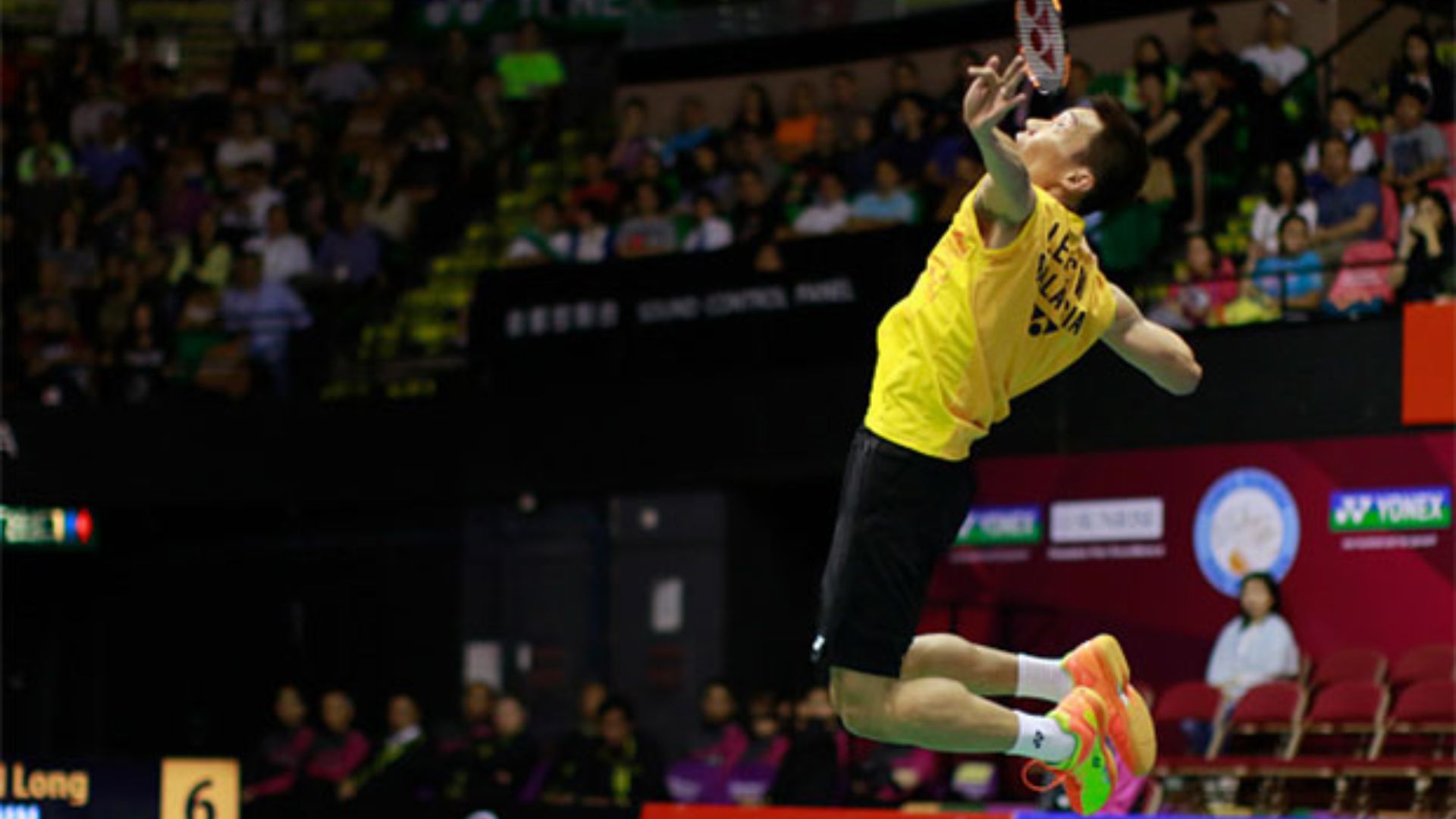
Smash
A smash is a powerful downward shot used to end a rally.
Example: “He won the point with a strong smash.”
Clear
A clear is a high shot sent to the back of the opponent’s court.
Example: “He used a clear to regain position.”
Drop Shot
A drop shot is a soft shot that lands close to the net.
Example: “The drop shot caught the opponent off guard.”

Drive
A drive is a fast, flat shot hit across the court.
Example: “The rally continued with quick drives.”
Scoring and Match Vocabulary
These terms relate directly to scoring and match progress.
Rally
A rally is the exchange of shots before a point is decided.
Example: “The rally lasted over 30 shots.”
Deuce
Deuce occurs when both sides reach 20 points.
Example: “The game went to deuce.”
Game and Match
- A game is played to 21 points
- A match is made up of games
Example: “He won the match in straight games.”
Rule-Related Badminton Terms
These words appear when play stops or badminton rules are enforced.
Fault
A fault happens when a rule is broken. Any action that breaks the rules and causes loss of a rally.
Example: That’s a fault, point to the opponent.”
Let
A let means the rally is replayed.
Example: “The shuttle broke, so a let was called.”
Service Court
The service court is the area where the serve must land.
Example: “The shuttle landed outside the service court.”
Fault-Related Badminton Terms
In badminton, a fault means play stops because something is not allowed. Commentators and umpires use specific words to explain why the fault happened.
General Fault Vocabulary
- Service Fault
A fault that happens during a serve.
Example: “Service fault called by the umpire.” - Receiving Fault
A fault committed by the receiver before or during the serve.
Example: “The receiver moved too early, receiving fault.”
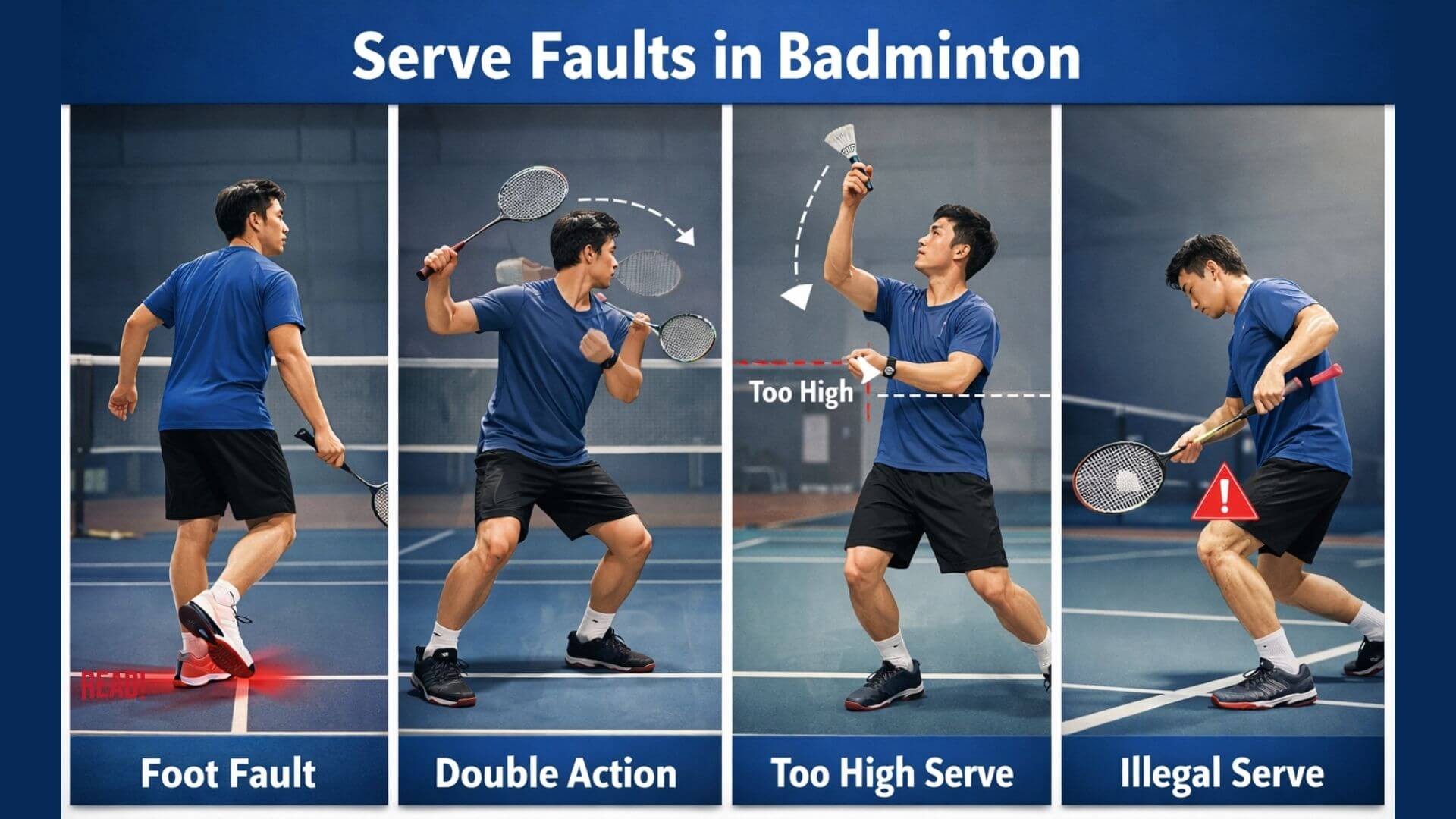
Serve-Related Fault Terms
These are commonly heard during the Malaysia Open:
- Foot Fault
The server’s or receiver’s foot is not placed correctly inside the service court at the moment of the serve.
Example: A player rushes to serve during a tense rally. As they swing, one foot lifts slightly off the floor. The umpire immediately stops play and announces, “Foot fault.”
- Double Action
The server’s racket movement is not one continuous motion.
Example: The server hesitates mid-serve, then flicks the shuttle forward. Because the serve looked like two movements instead of one smooth swing, the umpire calls, “Double action.”
- Illegal Serve
A general term used when serve technique breaks regulations.
Example: The server’s racket angle is too steep and the shuttle travels too fast. The umpire signals the end of the point and says, “Illegal serve, service over.”
- Too High Serve
The shuttle is hit above the allowed height during service.
Example: The shuttle is contacted above the server’s waist line. Even though the serve lands in, the umpire steps in and calls, “Serve too high, fault.”
Fact: In badminton, “short” is not an official fault name. It is an informal term used to describe a serve that lands too close to the net.
Net-Related Fault Vocabulary
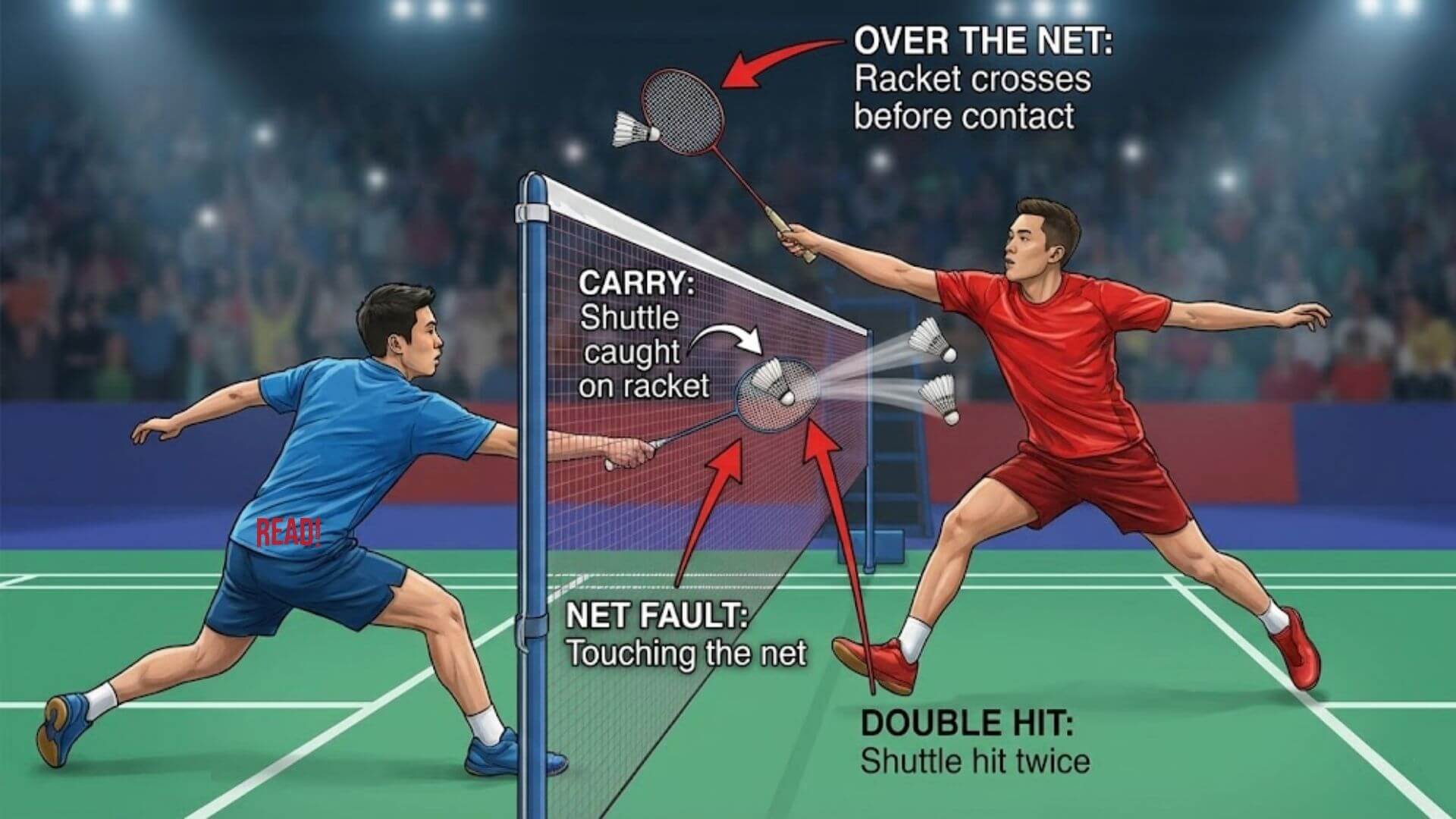
- Net Fault
When a player touches the net with their body or racket.
Example: “Net fault at the front court.” - Over the Net
The racket crosses into the opponent’s side before contact.
Example: “Over the net, that’s a fault.” - Net Touch
Informal commentary phrase for touching the net.
Example: “She clips the net, net touch fault.”
Shuttle & Contact Fault Terms
- Double Hit
The shuttle is hit twice by the same player or side.
Example: “Double hit, point conceded.” - Carry (or Sling)
The shuttle is caught and thrown instead of hit cleanly.
Example: “That was a carry, fault.” - Miss-hit
Not always a fault, but often mentioned before a fault decision.
Example: “Miss-hit leads to an error.”
Court & Boundary Fault Vocabulary
- Out
The shuttle lands outside the court boundary.
Example: “That shot is out.” - Long
The shuttle goes past the back boundary line.
Example: “Just long, fault called.” - Wide
The shuttle goes past the side boundary line.
Example: “Wide of the singles line.”
Why Umpires and Commentators Still Say “long” or “wide”
In live matches, saying only “out” is not always helpful.
Using long or wide:
- Tells players where the mistake happened
- Helps viewers understand shot control issues
- Gives context to tactics and errors
Movement & Position Faults
- Obstruction
Blocking the opponent’s movement or shot unfairly.
Example: “Obstruction called by the umpire.” - Early Movement
Receiver moves before the serve is struck.
Example: “Early movement, receiving fault.” - Encroachment
Entering the opponent’s space illegally.
Example: “Encroachment at the net.”
Umpire & Commentary Phrases Related to Faults
These are not faults themselves, but language you often hear:
- “Fault called”
- “Service over”
- “Point awarded”
- “Umpire intervenes”
- “Challenge unsuccessful”
- “Decision upheld”
These phrases help you follow why a rally ended.
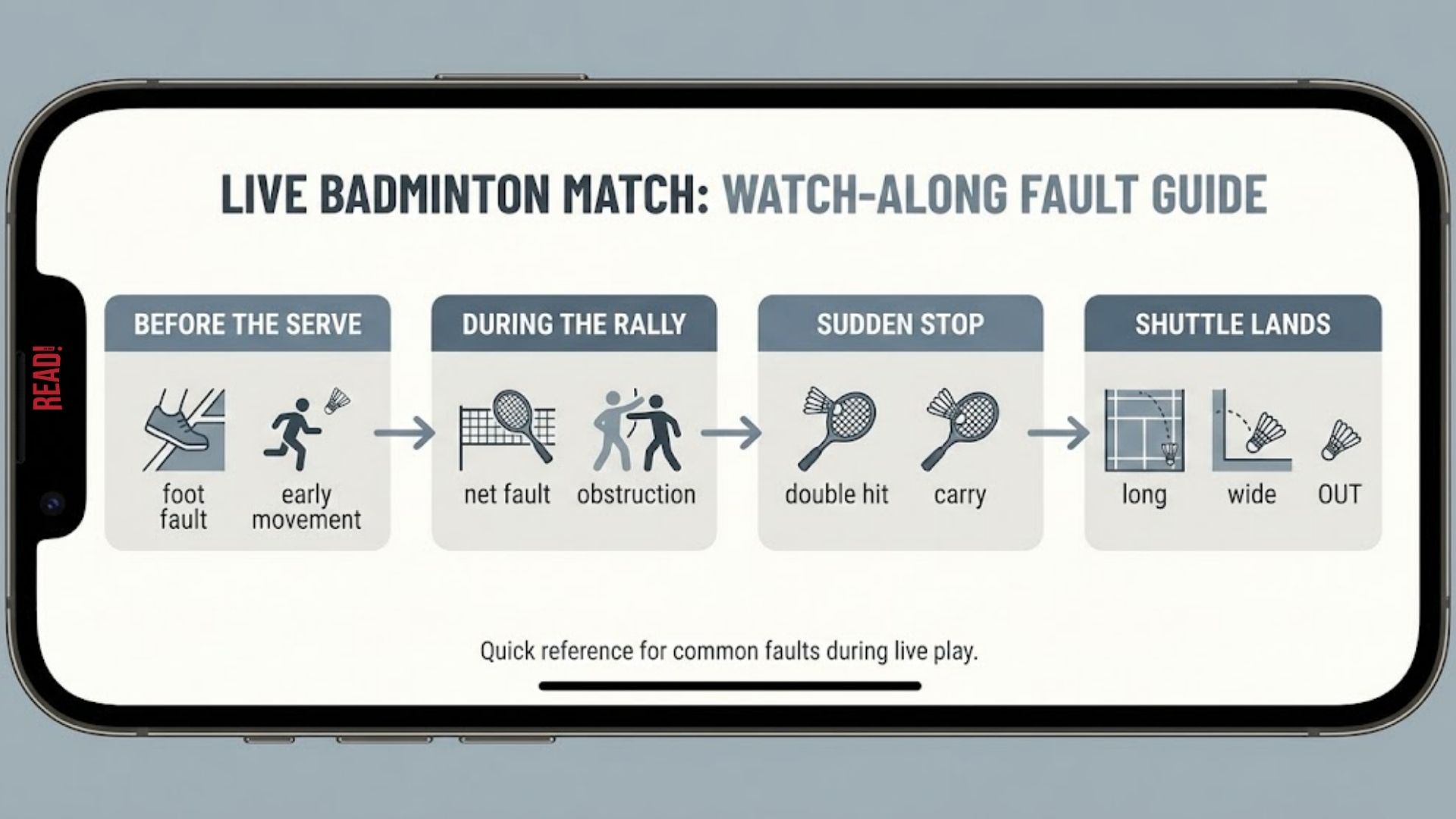
Watch-Along Learning Guide for Live Matches
Use this simple guide while watching the Malaysia Open or any badminton match.
Before the Serve
- Listen for service fault, foot fault, or early movement
- These happen before the rally really starts
During the Rally
- Watch the net closely
- If someone touches the net or crosses too early, you may hear net fault or over the net
When the Rally Ends Suddenly
- If play stops without a winner, listen for fault
- Common reasons include double hit, carry, or obstruction
When the Shuttle Lands
- Line judges may call out, long, or wide
- This means the shuttle landed outside the legal court
Learning Tip: How to Remember Badminton Terms
To remember new vocabulary:
- Watch short match clips
- Pause when a term is used
- Match the word with the action
- Say the word aloud
This method helps connect language with movement and meaning.
Conclusion: Building Vocabulary Through Badminton
Badminton terms describe speed, strategy, and movement. Learning them improves both your understanding of the sport and your English vocabulary.
At Read, a language learning hub, we use real-world topics like badminton to make learning natural and engaging. Whether you are watching the Malaysia Open or learning sports vocabulary, understanding these terms helps you follow the game with clarity and confidence.