English pronunciation can be confusing because English spelling does not always tell you exactly how a word sounds.
Words such as receipt, island, debt, comfortable, entrepreneur, and yacht contain silent letters, unexpected sounds, or stress patterns that can be difficult to predict from spelling alone.
For Malaysian English learners, another challenge is that familiar pronunciation patterns can sometimes influence how an English word is said. The good news is that most pronunciation problems become easier once you learn to recognise the pattern.
This guide covers 30 commonly mispronounced English words in total, with:
- IPA pronunciation
- Easy-to-read pronunciation
- Common pronunciation mistakes
- British and American differences where relevant
- Examples showing the word in context
- A simple tip to help you remember the correct pronunciation
Quick answer: Some commonly mispronounced English words include comfortable, debt, entrepreneur, herb, island, quinoa, receipt, rendezvous, subtle, yacht, queue, colonel, choir, epitome, and Wednesday.
At a Glance: 20 Commonly Mispronounced English Words
| Word | IPA | Easy pronunciation | Main difficulty |
|---|---|---|---|
| Comfortable | /ˈkʌm.fə.tə.bəl/ | KUM-fuh-tuh-bul | Syllables |
| Connect | /kəˈnekt/ | kuh-NEKT | Word stress |
| Debt | /det/ | DET | Silent B |
| Entrepreneur | /ˌɒn.trə.prəˈnɜːr/ | on-truh-pruh-NUR | Word stress |
| Epitome | /ɪˈpɪt.ə.mi/ | ih-PIT-uh-mee | Spelling |
| Grand Prix | /ˌɡrɒ̃ ˈpriː/ | gron PREE | French spelling |
| Herb | /hɜːb/ UK; /ɝːb/ US | HERB / ERB | UK/US difference |
| Island | /ˈaɪ.lənd/ | EYE-lund | Silent S |
| Library | /ˈlaɪ.brər.i/ | LIE-bruh-ree | Syllables |
| Quinoa | /ˈkiːnwɑː/ UK; /kɪnˈwɑː/ US | KEEN-wah / kin-WAH | Spelling |
| Receipt | /rɪˈsiːt/ | ri-SEET | Silent P |
| Rendezvous | /ˈrɒn.deɪ.vuː/ | RON-day-voo | French spelling |
| Restaurant | /ˈres.tər.ɒnt/ | RE-stront | Syllables |
| Salmon | /ˈsæm.ən/ | SAM-un | Silent L |
| Schedule | /ˈʃedʒ.uːl/ UK; /ˈskedʒ.uːl/ US | SHED-yool / SKED-yool | UK/US difference |
| Subtle | /ˈsʌt.əl/ | SUT-ul | Silent B |
| Wednesday | /ˈwenz.deɪ/ | WENZ-day | Spelling |
| Yacht | /jɒt/ UK; /jɑːt/ US | YOT / YAHT | Unexpected spelling |
| Won | /wʌn/ | WUN | Homophone |
| Queue | /kjuː/ | KYOO | Extra letters |
1. Comfortable
Common mistake: com-for-ta-ble
Correct pronunciation: KUM-fuh-tuh-bul
IPA: /ˈkʌm.fə.tə.bəl/
Meaning: Describes something that makes you feel physically relaxed or free from discomfort.
The word comfortable has more letters than the number of sounds you may hear in normal speech. Learners sometimes pronounce every written syllable very carefully, making the word sound longer than it normally does.
Cambridge gives British pronunciation as /ˈkʌm.fə.tə.bəl/ and an American variant with a similar reduced middle section.
Example sentence: These shoes are very comfortable.
Tip: Don’t try to pronounce every letter separately. Practise KUM-fuh-tuh-bul as one smooth word.
2. Connect
Common mistake: CON-nect (kon-neck)
Correct Pronunciation: kuh-NEKT (like “Ken” in Kentucky Fried Chicken”)
IPA: /kəˈnekt/
Meaning: To join, link, or communicate with someone or something.
Why it’s confusing: Many speakers mispronounce it because they apply the stress pattern of “contact” (CON-tact), but “connect” actually has a stronger stress on second syllable.
Tip: Make NECT the strongest part of the word.

3. Debt
Common mistake: debt/deb
Correct Pronunciation: DET
IPA: /det/
Meaning: Money that you owe to another person, company, or organisation.
Why it’s confusing: The b is silent. Debt is pronounced exactly like det, not “debt” with a /b/ sound. Cambridge lists /det/ for both UK and US English.
Example sentence: He is trying to pay off his debt.
Tip: Don’t pronounce the “b.” The word should sound exactly like “det.”
4. Entrepreneur
Common mistake: en-tre-pre-neur
Correct pronunciation: on-truh-pruh-NUR
IPA: UK /ˌɒn.trə.prəˈnɜːr/; US /ˌɑːn.trə.prəˈnɝː/
Meaning: A person who starts and manages a business, usually with the aim of making a profit.
The main challenge is stress. The strongest stress falls on the final syllable: on-truh-pruh-NUR
Cambridge gives the final syllable the primary stress in both British and American pronunciation.
Example sentence: She became a successful entrepreneur.
5. Epitome
Common mistake: EP-i-tome
Correct pronunciation: ih-PIT-uh-mee
IPA: /ɪˈpɪt.ə.mi/
The spelling can make epitome look as though the ending should rhyme with home. It doesn’t.
Example sentence: She is the epitome of professionalism.
6. Grand Prix
Common Mispronunciation: grand pricks
Correct Pronunciation: gron-pree/ grahn PREE
IPA: approximately /ˌɡrɒ̃ ˈpriː/
Definition: “Grand Prix” literally means “Grand Prize” in French. In English, it usually refers to a major motor racing event, especially Formula One races.
Why it’s confusing: The “x” is silent, and the vowel sounds differ from English. Many speakers apply English spelling rules, which leads to errors.
Example sentence: He follows the Formula One Grand Prix every season.
Tip: Remember it’s French: drop the “x” and lengthen the first vowel slightly.
7. Herb
Common Mispronunciation: HERB with an English-style pronounced H in every variety
Correct Pronunciation: HERB (UK), Erb/Urb (US)
IPA: UK /hɜːb/; US /ɝːb/
Definition: “Herb” refers to a plant used for flavoring, medicine, or fragrance, such as basil, mint, or parsley.
Why It’s Confusing: The spelling suggests that there should be a noticeable “h,” but in natural English, the “h” is often silent, just like in words like honest and hour. This is especially common in American English. People tend to over-pronounce the “h” based on how it’s written, leading to the common mistake.
Example sentence: She added fresh herbs to the pasta sauce.
8. Island
Common mistake: IS-land
Correct pronunciation: EYE-lund
IPA: /ˈaɪ.lənd/
The s is silent.
The correct pronunciation is EYE-lund, not “is-land.” Cambridge gives /ˈaɪ.lənd/ in both British and American English.
Example sentence: They spent their holiday on a beautiful island.
9. Library
Common mistake: lie-BRA-ree or lie-BERRY
Correct pronunciation: LIE-bruh-ree
IPA: UK /ˈlaɪ.brər.i/; US /ˈlaɪ.brer.i/
The word contains several sounds close together, so speakers sometimes drop or rearrange a syllable.
Example sentence: I borrowed the book from the library.
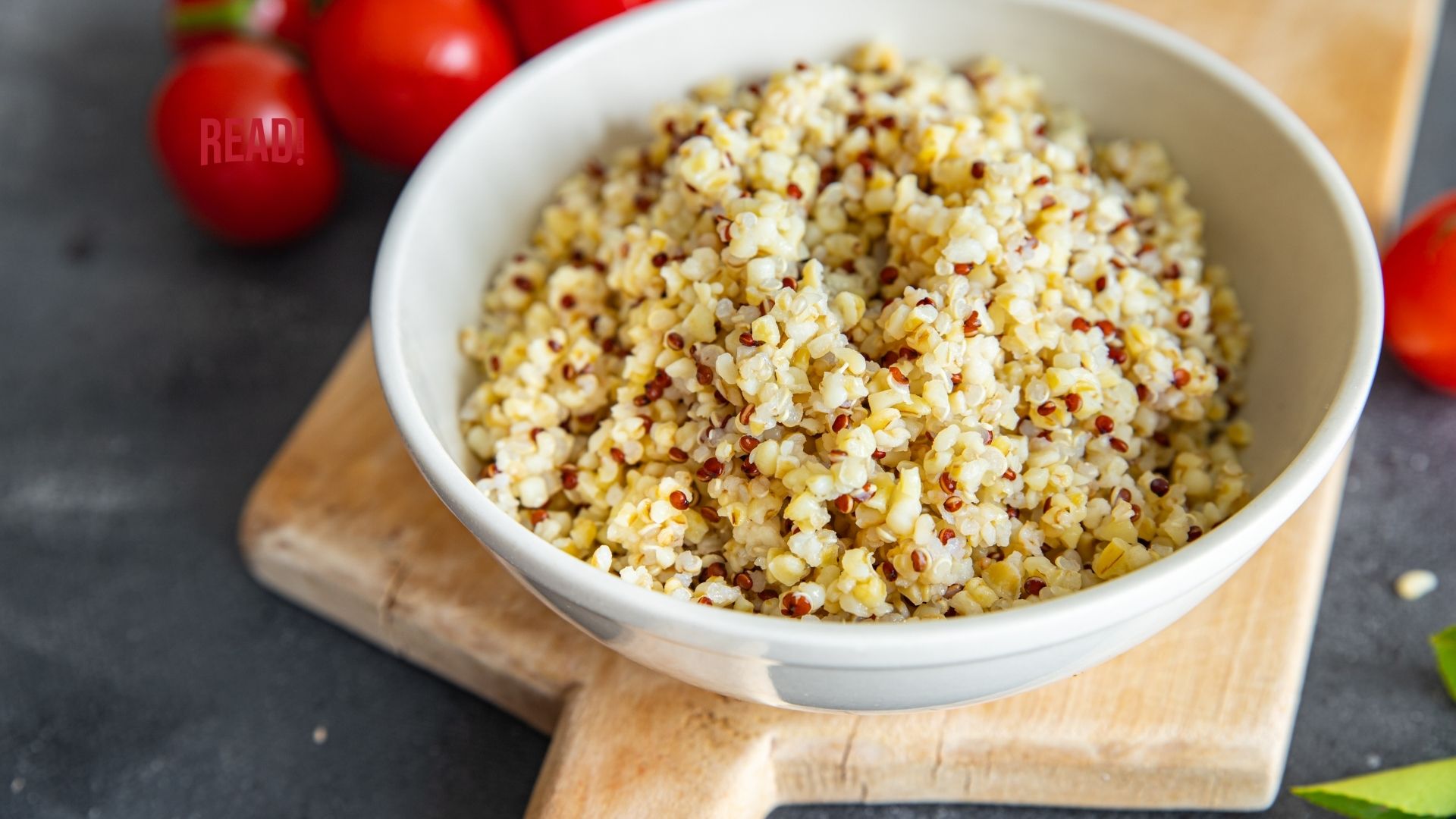
10. Quinoa
Common Mispronunciation: kwin-oh-ah, kwi-no-ah
Correct Pronunciation: keen-wah
IPA: UK /ˈkiːnwɑː/; US /kɪnˈwɑː/
Definition: Quinoa is a grain-like seed that is high in protein and commonly used in salads, bowls, and healthy dishes.
Why It’s Confusing: The spelling doesn’t match English pronunciation rules. People often try to read it phonetically instead of using the original pronunciation from Spanish/Quechua.
Example sentence: I usually add quinoa to my salad.
Tip: Say it slowly at first: keen-wah. Then practice saying it naturally in a sentence.
11. Receipt
Common Mispronunciation: re-ceipt
Correct Pronunciation: ri-SEET/re-seat
IPA: /rɪˈsiːt/
The “p” is silent. Spelling misleads speakers who try to pronounce every letter.
Example sentence: Please keep your receipt in order to exchange or receive a refund within 7 days.
Tip: Ignore the “p” and focus on the vowel sounds.
12. Rendezvous
Common Mispronunciation: ren-dee-vos
Correct Pronunciation: RON-day-woo
IPA: UK /ˈrɒn.deɪ.vuː/; US /ˈrɑːn.deɪ.vuː/
Definition: A “rendezvous” is a prearranged meeting or gathering at a specific time and place.
Why it’s confusing: Another French-origin word with many silent letters. English keeps the spelling but simplifies the sound.
Example sentence: They arranged a rendezvous at the café at noon.
13. Restaurant
Common mistake: res-tau-rant
Correct pronunciation: Reh-stront
IPA: UK /ˈres.tər.ɒnt/; US /ˈres.tə.rɑːnt/
The middle syllables are commonly reduced in natural English.
Cambridge gives different UK and US vowel sounds, but the word begins with RES and does not need to be pronounced as four equally strong syllables.
Example sentence: We found a new Italian restaurant.
14. Salmon
Common mistake: sal-mon/sell-mon
Correct pronunciation: SAM-un
IPA: /ˈsæm.ən/
The l is silent.
Example sentence: We had grilled salmon for dinner.
15. Schedule
British English: SHED-yool
American English: SKED-yool
IPA: UK /ˈʃedʒ.uːl/; US /ˈskedʒ.uːl/
This is an important example because both pronunciations are standard.
Cambridge lists /ʃedʒ.uːl/ for British English and /skedʒ.uːl/ for American English. In Malaysia, we usually follow British English.
Example sentence: What’s on your schedule today?
Tip: Don’t assume one pronunciation is automatically wrong. Choose the variety you’re using and stay consistent.
16. Subtle
Common mistake: SUB-tle
Correct pronunciation: SUT-ul
IPA: /ˈsʌt.əl/
The b is silent.
Example sentence: There is a subtle difference between the two colours.
17. Wednesday
Common mistake: WED-nes-day
Correct pronunciation: WENZ-day
IPA: /ˈwenz.deɪ/
The spelling contains more sounds than are normally pronounced in everyday speech.
Example sentence: The meeting is on Wednesday.
18. Yacht
Common Mispronunciation: yatch
Correct Pronunciation: YOT in British English; YAHT in American English
IPA: UK /jɒt/; US /jɑːt/
Why it’s confusing: The “ch” in yacht is pronounced like a “t,” not like in “church.” The word is borrowed from Dutch, and its pronunciation follows the original.
Example sentence: They spent the afternoon on a yacht.
Tip: Treat the “ch” as a “t” and say it quickly: yah-t.
19. Won
Common Mispronunciation: worn or wont
Correct Pronunciation: one/ WUN
IPA: /wʌn/
Why it’s confusing: People hear the “w” in writing or over-articulate it. In fact, “won” and “one” sound exactly the same.
Example sentence: Our team won the match.
Tip: won = one
20. Queue
Common mistake: trying to pronounce every letter, kweh-ueh
Correct pronunciation: Q
IPA: /kjuː/
The spelling is much longer than the pronunciation. The word is pronounced like cue.
Example sentence: We had to wait in a long queue.
More Commonly Mispronounced English Words
The following words are also useful additions to your pronunciation practice.
21. Colleague
Correct pronunciation: KOL-eeg
IPA: UK /ˈkɒl.iːɡ/; US /ˈkɑː.liːɡ/
The ending is pronounced -eeg, not as though the word were spelled “col-league” with an extra syllable.
Cambridge gives /ˈkɒl.iːɡ/ in British English and /ˈkɑː.liːɡ/ in American English.
Example sentence: My colleague helped me prepare the presentation.
22. Genre
Correct pronunciation: ZHON-ruh
IPA: UK /ˈʒɑ̃ː.rə/ or /ˈʒɒn.rə/; US /ˈʒɑːn.rə/
The spelling comes from French, so the g is not pronounced like the /g/ in go.
Example sentence: What genre of music do you enjoy?
23. Debris
Common mistake: DEB-riss
Correct pronunciation: UK DEB-ree or DAY-bree; US duh-BREE
IPA: UK /ˈdeb.riː/ or /ˈdeɪ.briː/; US /dəˈbriː/
The final s is silent.
Example sentence: Workers cleared the debris from the road.
24. Choir
Common mistake: CHOY-er / Chor
Correct pronunciation: kwai-uh/ KWY-er
IPA: UK /kwaɪər/; US /ˈkwaɪ.ɚ/
The spelling choir does not follow the usual English pronunciation of “ch.”
Cambridge gives /kwaɪər/ for British English and /ˈkwaɪ.ɚ/ for American English.
Example sentence: She sings in the school choir.
25. Colonel
Common mistake: COL-on-el
Correct pronunciation: KER-nul
IPA: UK /ˈkɜː.nəl/; US /ˈkɝː.nəl/
This is one of English’s classic spelling-versus-sound examples. The written form does not resemble the pronunciation.
Cambridge gives the same basic KER-nul pattern in British and American English.
Example sentence: The colonel addressed the soldiers.
26. Vehicle
Common mistake: vee-HICK-ul with equal stress
Correct pronunciation: VEE-uh-kul in American English; a similar three-part form in British English
IPA: UK /ˈvɪə.kəl/; US /ˈviː.ə.kəl/
The middle vowel can be easy to overlook when reading the word quickly.
Example sentence: The vehicle needs to be serviced.
27. Often
Correct pronunciation: OF-un/ O-fn
The t may be silent in a common pronunciation, although a pronunciation with /t/ is also recorded.
Cambridge lists both forms in British and American English.
Example sentence: I often practise English in the evening.
28. Mischievous
Common mistake: mis-CHEE-vee-us
Correct pronunciation: MIS-chuh-vus or MIS-chi-vus
IPA: UK /ˈmɪs.tʃɪ.vəs/; US /ˈmɪs.tʃə.vəs/
The word is often incorrectly given an extra syllable.
Cambridge lists three syllables in the standard pronunciations.
Example sentence: The mischievous child was always playing jokes.
29. Recipe
Correct pronunciation: RES-i-pee in British English; RES-uh-pee in American English
IPA: UK /ˈres.ɪ.pi/; US /ˈres.ə.pi/
The final -pie sound is not pronounced like the food pie. The word ends with an /i/ sound.
Example sentence: I found a simple recipe online.
30. Hyperbole
Common mistake: HYPER-bowl
Correct pronunciation: hy-PER-buh-lee
IPA: UK /haɪˈpɜː.bəli/; US /haɪˈpɝː.bəli/
The ending is pronounced -buh-lee, not like the English word bowl.
Example sentence: Saying that the wait lasted forever was obviously hyperbole.
Why These Pronunciation Mistakes Are So Common
English pronunciation is difficult partly because spelling and pronunciation do not always have a one-to-one relationship.
A learner may see a letter and naturally expect to hear it. However, English contains many silent letters, reduced vowels, unusual spellings, borrowed words and words whose pronunciation has changed over time.
Also, most of these words are learned:
- Through reading
- Through work emails
- Through written communication
But pronunciation comes from what we hear, not what we see. This is why even fluent speakers mispronounce very common words.
The 5 Main Reasons English Words Are Difficult to Pronounce
1. Silent letters
Some English words contain unpronounced letters.
Examples: debt (silent b), receipt (silent p), island (silent s), subtle (silent b), salmon (silent l).
2. Unexpected spelling
Some words cannot be pronounced reliably from their spelling: yacht, queue, choir, colonel.
3. Word stress
English stresses certain syllables: CONtract (noun) vs. conTRACT (verb). Incorrect stress can make speech sound less natural.
4. Reduced syllables
Unstressed syllables often have weaker vowel sounds, making words sound shorter than they look: comfortable, restaurant.
5. British and American differences
Some words have different standard pronunciations depending on the variety of English. A different pronunciation is not necessarily incorrect—it may simply reflect a different variety of English.
How to Fix Mispronounced Words Long-Term
- Listen to the word in full sentences
- Copy the rhythm, not the spelling
- Focus on which part is stressed
- Accept that English spelling is unreliable
Correcting just a handful of high-frequency words can noticeably improve how natural your speech sounds.
Conclusion
Pronunciation problems are rarely about ability. They are about exposure and practice. Many English words look logical on paper but are spoken quite differently. Once you stop relying on spelling and start listening for stress, rhythm, and natural sound, pronunciation becomes much easier.
Even fixing just a handful of high-frequency words like the 12 we covered, can make your speech clearer and more confident, and people will stop asking you to repeat yourself. Small changes really do make a noticeable difference.
If you want to build a stronger foundation in English, explore more practical guides on Read,a language learning website. These resources will help improve your overall English skills.