

You may understand English grammar and sentence structure but still struggle to get a high score in IELTS, TOEFL, or other English proficiency exams. This is a common problem for many learners.
The reason is simple: vocabulary plays a major role in how examiners evaluate your English. Using the same basic words repeatedly can limit your score, especially in writing and speaking. Examiners look for range, accuracy, and the ability to choose the right words for the right context.
This guide is designed to help you build strong, practical vocabulary for IELTS and other English proficiency exams. Instead of memorising long word lists, you will learn what kind of vocabulary really matters and how to use it naturally in exam situations.
Why Vocabulary Matters in IELTS and TOEFL
Vocabulary directly affects your performance across all exam sections.
How Vocabulary Impacts Your Score
- In IELTS Writing and Speaking, vocabulary affects your Lexical Resource score
- In Reading and Listening, vocabulary helps you understand questions and ideas quickly
- In TOEFL Speaking and Writing, vocabulary shows clarity, precision, and academic awareness
Examiners do not reward complicated words used incorrectly. They reward clear, accurate, and natural language. This is why building the right vocabulary for English proficiency exams is more effective than trying to sound advanced.
How IELTS Examiners Assess Vocabulary (Lexical Resource)
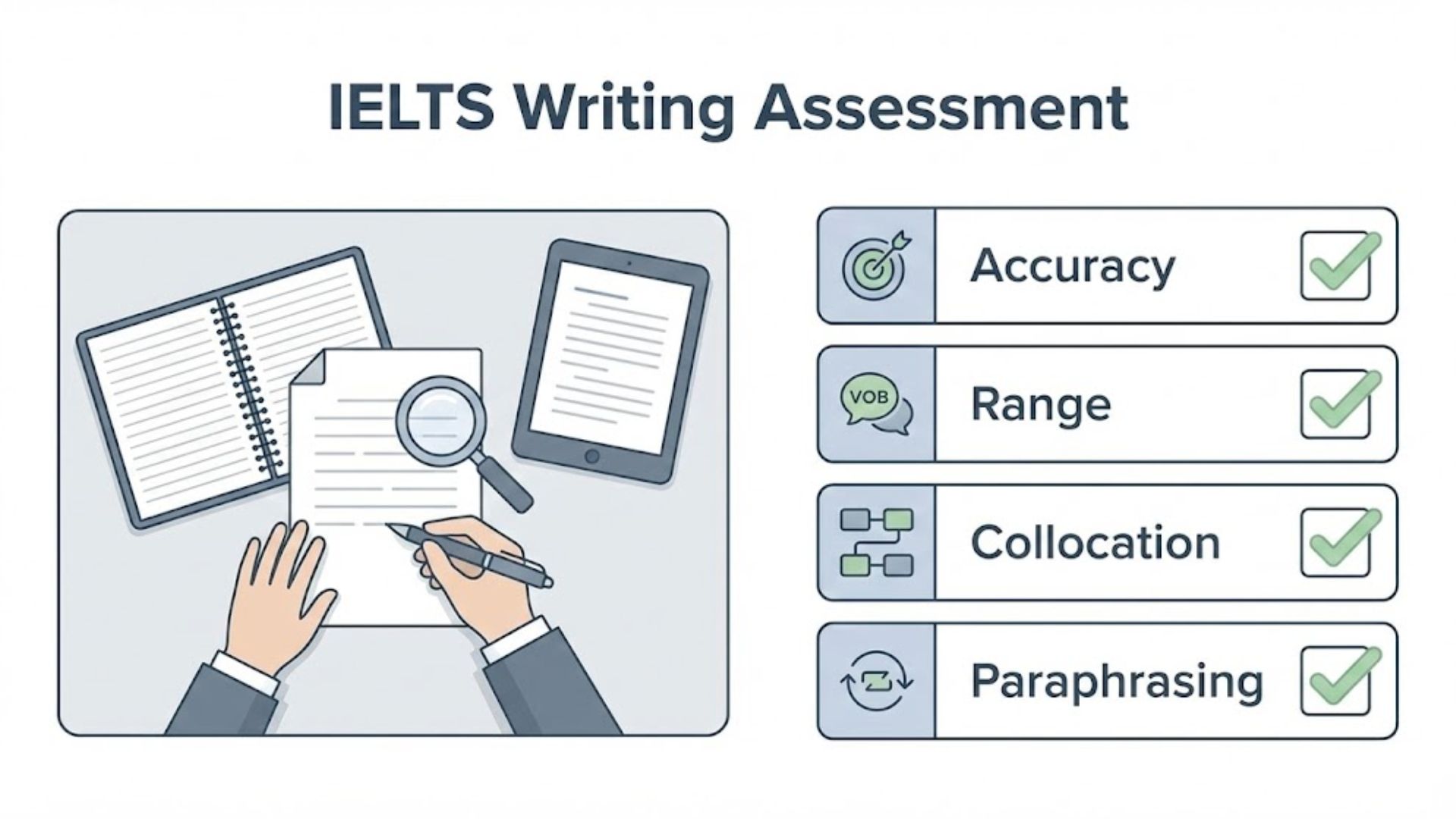
In IELTS Writing and Speaking, vocabulary is assessed under Lexical Resource. This is not about using difficult words. Examiners look for how well you choose and control vocabulary.
They assess:
- Range: Can you use a variety of words instead of repeating the same ones?
- Accuracy: Are words used correctly in meaning and grammar?
- Appropriacy: Are words suitable for the task and context?
- Collocation: Do words sound natural together, not translated or memorised?
- Paraphrasing: Can you express ideas in different ways without changing meaning?
Using advanced words incorrectly often lowers scores. Clear, accurate vocabulary used naturally scores higher than complex vocabulary used poorly.
This is why strategy matters more than memorisation.
What Type of Vocabulary Do English Proficiency Exams Expect?
English exams require a balance between everyday language and academic expressions.
You need:
- Simple vocabulary for personal and familiar topics
- Academic vocabulary for essays, discussions, and formal responses
Knowing when and how to use each type is essential for scoring well.
Vocabulary Differences Between Band 6 and Band 7+
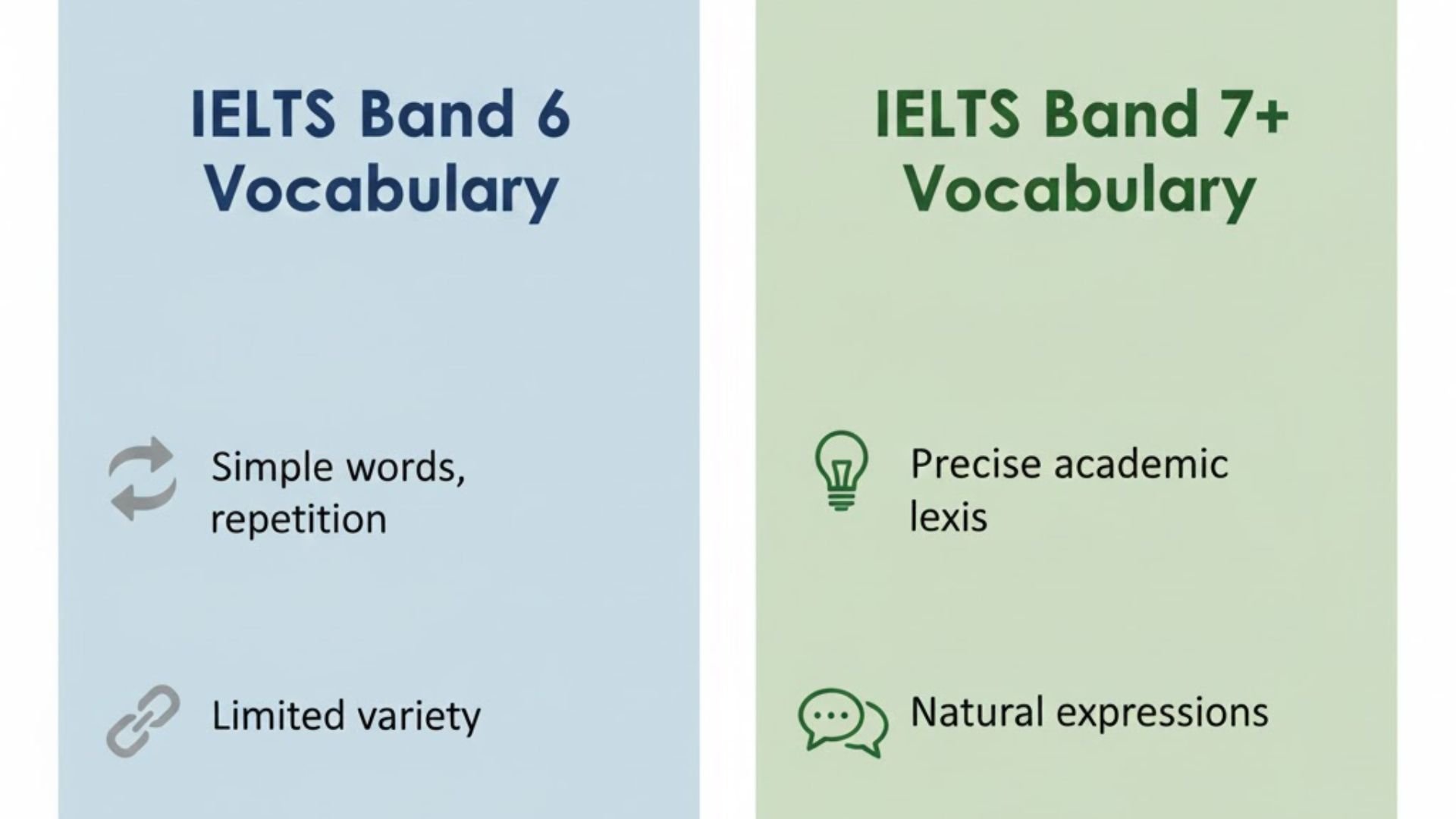
Many learners ask what separates an average score from a high score. The difference is rarely grammar alone. Vocabulary control plays a major role.
Band 6 Vocabulary Characteristics
- Vocabulary is generally correct but repetitive
- Limited paraphrasing
- Overuse of basic words such as important, good, bad
- Some awkward or unnatural word combinations
Example: Technology is very important in modern life.
Band 7+ Vocabulary Characteristics
- Wider range of expressions
- More precise word choices
- Natural collocations
- Clear paraphrasing without changing meaning
Example: Technology plays a crucial role in modern society.
The key difference is precision, not complexity.
Topic-Based Vocabulary for IELTS and TOEFL
Learning vocabulary by topic is one of the most effective strategies for exam preparation.
Common Exam Topics
- Education
- Technology
- Environment
- Health
- Work and career
- Society and culture
Example: Education Vocabulary
Some useful words include:
- curriculum
- assessment
- academic performance
- practical skills
- lifelong learning
Example sentence: Modern education systems should focus on both academic performance and practical skills.
Important Academic Verbs for Exam Writing
Strong verbs help you express ideas clearly and professionally in writing tasks.
Common Academic Verbs
- analyse
- evaluate
- compare
- demonstrate
- suggest
- emphasise
Example sentence: This essay will analyse the advantages and disadvantages of online education.
Using these verbs correctly improves clarity and makes your writing sound more academic.
High-Scoring Adjectives You Can Use Naturally
Instead of repeating basic adjectives, use accurate alternatives.
- good → effective, beneficial
- bad → harmful, negative
- big → significant, substantial
- important → essential, crucial
Example sentence: Technology plays a crucial role in modern communication.
Always choose accuracy over complexity.
Common Vocabulary Mistakes and Better Alternatives
| Exam Section | Common Word Choice | Better Vocabulary Option |
| Writing Task 2 | very important | essential, crucial |
| Writing Task 1 | goes up | increases, rises |
| Speaking Part 3 | many people think | it is widely believed |
| Academic Writing | big problem | significant issue |
| Opinion Essays | bad effect | negative impact |
Choosing accurate alternatives improves clarity and examiner confidence.
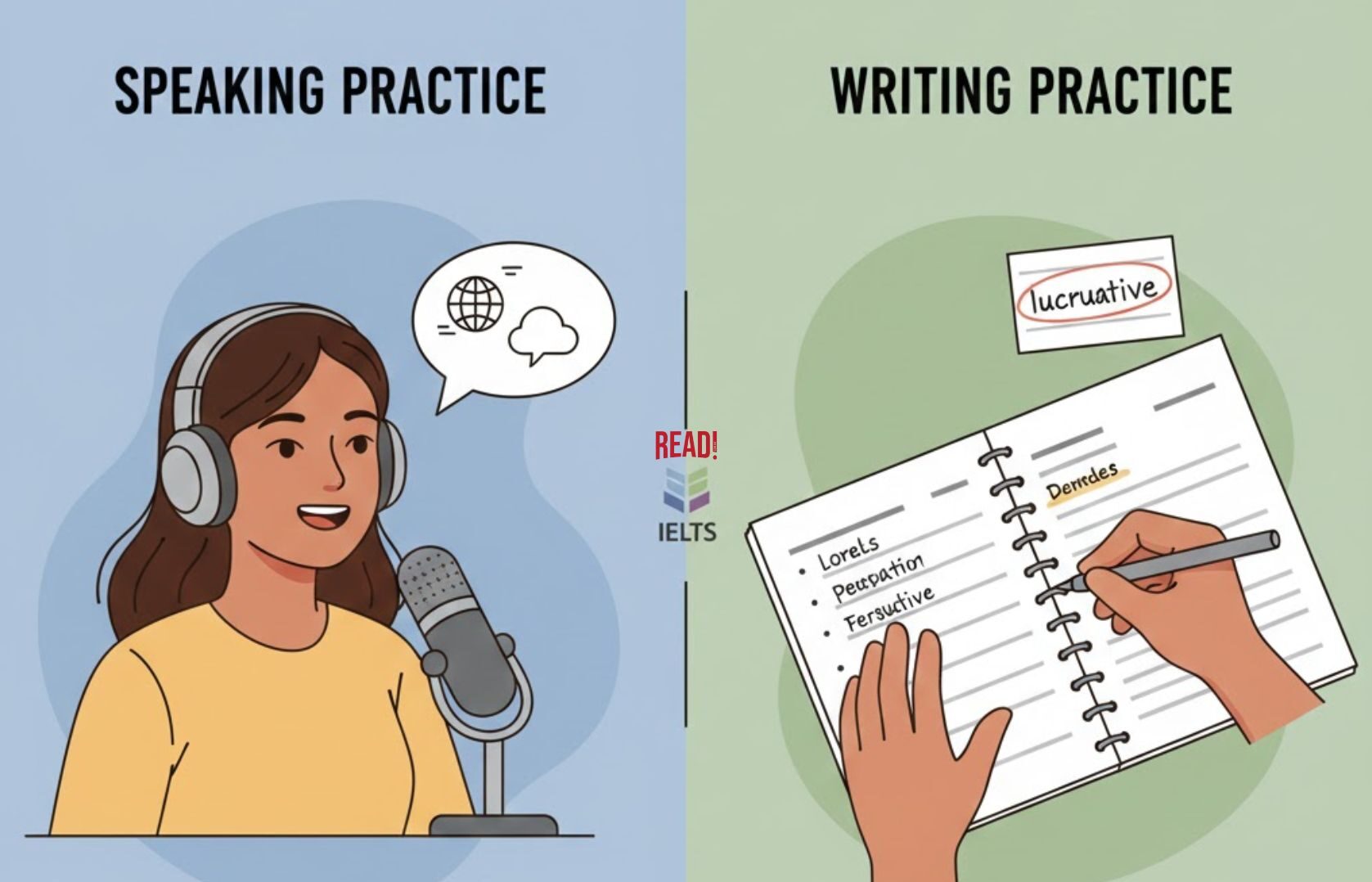
Vocabulary for IELTS Writing Tasks
IELTS Writing Task 1: Describing Charts and Trends
You need specific vocabulary to describe data clearly.
Useful words include:
- increase / decrease
- rise / fall
- fluctuate
- remain stable
- reach a peak
Example sentence: The number of international students increased steadily over the five-year period.
Practising this vocabulary regularly can greatly improve your Task 1 performance.
IELTS Writing Task 2: Opinions and Discussions
For Task 2, you must express opinions and discuss ideas clearly.
Useful phrases include:
- In my opinion
- It is widely believed that
- Some people argue that
- This issue has become controversial
Example sentence: Some people argue that online learning offers greater flexibility than traditional classrooms.
Vocabulary for IELTS Speaking
Speaking Part 1: Familiar Topics
Use natural, everyday vocabulary.
Example: I usually spend my weekends relaxing at home or meeting friends.
Avoid memorised answers or overly formal language.
Speaking Part 2: Describing Experiences
You need descriptive words to tell a short story.
Useful vocabulary includes:
- memorable
- challenging
- rewarding
- experience
Example sentence:
It was a challenging but rewarding experience that helped me gain confidence.
Speaking Part 3: Abstract Ideas
This part requires more advanced vocabulary.
Examples include:
- social trends
- long-term impact
- personal development
- public awareness
Example sentence: This trend may have a long-term impact on young people’s personal development.
Vocabulary for TOEFL and Other English Proficiency Exams
IELTS and TOEFL differ in format, but vocabulary expectations are similar. Both exams reward clarity, academic tone, and accurate word choice.
Academic Reading Vocabulary
Common academic words tested across exams include:
- hypothesis
- evidence
- research
- theory
- methodology
Example sentence: The research provides strong evidence to support the theory.
Formal Vocabulary for Speaking and Writing
TOEFL responses often require slightly more formal phrasing.
Useful expressions include:
- According to the passage
- The speaker suggests that
- One possible explanation is
Learning vocabulary that works across exams saves time and improves consistency.
How to Learn Vocabulary for IELTS Effectively
Learn Words in Context
Always learn vocabulary with example sentences rather than in isolation.
Group Vocabulary by Topic
Topic-based learning improves memory and confidence.
Focus on Accuracy First
Using simple words correctly is better than using advanced words incorrectly.
Reuse Vocabulary in Speaking and Writing
The more you use new words, the more natural they become.
A Simple Weekly Vocabulary Practice Structure
To see progress, vocabulary must be used, not collected.
A simple weekly approach:
- Choose one exam topic
- Learn 10 to 15 useful words
- Write two sentences using each word
- Use 5 words in speaking practice
- Review mistakes and corrections
Consistency matters more than volume.
Conclusion: Build Vocabulary That Scores, Not Just Sounds Advanced
Strong vocabulary for IELTS and other English proficiency exams is not about sounding impressive. It is about choosing accurate words, using them naturally, and applying them correctly in exam tasks.
By focusing on topic-based vocabulary, academic verbs, examiner expectations, and consistent practice, you can improve clarity, confidence, and overall performance.
For more structured vocabulary lessons, exam strategies, and practical language guidance, continue learning with READ, Language Learning Hub, where everyday practice leads to lasting improvement.