

 Manglish is Malaysia’s casual and colourful way of speaking English, but it is not always the right choice for clear communication.
Many Malaysians grow up using Manglish naturally in daily conversations. It is fast, expressive, and familiar, which makes it effective in informal settings. However, in exams, professional writing, or international conversations, the same habits can create confusion or weaken your message.
This guide looks at when Manglish helps, when it holds you back, and how to switch to clearer English when the situation demands it, without losing your identity or confidence.
What Exactly is Manglish?
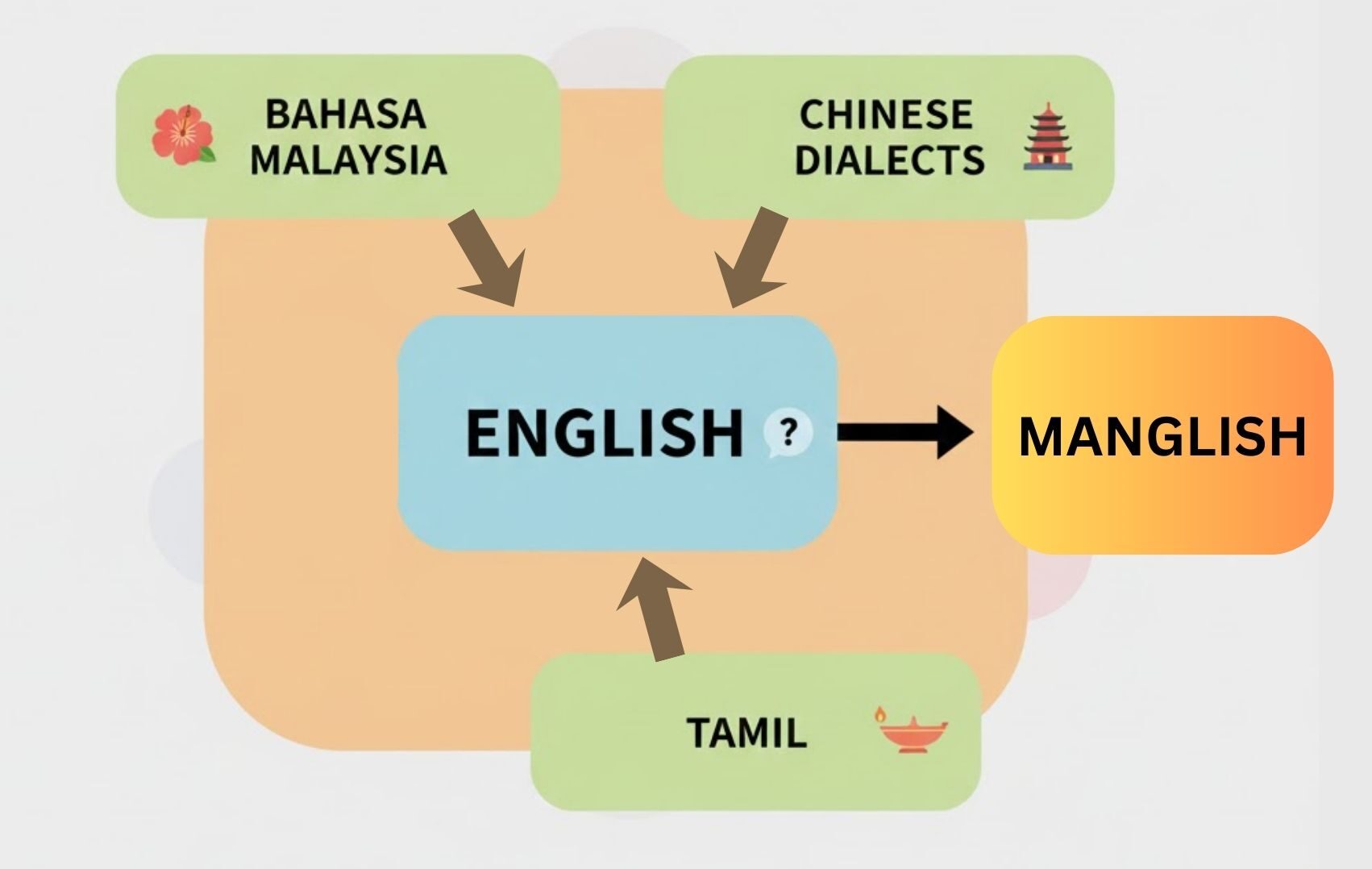
Manglish, short for Malaysian English, is a localised form of English shaped by Bahasa Malaysia, Chinese dialects, Tamil, and everyday Malaysian culture. It is not random slang or broken English. Instead, it reflects how multilingual speakers naturally adapt language for speed, familiarity, and social connection.
At its core, Manglish blends standard English vocabulary with local sentence structures and expressions that feel intuitive to Malaysians.
Common characteristics of Manglish include:
- Direct translations from Bahasa Malaysia or other local languages
For example, “got problem” mirrors ada masalah. The structure feels natural locally, even though it differs from standard English. - Sentence-ending particles that add tone or emotion
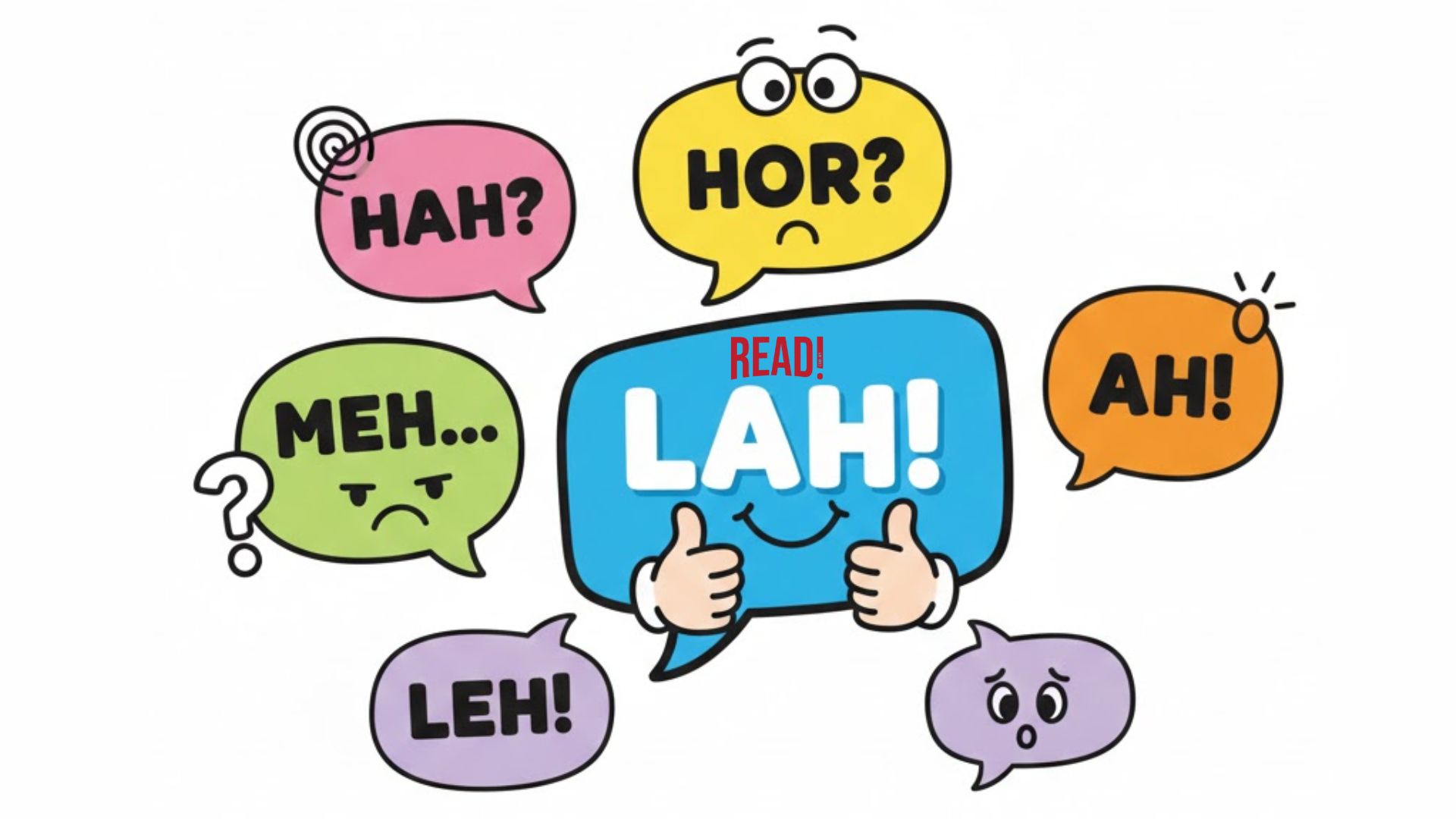
Words like lah, meh, leh, and ah do not change meaning but add tone or emotion to a sentence. Among these, “lah” is the most commonly used and often misunderstood, as its meaning depends heavily on context and tone. You can see how “lah” works in real conversations with practical examples explained in more detail. - Simplified or adapted grammar patterns
Phrases such as “Why you so late one?” prioritise clarity and tone over textbook grammar rules.
Everyday Manglish examples and their standard English equivalents:
- “Can or not?” means “Is this possible?”
- “No need lah.” means “That’s not necessary.”
- “Don’t play play ah!” means “Be serious” or “Don’t take this lightly.”
Manglish is more than casual speech. It is a form of code-switching. Malaysians instinctively adjust how they speak depending on who they are talking to. Manglish is common among friends, family, or informal settings, while standard English is usually used in professional, academic, or international contexts.
Understanding Manglish helps explain why many Malaysians are fluent communicators, even if their English does not always follow traditional rules. It is not about incorrect English, but about using language in a way that fits the situation and the people involved.
When is It Okay to Use Manglish?
Use Manglish casually with peers, friends, or family.
Manglish works best in informal, familiar settings where the goal is connection rather than precision. When everyone shares the same cultural and language background, Manglish feels natural, friendly, and efficient.
Appropriate situations for using Manglish include:
- Casual conversations with friends, family, or close colleagues
- Text messages or informal online chats
- Jokes, storytelling, or humour that relies on local expression
- Social settings where shared identity matters more than formality
In these contexts, Manglish helps build rapport and reflects a sense of belonging. It allows you to sound relaxed and culturally in tune with the people around you.
However, Manglish should be avoided in situations where clarity, professionalism, or accuracy is essential.
Avoid using Manglish in:
- Job applications, CVs, and cover letters
- Business emails, reports, or formal correspondence
- Academic writing, exams, or assessments
- Presentations or public speaking aimed at international or mixed audiences
In these settings, Manglish can confuse readers or listeners who are unfamiliar with it, and it may unintentionally reduce the credibility of your message. Knowing when to switch to standard English is a key communication skill, not a rejection of your identity.

When Manglish Becomes a Problem
Using Manglish in every situation can slowly create communication gaps, especially when clarity and accuracy are required. While it feels natural in daily life, over-reliance on Manglish can lead to habits that are difficult to adjust in formal settings.
Common issues that arise include:
- Confusing international colleagues, clients, or audiences who are unfamiliar with local expressions
- Reinforcing grammar patterns that do not translate well into standard written English
- Finding it harder to write clearly in exams, reports, or professional documents
- Struggling to shift tone when moving from casual speech to formal communication
The goal is not to eliminate Manglish, but to control it. Being fluent in both Manglish and standard English gives you flexibility. You can speak naturally in social settings while communicating clearly and professionally when it matters most. Knowing when and how to switch is a valuable skill that strengthens, rather than limits, your overall communication ability.
Common Manglish Phrases and Their Standard English Equivalents
Many Manglish phrases are direct, expressive, and easy for Malaysians to understand. However, when used with non-locals or in formal contexts, they can sound unclear or incomplete. Seeing the standard English equivalent helps highlight how small wording changes improve clarity and tone.
| Manglish Phrase | Standard English Equivalent |
| “Can or not?” | “Is this possible?” |
| “Got problem ah?” | “Is there an issue?” |
| “So expensive one!” | “That’s very expensive.” |
| “Don’t like that lah.” | “Please don’t behave that way.” |
| “Wait me five minutes.” | “Give me five minutes, please.” |
| “Why you never tell me?” | “Why didn’t you tell me?” |
| “I help you do.” | “I’ll help you with this.” |
| “Just now he call me.” | “He called me earlier.” |
These examples show that Manglish often removes tense markers or prepositions for speed. While this works locally, adding those small grammatical details in standard English makes your message clearer, more precise, and more professional, especially in writing or formal speech.
The Role of Sentence-final Particles in Manglish
Sentence-final particles such as lah, meh, hor, leh, and ah play an important role in Manglish. They do not change grammar or sentence structure. Instead, they shape tone, emotion, and intent, helping speakers sound friendly, casual, or expressive.
These particles are especially useful in spoken conversations, where tone matters as much as meaning. However, because they rely heavily on shared cultural understanding, they rarely translate well into formal English.
| Particle | General Meaning | Closest Formal Equivalent |
| lah | Emphasis or confirmation | “okay”, “indeed”, or omitted |
| meh | Doubt or surprise | “really?”, “are you sure?” |
| hor | Seeking agreement | “right?”, “isn’t it?” |
| leh | Casual suggestion | “maybe”, “how about” |
| ah | Softening or prompting | “yes?”, “did you?”, “hello?” |
In writing or professional speech, these particles often weaken clarity because readers or listeners may not understand the emotional nuance behind them. Removing the particle and replacing it with clearer wording usually results in a more direct and professional message.
Understanding how these particles function helps you recognise when they add warmth to a conversation and when they should be left out for clearer communication.
Manglish vs Malaysian English vs Standard English
English in Malaysia exists on a spectrum. Each variation serves a different purpose, and understanding the differences helps you choose the right tone for each situation.
- Manglish is informal and highly localised. It often involves code-switching and relaxed grammar, shaped by everyday speech patterns.
Example: “Why you never tell me lah?”
- Malaysian English sits in the middle. It follows standard English grammar but includes local vocabulary, phrasing, or rhythm that sounds natural to Malaysians.
Example: “Can you help carry this?”
- Standard English is internationally recognised and expected in professional, academic, and formal settings. It prioritises clarity, correctness, and neutral tone.
Example: “Could you please assist me with this?”
None of these forms are inherently right or wrong. The key skill is knowing which one to use and when. Standard English is essential for exams, workplaces, and global communication, while Manglish remains valuable for building rapport and expressing local identity in informal contexts.
How Manglish Grammar Patterns Differ from Standard English
Manglish sentence structures often reflect patterns from Bahasa Malaysia or Chinese languages, where meaning is conveyed with fewer tense markers or auxiliary verbs. This makes speech faster and more direct, but it can sound incomplete or unclear in standard English.
Common examples include:
- Manglish: “You going already ah?”
Standard English: “Are you leaving now?” - Manglish: “This one cannot.”
Standard English: “This isn’t allowed.”
In Manglish, context carries much of the meaning. In standard English, grammar plays a bigger role in signalling time, intent, and formality. Learners benefit from practising full sentences in both styles, as this builds awareness of how structure changes depending on the situation and audience.
Code-switching in Malaysian Communication
Code-switching is a natural part of communication in Malaysia. Many speakers move effortlessly between English, Bahasa Malaysia, and other local languages within a single sentence or conversation.
For example:
“I sudah email you that file, got?”
Among Malaysians, this is efficient and easily understood. However, for international listeners or formal contexts, mixed-language sentences can cause confusion or misunderstandings.
Being aware of when you are code-switching helps you adjust your language more deliberately. This awareness allows you to maintain clarity in professional or global settings, while still enjoying the flexibility and expressiveness of local communication when appropriate.
Miscommunication Risks in Formal Settings
Using Manglish in professional or academic environments can lead to misunderstandings, slower responses, or even a negative impression. What sounds friendly and efficient locally may appear unclear or overly casual to someone unfamiliar with Malaysian speech patterns.
Example scenario:
An intern emails an overseas supervisor:
“I already submit the file last week lah, can check or not?”
Clearer standard English version:
“I submitted the file last week. Could you let me know if it has been received?”
The second version removes local particles, clarifies tense, and uses a polite, professional tone. These small changes make the message easier to understand and more appropriate for formal communication.

Exercises to Practise Switching from Manglish to Standard English
Learning to switch smoothly takes practice, not memorisation. The goal is to recognise your natural Manglish habits and consciously adjust them when needed.
Try this simple exercise:
- Write down five Manglish phrases you use frequently
- Rewrite each phrase in clear, formal English
- Say both versions out loud and record yourself
- Listen back and compare clarity, tone, and confidence
Regular practice builds awareness and control. If you want a structured starting point, you can further study and bookmark the Manglish-to-English Cheat Sheet at Read.com.my, which provides practical examples and side-by-side rewrites to help you practise more effectively.
Pronunciation Tips: Manglish vs Standard Intonation
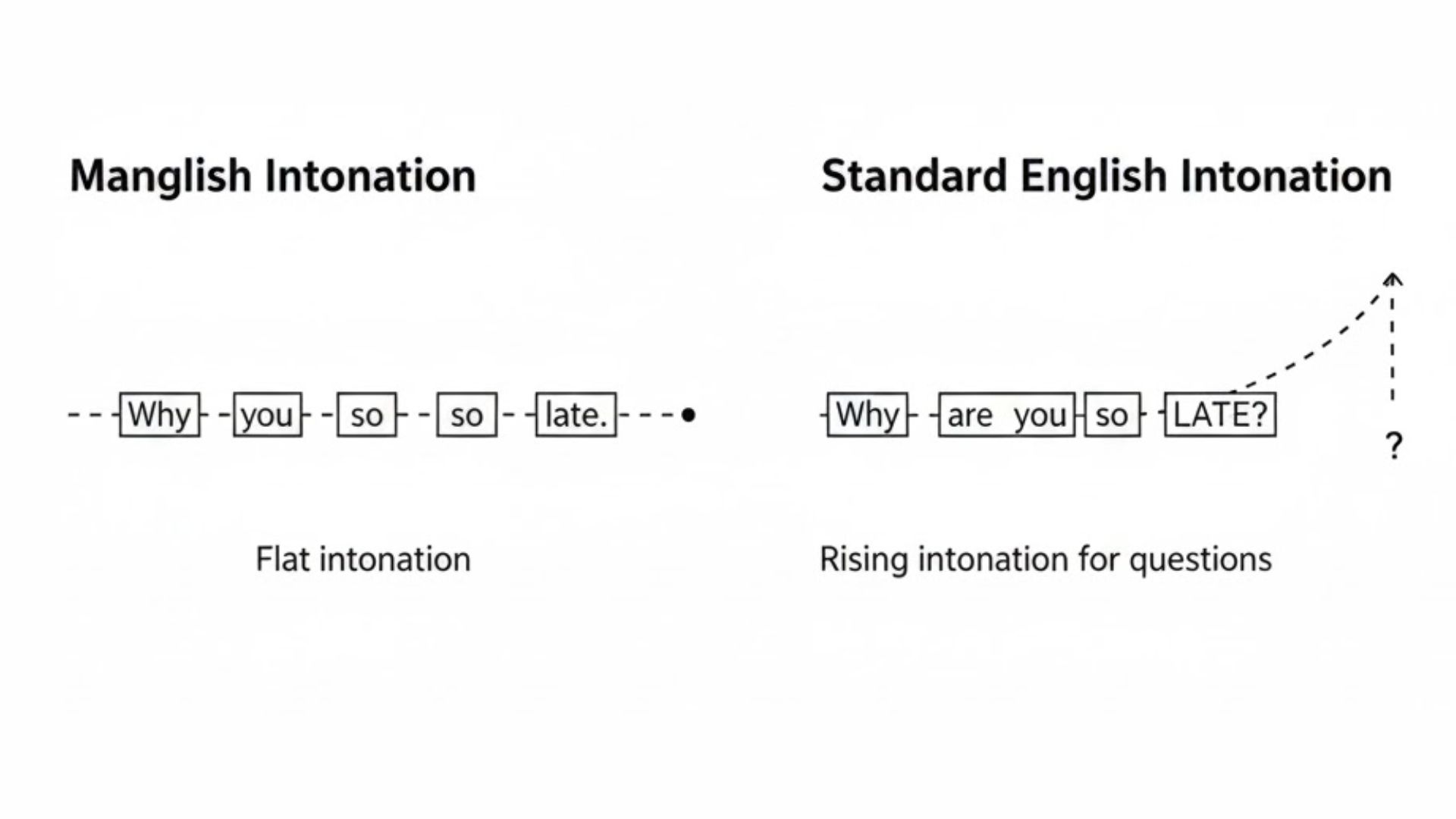
Manglish pronunciation often uses a flatter, more even tone because meaning is supported by particles and context. Standard English, on the other hand, relies more heavily on intonation to signal questions, emphasis, or emotion.
Example:
- Manglish: “You going out ah?” (spoken with a flat or steady tone)
- Standard English: “Are you going out?” (spoken with rising intonation at the end)
In standard English, rising tones usually signal questions, while falling tones indicate statements or certainty. Without these tonal cues, listeners may struggle to interpret intent, especially in spoken conversations.
To improve, practise saying the same sentence with different tones. Listen to native or proficient speakers, repeat after them, and record yourself. This helps train your ear and mouth to work together, improving clarity and natural rhythm over time.
Is Manglish Bad English?
Not necessarily. Manglish is informal and context-specific, not incorrect by default. It is a natural part of Malaysian identity and reflects the country’s multilingual environment.
However, relying only on Manglish can cause challenges, such as:
- Difficulty communicating clearly with global audiences
- Confusion in exams, formal writing, or workplace communication
- Sounding overly casual or unprofessional in formal settings
Think of Manglish as one language tool in your toolkit. Mastering standard English alongside it gives you flexibility. You can express yourself naturally when the situation allows, and communicate clearly and confidently when it matters most.
How Manglish Affects Learning English
Manglish can make English feel more approachable, especially for beginners, but it can also create confusion if learners are not guided on when and how to use it. When informal patterns are picked up without understanding their limits, progress in standard English may slow down.
Common challenges learners face include:
- Memorising Manglish sentence structures instead of standard grammar rules
- Feeling unsure about which tone or style to use in different situations
- Hesitating when writing or speaking formally due to mixed language habits
- Struggling to explain ideas clearly without relying on local expressions
The solution is not to avoid Manglish, but to learn both consciously. By understanding the differences and practising each style in the right context, learners gain confidence and control. This approach allows Manglish to remain a cultural strength, while standard English becomes a reliable tool for exams, work, and global communication.
Conclusion: Know When to Use Manglish, and When to Switch
Manglish is expressive, familiar, and deeply rooted in Malaysian culture. It works well in everyday conversations, but in learning environments, exams, and professional settings, switching to standard English helps you communicate more clearly and confidently.
At Read.com.my, we help Malaysians become comfortable using both. As a learning hub for clear English communication, we focus on practical English skills, localised examples, and real-life usage, so you know not just what to say, but when to say it.
Language reflects who you are, but it also shapes how others understand you. When you learn to use Manglish and standard English intentionally, you gain flexibility, credibility, and confidence in any situation.